

Trump’s "Superman" persona meets Iranian defiance
From "Superman" posturing to covert networks and growing protests, U.S. and Israeli strategies aim to pressure Iran’s leadership without toppling the regime outright.



 Messenger
 Whatsapp
 Threads
 Email
Email
 Print
Print
 X
X
 Facebook


In Caracas, U.S. President Donald Trump’s self‑portrayal as a “Superman” ‑ like figure - an image first circulated by the White House on social media last July - appeared to gain further traction following the dramatic U.S. military capture of Venezuelan President Nicolás Maduro and his wife, who were taken into custody and transported to New York to face federal charges.
From that point, Trump styled himself as an enforcer of international law, issuing stern warnings to Iran’s rulers that they would “face consequences” if they responded to protests with lethal force.
Since making these statements, Trump has faced scrutiny not only from his adversaries but also from some of his closest allies. His associates went so far as to issue threats on his behalf, with Senator Lindsey Graham warning that Trump could take lethal action against Iran’s Supreme Leader Ali Khamenei.
However, Khamenei, in line with his decision to confront "saboteurs" by cutting off internet and phone services and deploying the Revolutionary Guard to areas of protests and demonstrations, chose to challenge Trump, even going so far as to declare his belief that his regime would endure while Trump would fall - just as Pharaoh and the emperors did.
Khamenei’s defiance was clearly unwelcome for "Superman." Just hours earlier, Trump seemed to try to avoid being cornered by the Iranian crisis. When asked by an American colleague about reports that the death toll in Iran had exceeded thirty - now believed to be in the hundreds - he appeared to signal weakness and retreat, claiming the deaths were not due to repression but occurred during stampedes. He also refused to meet with the exiled shah’s son, who was attempting to leverage the unrest to present himself as the only alternative.
Following this, Khamenei declared his stance against both the insurgents within his regime and the American president, setting in motion a campaign to suppress the increasingly widespread, bold, and growing "revolution."
What will Trump do under these circumstances?
No one can provide a definitive answer, given the reliance on "deception" in military operations, which demands that plans remain as secretive, misleading, and obscure as possible. Yet, from appearances, it seems clear that American pragmatism views the unrest in Iran, coupled with the regime’s inability to offer viable political, economic, social, and financial solutions amid harsh sanctions, as one of the strongest pressure points.
This situation may push the Iranian leadership to reconsider its refusal to engage with Washington on issues such as the "zero-enrichment" policy and the dismantling of its ballistic missile programs. This is exactly what U.S. Vice President J.D. Vance hinted at on Friday, when he stated: "We support anyone who participates in peaceful protests (…) and the smartest move the Iranian leaders could make - which was correct two months ago and remains correct today - is to engage in real negotiations with the United States."
Still, this does not change the fact that Trump remains a prisoner of the 'Superman' image he has cultivated - an image that Israel may try to exploit to push him into acting on his threats.
The optimism about toppling the Iranian regime, openly expressed by Israeli Prime Minister Benjamin Netanyahu after days of silence, should not be underestimated. Netanyahu did not base this optimism on media reports; rather, by Israel’s own admission, it stems from its extensive network of Mossad collaborators inside Iran, who played a crucial role in paving the way for the Israeli Air Force to penetrate Iranian airspace during the "12‑Day War" last June.
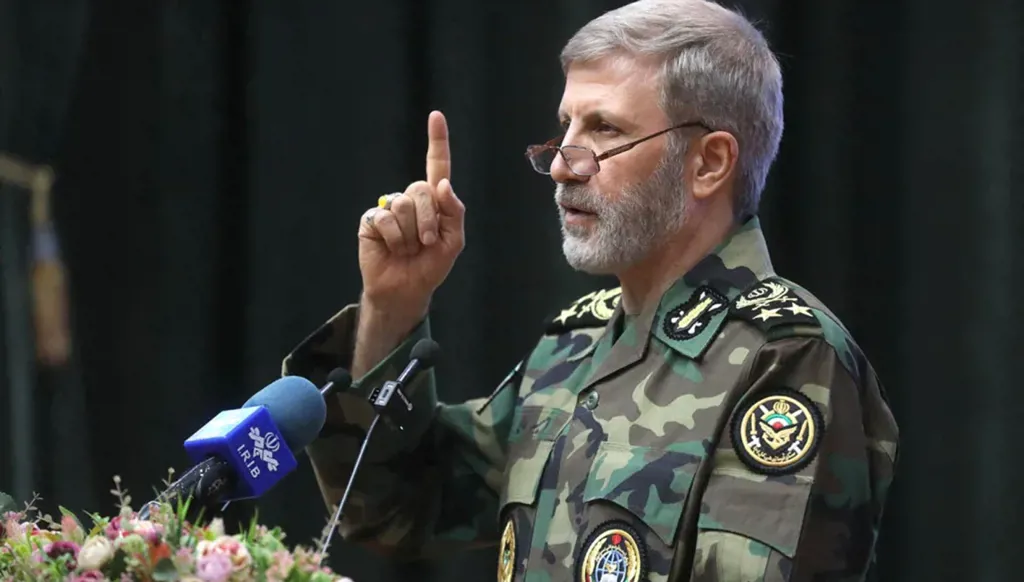
Many observers believe there may be a convergence of interests between Trump and Netanyahu: both aim to weaken elements of the Iranian regime, preferring to shift power away from the Revolutionary Guard toward the regular army and to elevate President Masoud Pezeshkian over Supreme Leader Ali Khamenei - a strategy seen by some as more akin to changing behavior within the system, rather than overthrowing it outright, similar to what happened in Venezuela.
Disclaimer: The opinions expressed by the writers are their own and do not necessarily represent the views of Annahar.