

The Arab obsession with conspiracy and the politics of self-blame
History shows the Arab world isn’t shaped by hidden conspiracies; it’s shaped by public plans, foreign strategies, and our own governance failures. Understanding this is key to facing today’s crises.



 Messenger
 Whatsapp
 Threads
 Email
Email
 Print
Print
 X
X
 Facebook
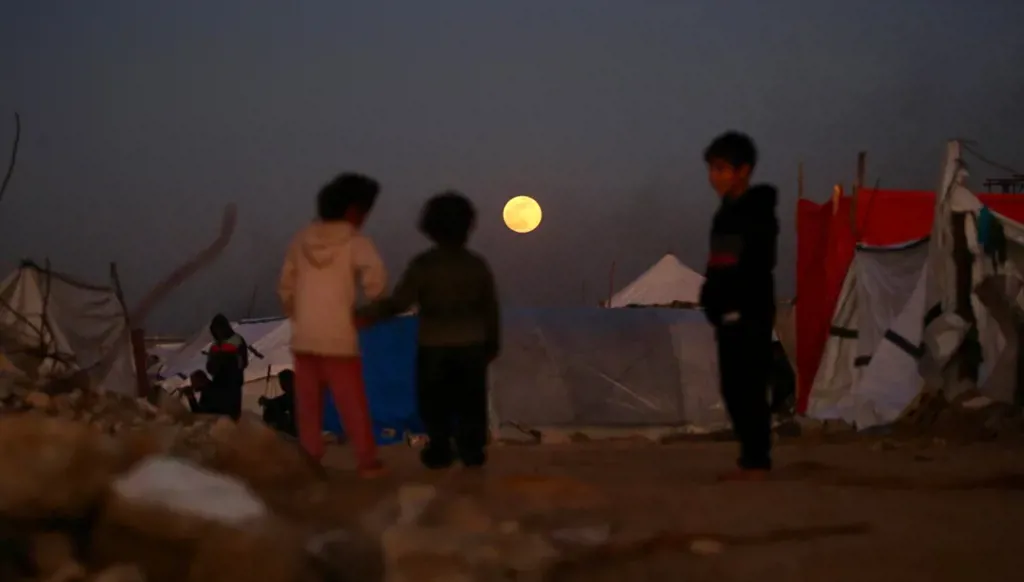


Since the Arab world broke away from the Ottoman Empire and appeared on the political stage in the early 20th century, the idea of conspiracy has dominated its political actors, especially because that idea was reinforced on the ground with the subjugation of the Levant (the Eastern Arab region) to the control of colonial powers.
However, what must be noted is that this “conspiracy” was public, with the publication of the Sykes–Picot Agreement (1916) and the Balfour Declaration (1917), and through the movements of armies and the struggle for influence at the time between Western powers. This included enabling large-scale Jewish immigration to Palestine and establishing institutional structures for the Zionist movement there, knowing that all of this was detailed in the writings of its leaders and in the resolutions of its First Congress (Basel, Switzerland, 1897).
Thus, from a strategic perspective, everything was clear and public, unlike certain details that remained secret. But that does not mean everything that happened was a hidden conspiracy, without denying the existence of political conspiracies in general. Perhaps secrecy in this context had a functional role, aimed at exaggerating the power of Western actors, and covering up the roles of local actors who went along with those public, clear plans and facilitated them.
The point is that most historical developments or transformations that took place in the Arab East were not the result of secret conspiracies, but rather the result of public ideas and arrangements. This includes the expansion and entrenchment of Zionist settlement in Palestine, the Syrian intervention in Lebanon (1976), the U.S. invasion of Iraq (2003), and the facilitation of Iran’s increased influence in Iraq, Syria, and Lebanon, starting from its takeover of Iraq after the fall of Saddam Hussein’s regime (2003).
Accordingly, the consequences of the brutal war of extermination that Israel waged against the Palestinians in Gaza also topped the agenda of Israel’s far-right religious-nationalist camp. The Netanyahu government kept threatening, from time to time, to dismantle Palestinian statehood, to dominate Palestine “from the river to the sea,” and to rid itself of as many Palestinians as possible, by displacing them through coercive or subtle means, direct or indirect.
The point is that everything about our situation is known: the nature of the forces competing within and over the countries of the Arab East; the challenges and dangers they face; and their structural flaws. There have even been conferences and seminars held to present and discuss these issues, in addition to books and media coverage that have documented them.
Here we can recall a number of conspiracies or “plans.” There were those who referred to the “Trilateral Commission,” headed by Zbigniew Brzezinski, who served as U.S. National Security Advisor under President Jimmy Carter (1977–1981). The Commission was established in the early 1970s and included politicians and thought leaders from the United States, Europe, and Japan. It was said that its goal was to strengthen global control, including over the Arab world, as if this were some secret or surprising matter, or as if that Commission added or subtracted anything to that reality.
Brzezinski also published a book titled Between Two Ages: America’s Role in the Technetronic Era (1970), in which he predicted the imminent collapse of the Soviet Union (two decades before it happened), due to its failure in three areas: the human yearning for freedom, the nationalities question, and technological advancement, along with its inability to confront the model represented by the United States in these fields. This collapse did in fact occur in the early 1990s, suddenly and peacefully, due to the internal decay of the Soviet Union, not because of a conspiracy.
Former U.S. President Richard Nixon also published a book titled The Real War (early 1990s), often translated in Arabic as “The Golden Opportunity”. In which he argued that conditions had become ripe for the United States to consolidate its position as the sole global superpower, especially in the Middle East, following the collapse of the Soviet Union.
Perhaps the most prominent of these plans were those promoted by the “neoconservatives” during the presidency of George W. Bush (2001–2009), concerning the Arab region. They exploited the events of September 11, 2001, arguing that the United States should use force to impose arrangements compatible with its interests (and Israel’s interests). This was presented within what was called the “Project for the New American Century,” backed by their influence in the U.S. administration and inside the White House and the Departments of State and Defense.
President Bush also introduced his plan for “spreading democracy” in the Arab world (2002), to impose political reform, followed by his plan to establish a “Greater Middle East” (2003). This is different from the “New Middle East” plan that was proposed during the Clinton administration in the 1990s. All of these plans were public, published, and even discussed directly with Arab governments.
In his first term (2017–2021), U.S. President Donald Trump introduced his plan known as the “Deal of the Century” (2019), with the aim of removing the Palestinian question from Arab and international agendas, consolidating Israel’s legitimacy in the region, and abandoning the U.S. role as a sponsor of peace negotiations, while imposing Israeli dictates on Palestinians unilaterally.
Also, in his second term, Trump did not hide his plans, aligned with Netanyahu’s vision to reduce the Palestinian population in Gaza as much as possible, and to change the reality of the Gaza Strip by creating a “Riviera” (a tourism and economic zone) on its ruins. He has proposed similar ideas for southern Lebanon and Syria as well.
Thus, there are no conspiracies or secret plans, everything is almost out in the open. The weak are not worth conspiring against, which means the problem lies within us: in the deterioration of our conditions, the marginalization of our societies, the backwardness and corruption of our administrations, and on top of that, among us are those who portray defeats as victories, who dream of returning to the era of the Caliphate or to al-Andalus (medieval Muslim Spain), and we often march, by our own feet, toward our own ruin.
Disclaimer: The opinions expressed by the writers are their own and do not necessarily represent the views of Annahar