

Berri to Annahar: I will apply the law, with no compromise over depositors’ funds




 Messenger
 Whatsapp
 Threads
 Email
Email
 Print
Print
 X
X
 Facebook
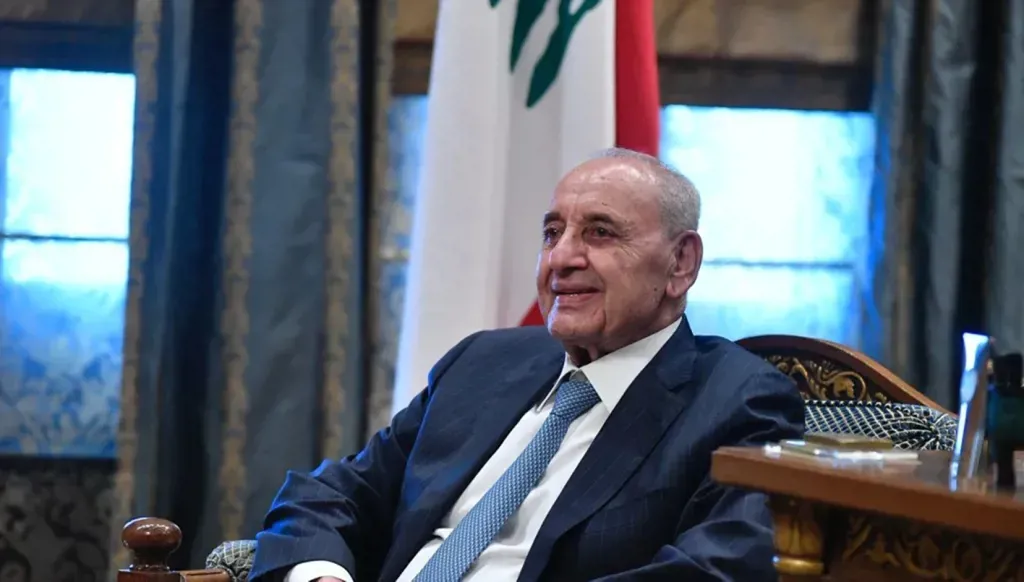


It has become clear that Speaker Nabih Berri, alongside several blocs, did not receive with comfort the financial regulation and deposit recovery bill.
The Speaker has not yet finalized his position on the matter, as he felt the necessary care was lacking in the “financial gap” law, which received the support of 13 ministers, including Finance Minister Yassin Jaber, who is considered close to him. Meanwhile, the three other ministers from the “Duo” opposed the law, aligning with ministers from the Lebanese Forces and Kataeb. Minister Charles Hage openly expressed his reservations, contrary to the stance of President Joseph Aoun. Had it not been for the votes of the two ministers from the Democratic Gathering, the bill would not have passed. This prompted Prime Minister Nawaf Salam to call leader Walid Jumblatt, requesting his intervention.
Berri told Annahar that he would implement “what the law says,” echoing the approach of the late President Fouad Chehab, who was known for strictly adhering to the constitution. Setting aside the issue of depositors’ rights, he does not believe the bill was introduced in the government through constitutional procedures. It is still unclear how he will handle the law, which MPs from Amal and other factions have described as a “Trojan horse.”
Will he refer it to the Finance and Budget Committee or to the joint committees?
While several blocs consider the bill unfair to depositors, they are also mindful of public anger ahead of the upcoming parliamentary elections, which make it difficult to pass such a law. This is especially the case for depositors with amounts over $100,000, who have little hope of recovering their funds. Opponents - including government-affiliated blocs as well as labor and popular groups - frequently face the question: “What have you done regarding depositors’ money in recent years?”
Meanwhile, Berri has yet to decide how to handle the bill, as questions continue to arise about how Parliament will address it once President Joseph Aoun signs it. Circles within Amal deputies and other blocs are raising concerns over the bill’s constitutionality. Some deputies argue that the government violated paragraph 5 of Article 65, which requires a two-thirds majority to pass such a vote, rather than the simple majority that was used. Parliamentary voices, including Deputy Qabalan Qabalan, have called on Parliament not to receive the bill and to return it to the government without delay.
In contrast, legal experts argue that Parliament should receive the bill even if it did not secure a two-thirds majority of ministerial votes. They contend that Aoun cannot return it to the government for further discussion, nor can the ministers who opposed it disown it, citing the principle of ministerial solidarity, which obliges all government members to support government decisions. Former Justice Minister Ibrahim Najjar is among those who hold this view.
Thus, the bill has taken center stage in Lebanese affairs at the start of the new year, amid a series of unfolding events. Deputies are expected to act with national responsibility, setting aside political and populist interests, and to subject the plan to a transparent and thorough review in parliamentary committees. This should include detailed figures from the Central Bank on deposits and their distribution, while rejecting any arrangement that absolves banks or shifts losses onto depositors.
Disclaimer: The opinions expressed by the writers are their own and do not necessarily represent the views of Annahar.