




 Messenger
 Whatsapp
 Threads
 Email
Email
 Print
Print
 X
X
 Facebook
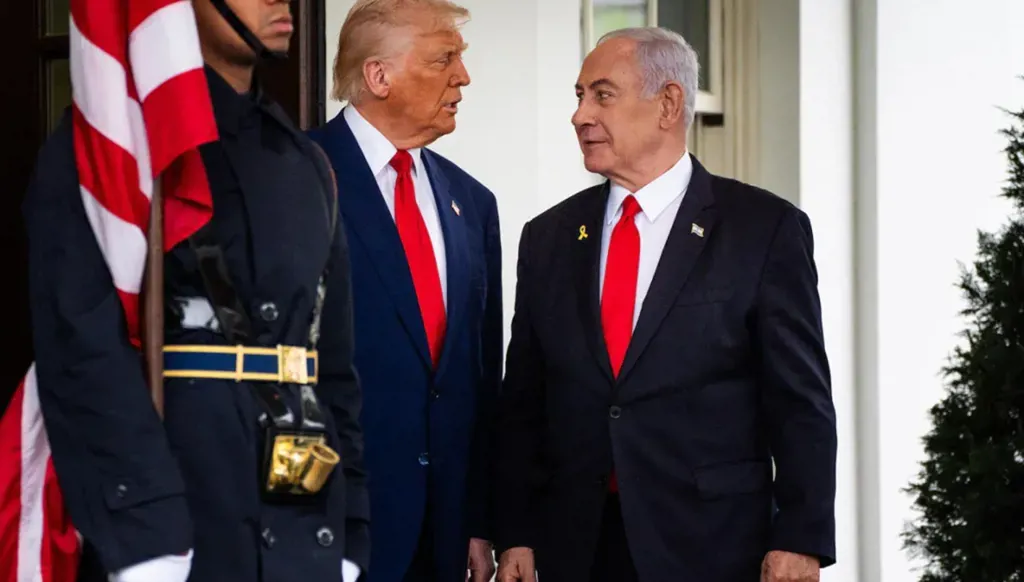


Israeli Prime Minister Benjamin Netanyahu attended the Florida Summit with U.S. President Donald Trump, each bringing different priorities. Netanyahu’s top concern is securing a political and security environment in Israel and the region that will help ensure his victory in next year’s elections.
This single objective will guide all of Netanyahu’s decisions in the coming period. Regardless of the Florida Summit outcomes or Trump’s reaffirmation of the Gaza Plan and the need to move to its second phase, Netanyahu retains room to maneuver. He can argue that Hamas has yet to meet the requirements of the first phase, such as relinquishing control and disarming.
Even if an announcement is made about the formation of a "Peace Council" and countries declare to Washington their readiness to participate in an international stabilization force led by an American general, or if the start of reconstruction in the area occupied by Israel is imminent, Netanyahu will not pull the Israeli army back beyond the "yellow line," citing Hamas’s failure to fulfill its commitments.
This reality clashes with Trump’s ambition to begin in Gaza as a stepping stone toward broader settlements in the Middle East. Ahead of the Florida Summit, the Israeli newspaper Yedioth Ahronoth reported that Netanyahu “places at the forefront the consolidation of existing Israeli security based on a new concept, which, in addition to traditional principles, incorporates advanced and preventive defense measures. He will seek political and military understanding and support from the Americans to implement these principles across all arenas.”
In other words, Netanyahu, who conceded to Trump by halting the war in Gaza without formally agreeing to a ceasefire, is unlikely to take further steps, fearing that doing so could erode support among his electoral base or jeopardize his coalition with the far right - without which he cannot retain power. Accordingly, settlement expansion in the West Bank is expected to accelerate in the months leading up to the elections as a way to secure the votes of extremists. These groups demand the formal annexation of the West Bank and the extension of Israeli law to it, while Netanyahu favors a quiet, de facto annexation, despite Trump’s opposition.
Therefore, "The New York Times" sees that "the year 2026 will be crucial for Netanyahu, and he will have to make a series of important decisions regarding security, the Palestinians, and the broader Middle East."
Based on this, Hebrew University of Jerusalem political science professor Reuven Hazan says Netanyahu wants to give voters time to shift their attention to other pressing matters.
Over the past two years, Netanyahu has succeeded in persuading a significant portion of the Israeli public that the country’s survival is tied to the continuation of wars and what he describes as “living on the edge of the sword.”
Nevertheless, Netanyahu views the polls predicting his electoral defeat with concern, fearing he would be unable to form a government again. He understands that losing power would strip him of immunity from accountability for the major failures of October 7, 2023, as well as for the ongoing trials in which he faces charges of fraud, bribery, and breach of trust.
When Trump asked Israeli President Isaac Herzog to grant Netanyahu an amnesty, he aimed to extend a major favor, expecting it to be repaid by Netanyahu not obstructing the implementation of the American vision for the Middle East.
Disclaimer: The opinions expressed by the writers are their own and do not necessarily represent the views of Annahar.