

CRISPR in 2026: Can gene-editing therapies move from rare breakthroughs to widely accessible treatments?
As CRISPR moves from lab success to real-world medicine, 2026 will test whether these revolutionary gene-editing therapies can reach the patients who need them most or remain costly, complex treatments available only to a select few.



 Messenger
 Whatsapp
 Threads
 Email
Email
 Print
Print
 X
X
 Facebook
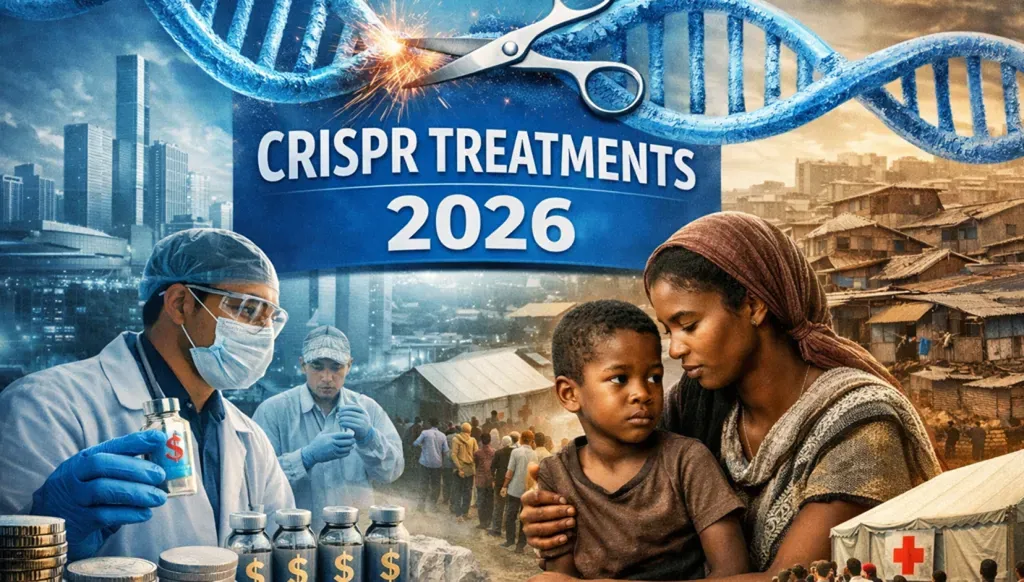


In 2026, the medical community is closely monitoring CRISPR-based gene-editing treatments, which have moved from remarkable laboratory successes to the more challenging reality of clinical application. The key question: Will these therapies become widely accessible to patients, or remain confined by their complexity and steep cost - potentially exceeding $2.2 million per person?
CRISPR is a form of gene therapy, enabling precise edits within a patient’s cells to tackle genetic disorders at their source, rather than simply alleviating symptoms.
The U.S. Food and Drug Administration’s approval in December 2023 of the first CRISPR-based treatment for sickle cell anemia marked a turning point. By January 2024, approval expanded to include blood-transfusion-dependent beta thalassemia, coinciding with the publication of significant efficacy results throughout 2024, signaling a clear shift of the field from the lab to the clinic.
In 2025, CRISPR entered practical use, with over 75 treatment centers established worldwide. While this signals expansion, it doesn’t automatically translate into rapid patient access. Widespread availability still faces significant hurdles - including highly trained medical teams, complex equipment and procedures, precise supply chains, and limited capacity - resulting in long waiting lists.
Thus, 2026 marks a critical year to test whether the promises of CRISPR can translate into genuinely accessible treatments, rather than remaining expensive, cutting-edge experiments available to only a select few.
In this context, Annahar spoke with specialists actively involved in developing CRISPR-based gene editing therapies.
“Platform trials” and accelerating the path
Inside the Innovative Genomics Institute at the University of California, Berkeley, Dr. Andy Murdock, the Director of Communications, told Annahar that the true measure of “genuine expansion” lies in the ability to replicate results beyond exceptional individual cases. He noted that the first “on-demand” gene therapy using CRISPR, performed in 2025 on a child known as KJ at the Children’s Hospital of Philadelphia, was a major milestone. However, what ultimately determines scalability, he explained, is “the second, third, fourth child, and beyond.” A single success may remain a rare medical achievement, but consistent replication with clear safety standards marks the start of a treatment system that can grow and reach more patients.
In 2026, the first clinical trials are expected to treat gene editing as a platform therapy for groups of patients who share the same disease but have different mutations. For instance, the urea cycle disorder that KJ was born with can result from multiple mutations within the same gene. If what doctors learned from treating one child can be applied to others regardless of the specific mutation, it signals a shift in the field - from highly individualized, “one-person custom” treatments to therapies that are repeatable and scalable.
But, as Murdock points out, the story isn’t purely scientific. He notes that profit considerations still dominate drug development, which is why rare diseases - though numbering around 7,000 - remain largely overlooked.
He adds that the traditional clinical trial model treats every new treatment as if starting from scratch, even when the only difference is a small change in the gene. This approach entails lengthy procedures, repeated reviews, strict regulations, manufacturing, and follow-up, all of which slow development and drive up costs.
In contrast, Murdock suggests the “platform trials” approach, where a single trial meets safety requirements but allows targeted adjustments for specific mutations, rather than rebuilding the trial from scratch each time. He notes that signs of this shift are already emerging, with regulatory agencies in the United States and the United Kingdom showing increasing openness to this model, signaling potential global expansion.

Indicators of justice
Meanwhile, Andrew M. Subica, a researcher in health disparities and health equity and an associate professor of social medicine, population, and public health at the University of California, Riverside, sets a different benchmark for success in 2026 - one that tests the beneficiaries themselves.
He told Annahar that practical “equity indicators” at this early stage begin with a simple question: Are the voices and concerns of the target communities genuinely engaged from the conceptual stage through the trials, or are they treated merely as passive recipients?
He adds that a second indicator is the diversity of trial participants, particularly from groups that are typically underrepresented, since different populations may respond differently to gene-editing tools. A third indicator is the focus of development itself: Does it address the greatest health burdens within society or globally, or does it prioritize what companies consider most profitable?