

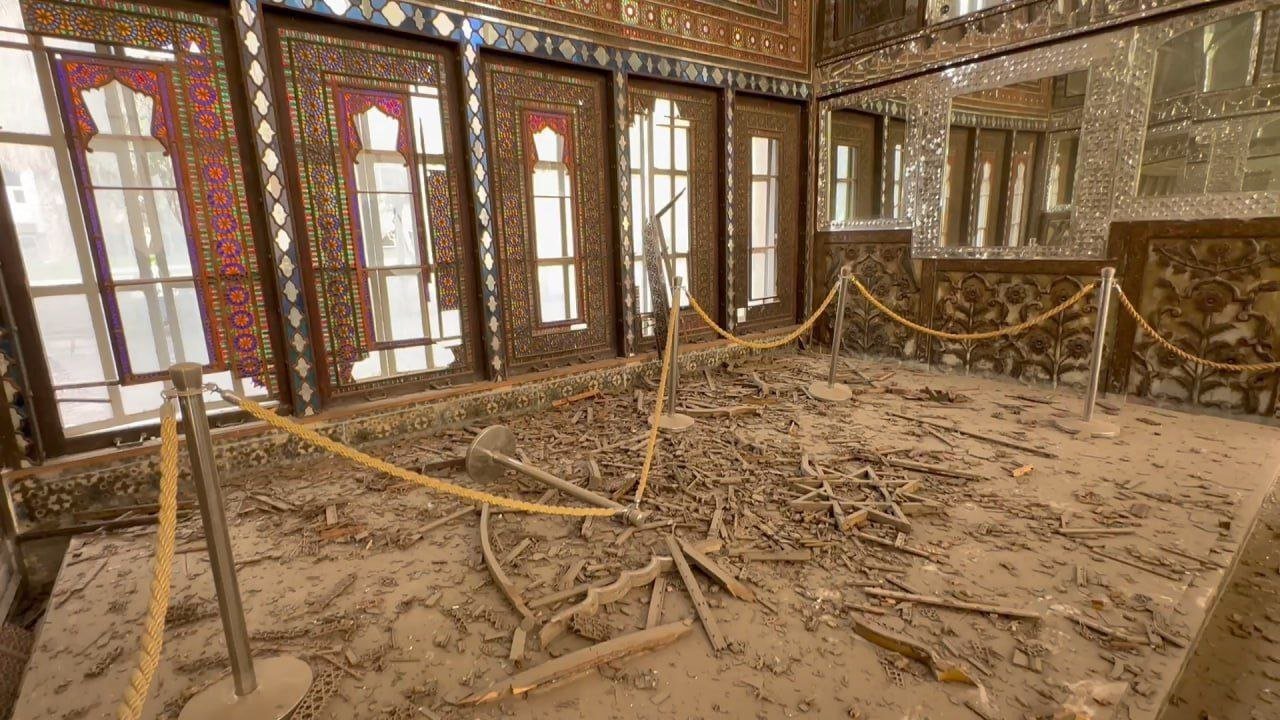
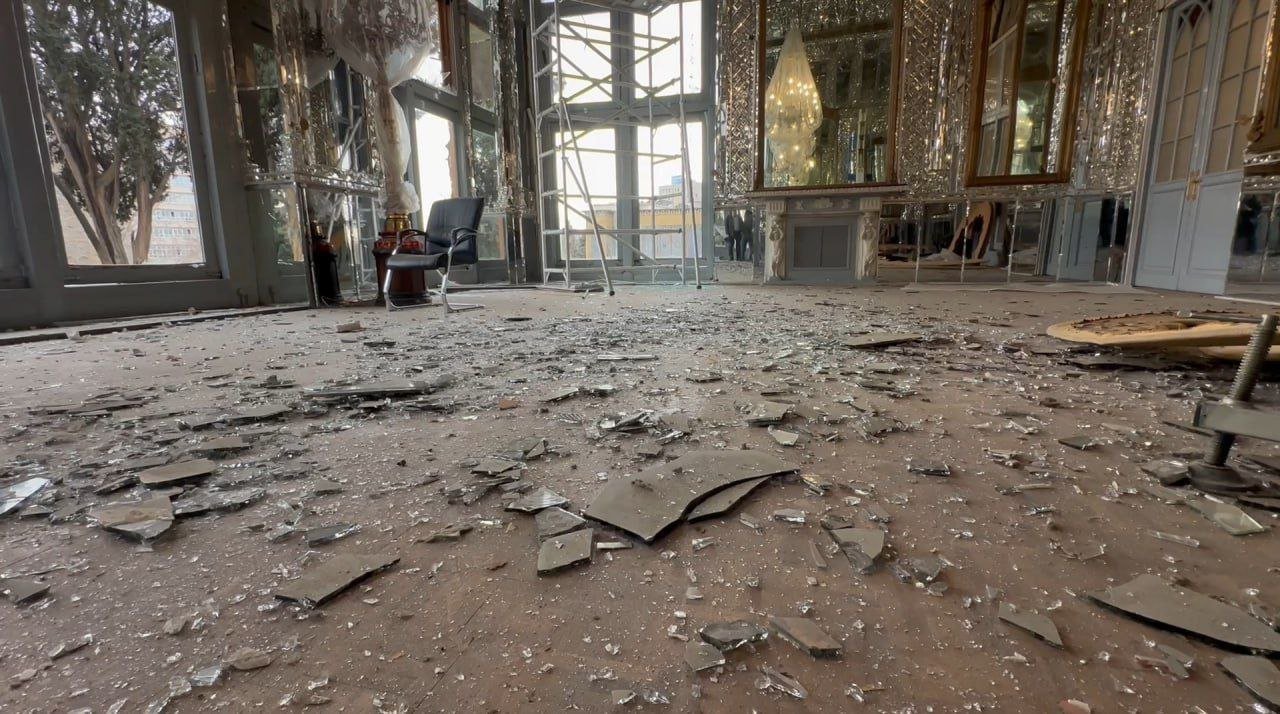
Historic Golestan palace in Tehran damaged in Israeli-American strikes
The UNESCO World Heritage site, known as the “Versailles of the East,” sustains partial damage in recent strikes.



 Messenger
 Whatsapp
 Threads
 Email
Email
 Print
Print
 X
X
 Facebook
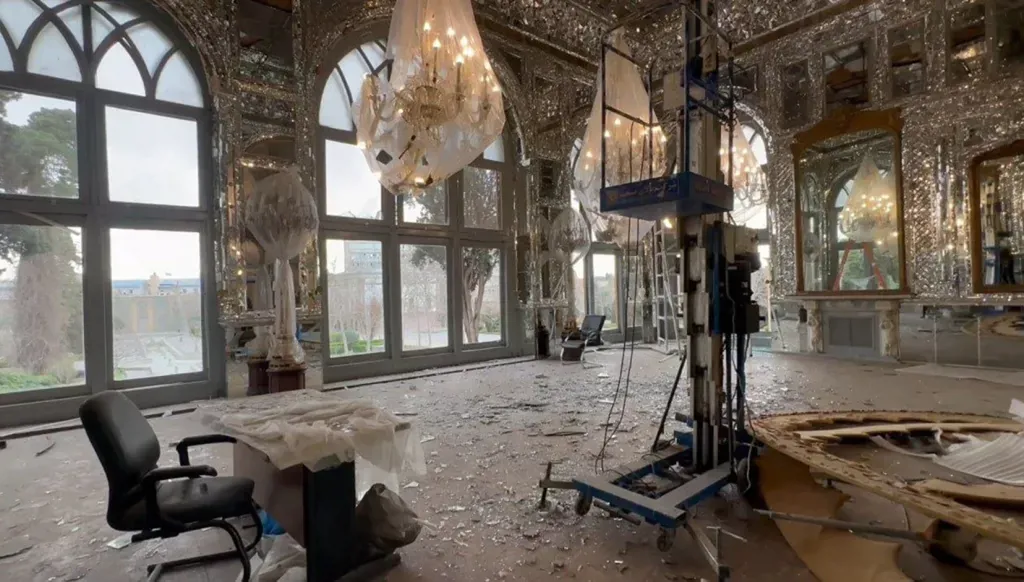


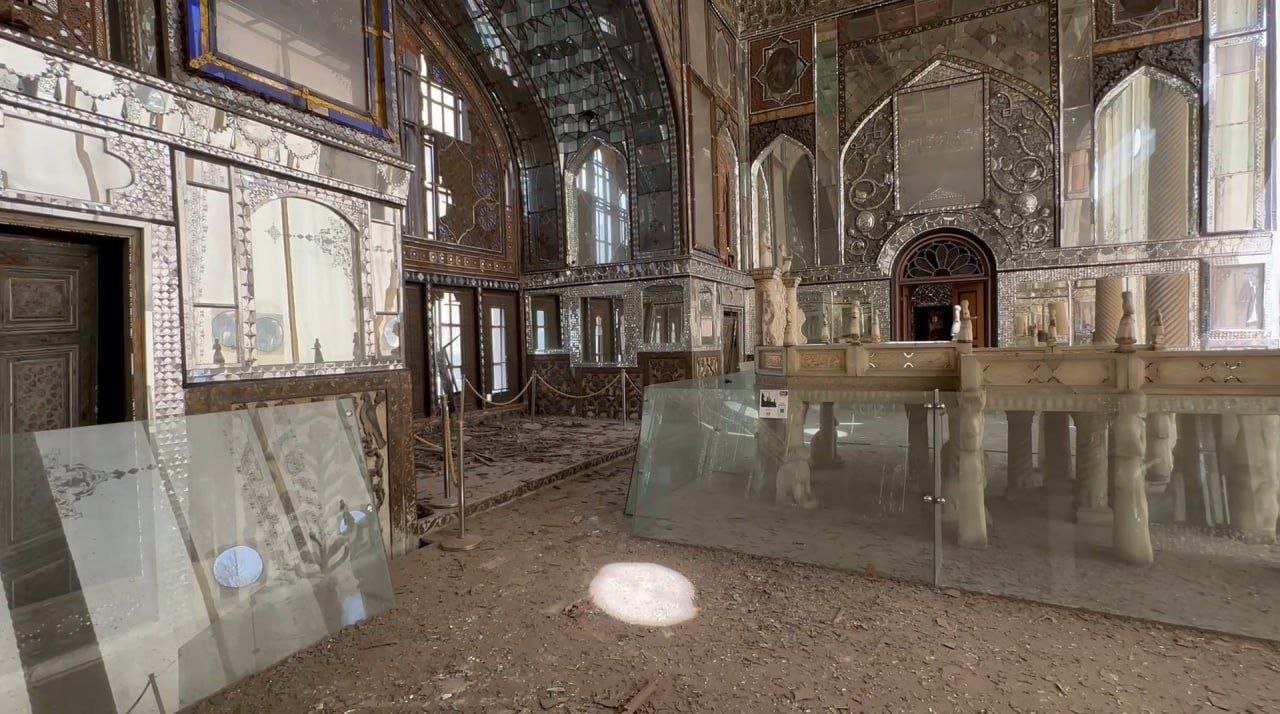
Ali Darabi, Iran’s Deputy Minister of Cultural Heritage, Tourism and Handicrafts, urged international organizations responsible for protecting cultural sites — foremost among them UNESCO — to fulfill their duties and responsibilities in safeguarding world heritage and cultural properties
The Qajar masterpiece and the "Versailles of the East"
The palace, once the headquarters of the Qajar Dynasty, is an artistic and architectural masterpiece, housing treasures of jewels, formal ceremony halls, walls decorated with intricate tiles, and niches engraved with images of birds and statues of princes.
Center of power and fusion of civilizations
Nasser al-Din Shah, who reigned from 1848 to 1896, was the first Iranian monarch to travel repeatedly to Europe, including a visit to Paris for the 1889 World Fair. Inspired by these journeys, he expanded the palace by adding new wings and galleries, and modeled an Iranian Hall of Mirrors after the Hall of Mirrors in Versailles, blending 18th-century French artistry with traditional Persian art.
After the fall of the Qajar era, the Pahlavi dynasty (1925–1979) demolished parts of the palace to make way for administrative buildings, shifting the political center to northern Tehran. Since then, Golestan has been used mainly for official receptions, most notably the coronation of the last Shah in 1967 in the famous Hall of Mirrors.
After the Islamic Revolution in 1979, the palace was fully closed and remained inaccessible until 1998, when it reopened to the public. Its historic significance was further recognized in 2013 when it was inscribed on the UNESCO World Heritage List, standing as an enduring symbol of Iranian identity.