

In Interludes and Transitions: Diriyah Biennale 2026 explores life in motion
From Riyadh to the world, artists and curators reflect on journeys, settlements, and the flows that shape human experience across time and place.



 Messenger
 Whatsapp
 Threads
 Email
Email
 Print
Print
 X
X
 Facebook
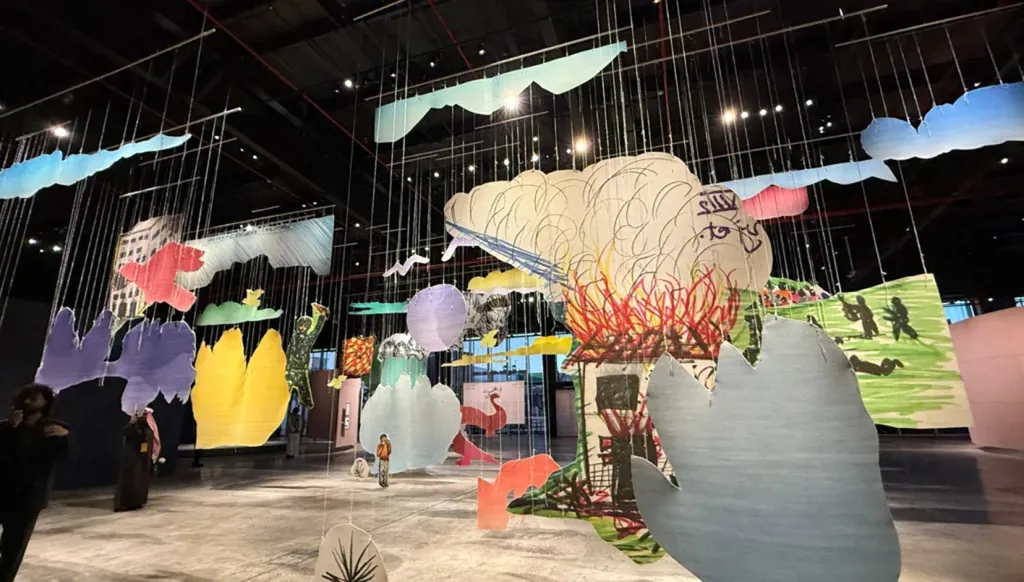


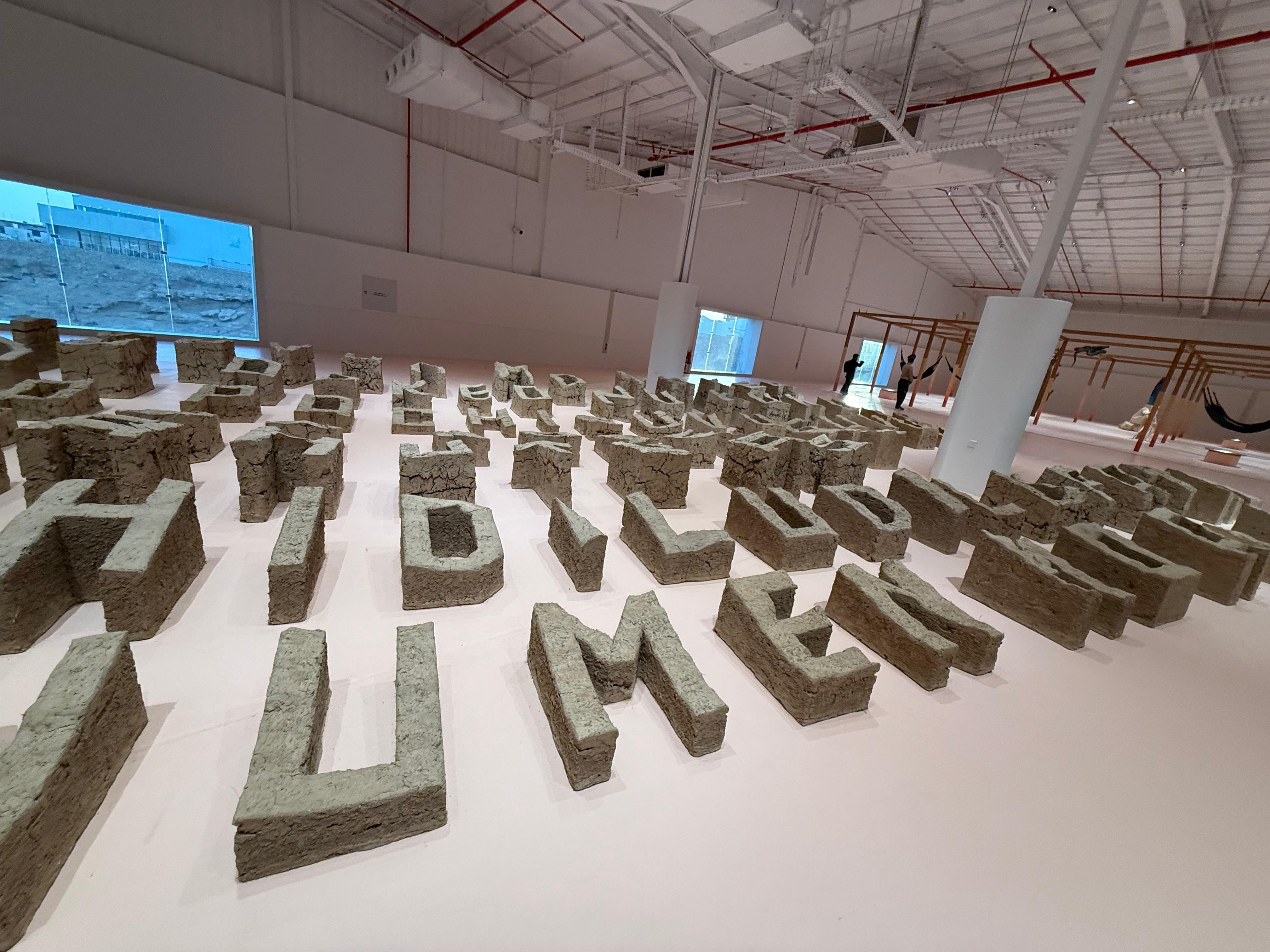
Interludes and Transitions (Fi al-hill wa al-tarhal) is not a passing title chosen by the Diriyah Contemporary Art Biennale 2026 to represent more than 65 artists from 37 countries. Rather, it is a conceptual framework that evokes movements, migrations, and transformations which, across the ages, have formed bridges between the Arabian Peninsula, its surroundings, and the wider world. These intersections have manifested in collective memory and history, as well as in vocabulary, songs, stories, and rhythms. Each artist offers a personal reading of this concept, through which Interludes and Transitions appears in multiple forms and expressions (an Arabic phrase referring to life both in settlement and in constant movement).
Annahar toured the biennale’s exhibition halls and the studios of the JAX Creative District in Diriyah, delving into the experience of this major artistic and cultural landmark, closely exploring the artworks, and conducting in-depth interviews with the artistic curators, participating artists, and studio owners who have turned this exhibition into a space for creativity.
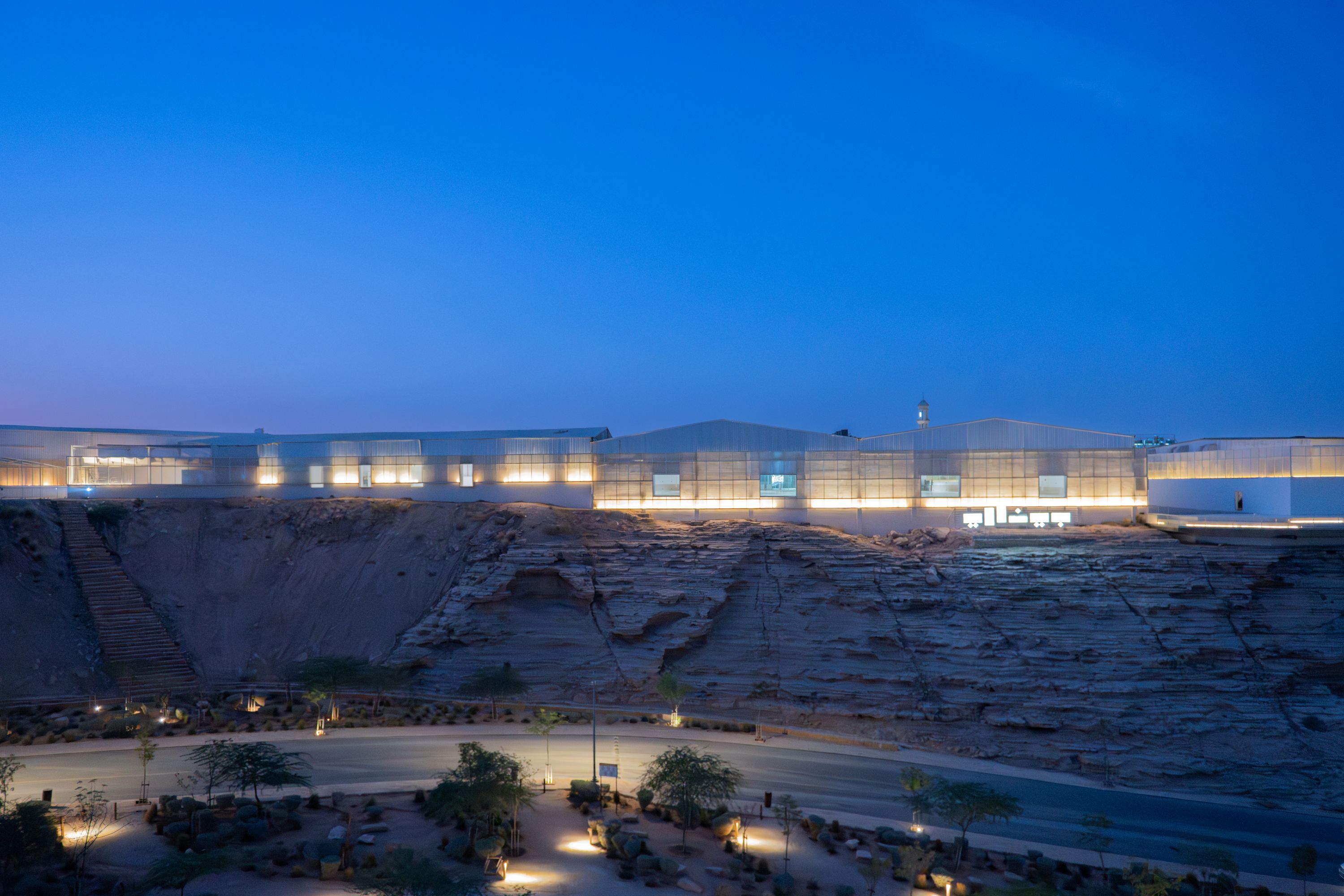
In a special interview with Annahar, the Artistic Director of the Diriyah Contemporary Art Biennale 2026, Sabih Ahmed, a cultural theorist and academic who currently serves as Projects Advisor at the Ishara Art Foundation in Dubai, explained that the title of the third edition, “In Interludes and Transitions,” refers to “journeys of nomadism and cycles of settlement and movement that have formed an essential part of the lives of many Bedouin communities in the region”.
The Artistic Director emphasized that the English title “In Interludes and Transitions” “is not a literal translation of the Arabic phrase, but rather a reference to cycles of travel and mobility that shape life today, not only in our present moment but also as forces that have shaped human life around the world for many centuries.”
He added: “What is meant here is to think about the world not through a geographical map, but through a choreography of multiple movements: the movement of goods, the movement of people, the movement of stories, and the movement of belief systems. These movements have historically converged at the crossroads of East and West, North and South, often through the Gulf region.”
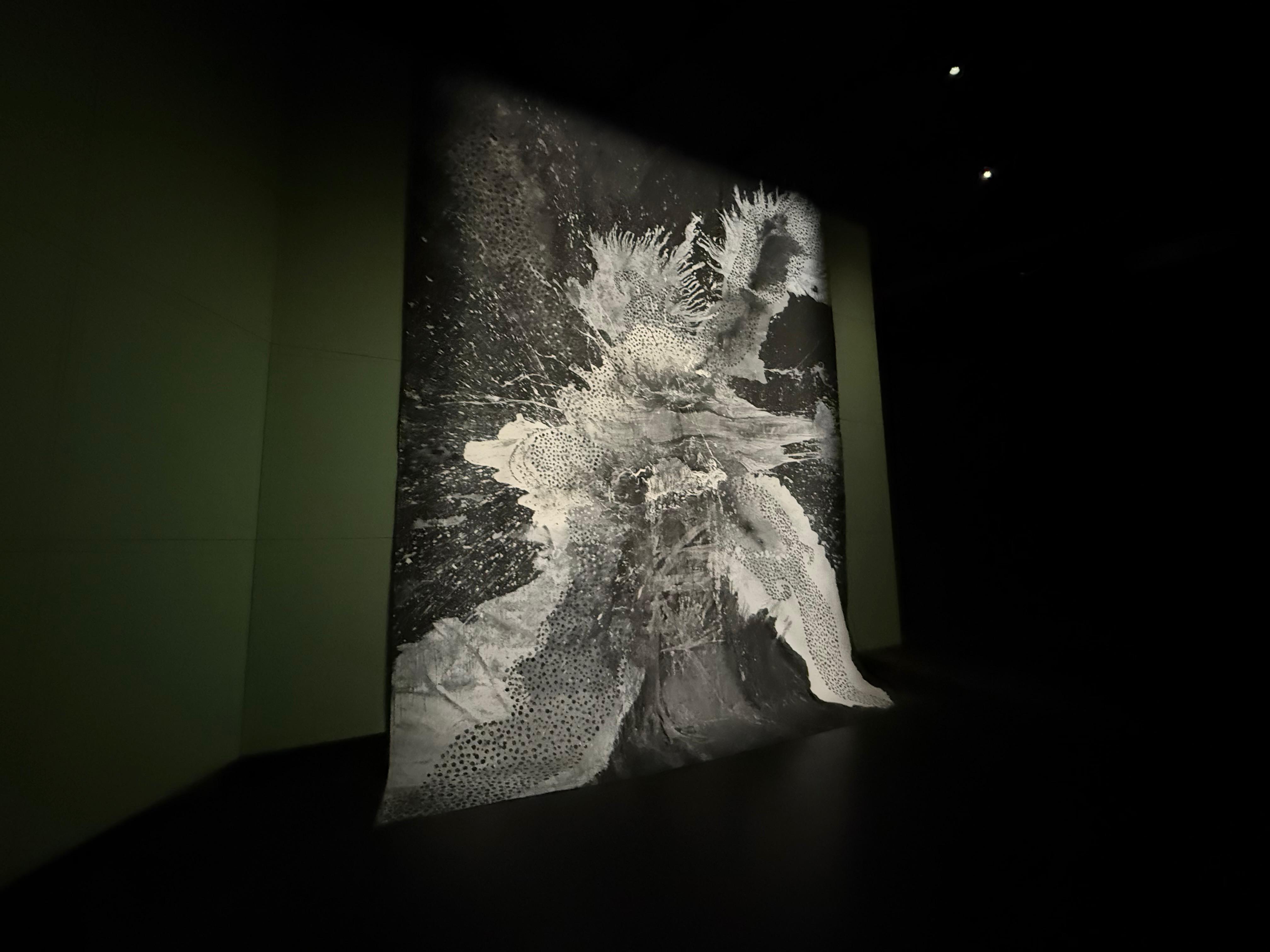
He pointed out that the curatorial work of the Biennale began by exploring multiple perspectives, focusing on how the world appears from here, rather than how this place appears to the world.
Diriyah Biennale 2026: Reading the World from Riyadh
For his part, the participating architect and exhibition designer, Sammy Zarka, emphasized that “this Biennale does not look at Riyadh from a global perspective so much as it seeks to read the world from the perspective of Riyadh today, through the diversity of the works presented and the variety of their styles and approaches.”
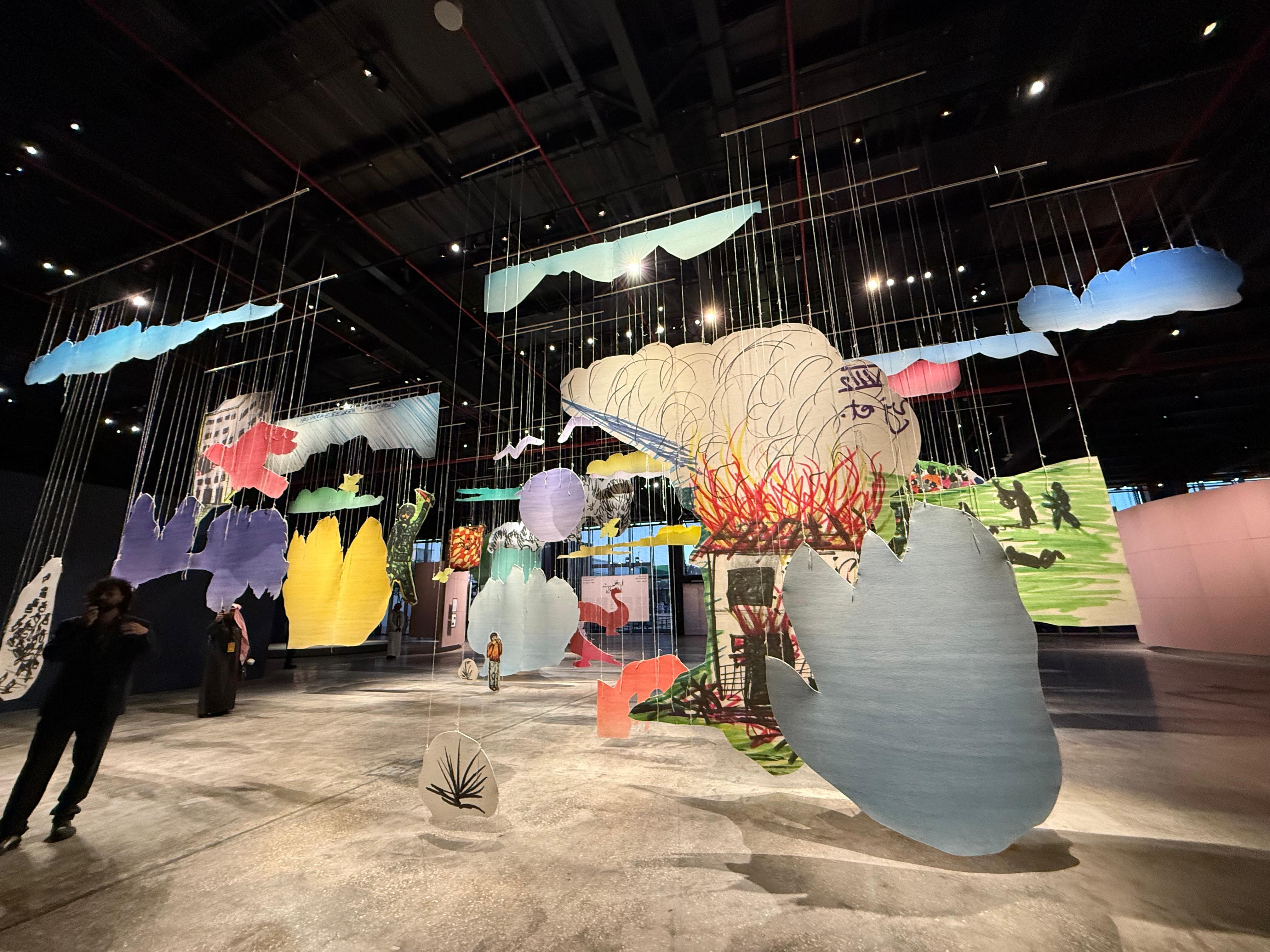
In this context, he highlighted the opening work in the first hall by Petrit Halilaj from Kosovo, in which the artist recalls his experience of displacement at the age of fourteen. The work creates a space that initially suggests walking through a calm and beautiful forest, before gradually revealing to viewers the harsh realities associated with the experience of displacement as lived by the artist.
Moath Alofi: “I Think I Am Completely Nomadic”
The works of Saudi artist and photographer Moath Alofi, who runs an art studio in the JAX District, clearly embody the concept of “In Interludes and Transitions”. Alofi is an explorer of Saudi Arabia and other regions around the world, gathering found objects and artistic materials that he later reinterprets in his exhibition through multiple media.
In this context, Alofi told Annahar: “I think I am completely nomadic. All my works, in order to reach a state of settlement, require actual travel. I go out to explore and collect the materials that will be used in the studio, and from there I later develop them into different works, whether video, photography, or various artistic media.”
Budoor Al Sudiri: Travel as a Journey of Knowledge
Among the participating studios in the Biennale, Misnad Studio stands out, contributing through two exhibitions that present diverse works combining local and international artists, with a clear focus on artistic experience and the artwork itself.
In a special interview with Annahar, the studio’s founder, Budoor Al Sudiri, explained that “the two exhibitions intersect with the concept of ‘In Interludes and Transitions’ through the content and the works presented by the artists. Here, travel is not merely movement, but a journey of discovering knowledge and skills, which are then reinterpreted into artworks, transforming them into shared icons in which artists participate together in their settlement and journeys.”