

Solh: Nancy Mounir bridges cultures through music
Blending historical recordings and live performance, the Egyptian artist explores music, rituals, and stories from cultures around the world.



 Messenger
 Whatsapp
 Threads
 Email
Email
 Print
Print
 X
X
 Facebook
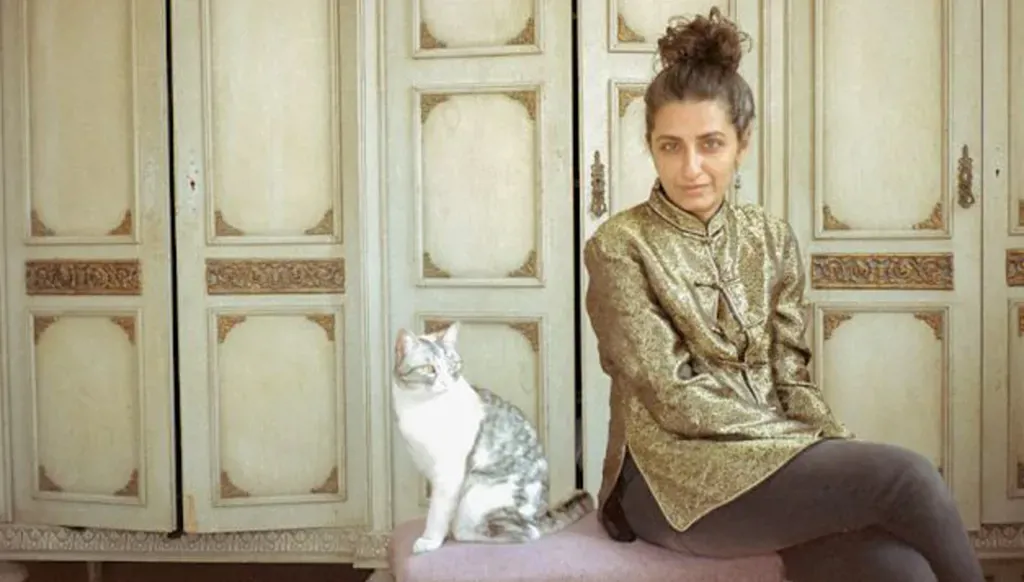


Egyptian artist Nancy Mounir continues to explore music across different civilizations, countries, and rituals around the world, offering a sound experience that combines archival recordings with live performance. This year, her work will be presented at the 2026 Diriyah Contemporary Art Biennale in its third edition, titled In Interludes and Transitions, through her musical project Solh.
She grew up in a musical family and began playing at her local church, where she discovered her passion for the harmonium. She plays a wide range of Western instruments, including violin, piano, bass, and theremin, alongside traditional instruments such as the kawala (Egyptian flute). She has also composed original music for theater, film, and various art installations.
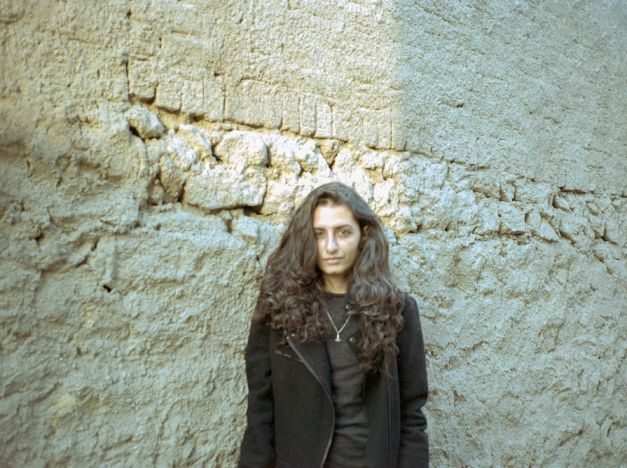
A sound experience combining archival recordings and live performance
Nancy embodied the Biennale’s theme through her work as a space for sonic experimentation and liberation from traditional constraints. The project combined archival recordings from diverse cultures and rituals with live musical performance, creating a unique artistic experience that takes visitors on a journey through the world’s varied sounds.
In an exclusive interview with Annahar, she described her Biennale piece, titled Solh, saying: “It is a sound installation resulting from archival research within a larger series that connects the works I engage with, which relate to microtonal music, archives, and the compositional possibilities that can emerge from them, and how these elements intersect with the Biennale’s overall concept.”
Regarding her participation, she explained: “This is my first time at the Diriyah Biennale, and I feel part of a group of artists who quickly meet and get to know each other, exchanging discussions and artistic ideas. During my tour of the Biennale, I felt that my work, alongside the other pieces, transforms into a single large work, carrying shared questions and concerns, and opening opportunities for future collaborations with other artists.”
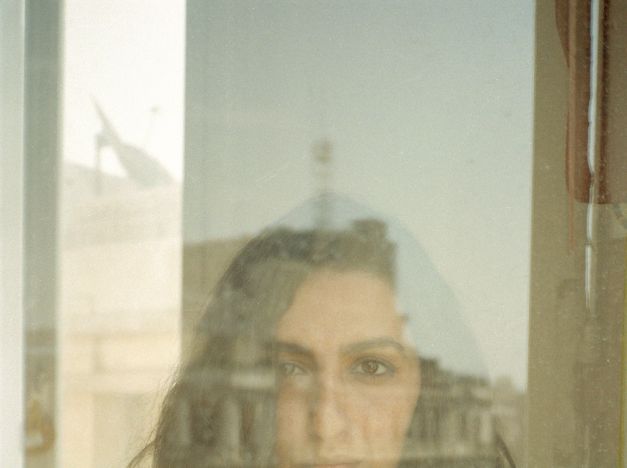
Musical research and the global archive
Nancy Mounir’s work includes numerous recordings from Morocco, South Africa, and Papua New Guinea, where people perform diverse rituals—funerary, healing, or songs during harvest. Mounir explains: “In this archive, singing occurs more as a ritual than as a performative display, which is why I was particularly interested in recordings from this context.”
Her multi-channel sound installation Solh—meaning “Reconciliation” in Arabic—expands the geographic scope of her research into microtonal music. The 1932 Cairo Congress of Arab Music attempted to standardize Arabic music under Western influences, reducing microtones to “quarter tones.” She views this shift as a loss of expressive richness and broad musical possibilities, according to the Biennale catalog description of her work.
The Egyptian artist also highlighted the central role of Ambisonic sound technology in the piece. It is based on the idea of a “sound choreography” within the space—how sounds from different countries and archives move, intersect, and interact within the space, creating dialogue and harmony, while allowing sounds from geographically distant locations to meet within a single environment.
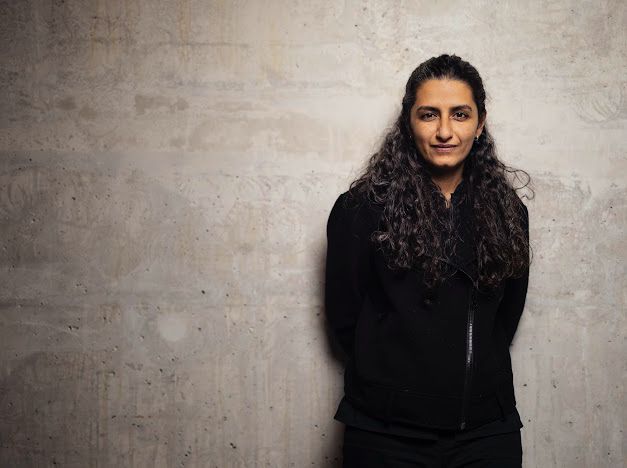
Project beginnings and the international commission
Nancy began the project through a commission from the Experimental Media and Performing Arts Center in New York, explaining: “They asked me about my work in 2017, when I was in South Africa working with director Laila Soliman on a theater production. I had the opportunity to explore the archive of the International Library of African Music and collect various materials.”
She added: “I had long been collecting this type of archive and owned a large collection, but I never intended to work on it artistically; the goal was simply to listen and learn.”
She noted that “this work would not have happened without questions related to microtonal music, which appear in previous works and are connected to songs from the 1920s and the Sīrat al-Hilālīya (an epic Arabic narrative). It is like continuing a path I am interested in, and I have great curiosity about this world.”
Musical collaboration and artistic direction
Nancy sees herself in this project as an “observer and listener,” conveying her experience of engaging with the archive. The work involved collaboration with classical musicians, including a string quartet, French horn, bassoon, and trumpet, while she played flute and theremin and directed the music.
She described the experience: “I was very happy to collaborate with the musicians; a harmony emerged between the archive elements and the participating musicians, and it was a deeply felt experience. I cannot define exactly what I want the audience to feel, but the work opens a space to share this experience with others.”