

INTERVIEW — Karim Sadjadpour: Iran Hardens Under Pressure as War Fails to Deliver Resolution
Despite military pressure, Tehran’s nuclear ambitions and regional network remain outside any settlement.



 Messenger
 Whatsapp
 Threads
 Email
Email
 Print
Print
 X
X
 Facebook
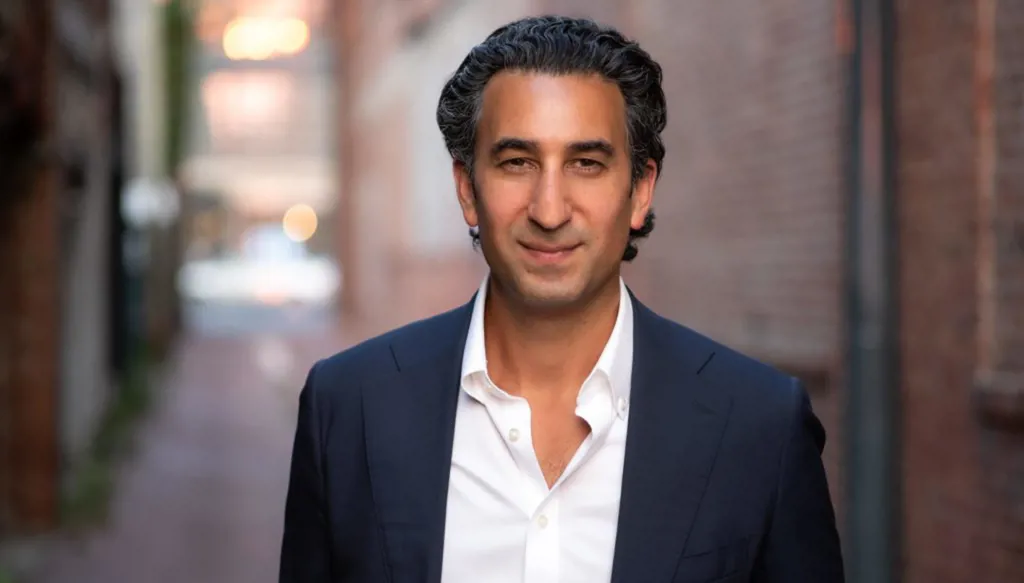


Iranian American researcher Karim Sadjadpour offers a different assessment of the trajectory and limits of the war, arguing that its dynamics are shaped not only by the battlefield but by the internal structure of Iran’s ruling system, where the “1979 vision” continues to dominate despite the absence of its longtime architect.
In an interview with Annahar, Sadjadpour said Iran is not collapsing but undergoing a prolonged transitional phase that may not yield a new strongman, instead producing a more hardened and less stable system. He highlighted a central paradox: Gulf states build influence on stability, while Tehran derives power from instability.
The war, he said, is neither open-ended nor likely to produce a comprehensive settlement. Even if fighting subsides in the near term, core issues — including Iran’s nuclear program, missile capabilities and regional proxies — are unlikely to be resolved.
Ultimately, the conflict will be shaped by pragmatic factors such as oil prices, U.S. public opinion and the military capabilities of each side, alongside a less quantifiable element: a regime whose definition of victory is survival.
Annahar's exclusive interview with Sadjadpour can be found below.
Following the death of Ali Khamenei and the scale of leadership losses, is Iran today operating under a coherent leadership, or are we witnessing a fragmented power structure behind the scenes?
I think the regime still has a coherent ideology—what I call Vision 1979—but the power vacuum left by Ayatollah Khamenei’s death could take years to fill. If Khamenei were alive today, he would have the power and legitimacy to sign a compromise deal with Trump. As of now it’s not clear whether any current Iranian leader has the legitimacy or the will to do anything other than continue to escalate.
Mojtaba Khamenei has taken over under extreme pressure. In your view, is he a consolidating leader, or a transitional figure?
To paraphrase Ibn Khaldun, the first generation builds, the second generation consolidates, and the third generation squanders. Mojtaba is the Islamic Republic’s third generation Supreme Leader, and so far he has shown no signs that he will emerge as a powerful figure. I think he will prove to be more of a transitional figure than Iran’s next powerful strongman, like his father.
In this context, who truly holds decision-making power in Iran today: the Supreme Leader, the IRGC, or a broader internal coalition?
The inner workings of the regime are a black box for us at the moment. The state of Mojtaba’s physical and mental health is unclear. If he’s alive—I have been told that he is alive--he’s in hiding. Likewise, the senior leadership that hasn’t been killed by Israel must live in fear of being killed or having their communications penetrated by the US and Israel.
The IRGC are 150,000 men who hold somewhat diverse views. I wouldn’t describe any of them as democrats, but some would perhaps like Iran to behave more like a nation than a cause. The men who are thought to be Mojtaba’s closest advisors—including Ghalibaf, Vahidi, Taeb, and Zolqadr—each have decades of experience in repression, which will be needed for the regime to continue to stay in power.
After the targeted strikes and internal pressures, is the Iranian regime more vulnerable, or more likely to become even more hardline and closed?
I think the answer is all the above. It’s more vulnerable to external attack given it doesn’t control its airspace. It will be forced to be even more brutal given its lack of popular support and legitimacy. Its internal communications are penetrated by Israeli intelligence, and given profound popular discontent there are widespread concerns about espionage operations even deep within the regime.
Given the recent internal unrest, is this war strengthening the regime’s internal control, or does it risk creating new space for dissent inside Iran?
In the immediate term I think the regime is willing to continue to kill tens of thousands of people, as they reportedly did last January, to stay in power. At some point we will surely see popular protests in Iran again, but for now it appears the population is traumatized by being trapped between two hells, a cruel dictatorship and a ruinous war.
Do the United States and Israel share the same endgame in this war, or are we seeing two parallel strategies under one military campaign?
I think Israel and the US share the same ideal endgame, which is an Iran whose organizing principle is its own national interests and prosperity, not a revolutionary regime whose official slogans are Death to America and Death to Israel. But the discussion is no longer what is ideal, but what is a realistic near-term endgame. Given the US and Israel perceive the threat from Iran differently, their goals are naturally somewhat different.
Israel sees the Islamic Republic like Nazi Germany, a deeply dangerous, antisemitic regime whose professed goal for nearly five decades has been the elimination of Israel. Before October 7, 2023, they were willing to play defense against Iran, but since then they’ve chose to play offense against Iran and its regional proxies. Turning Iran into a failed state is not Israel’s idea outcome, but it is a preferable outcome to keeping the regime intact, angry, and committed to rebuilding to fight another day.
For the U.S, on the other hand, the Islamic Republic is thousands of miles away and viewed as a threat, but not an existential one. Trump was hoping to turn Iran from an adversary into a partner, as he believes was the vase in Venezuela, but even absent that outcome Trump can openly contemplate ending the war. What’s more, for Trump spending upwards of $30b to turn Iran into a failed state is not an acceptable political outcome.
Are we still in a contained conflict, or at the beginning of a broader regional war involving Gulf states more directly?
We’re not in a contained conflict. The Islamic Republic threatened to regionalize the war, and they made good on their promise. Every Gulf state has been attacked; the UAE alone has been on the receiving end of over 2200 Iranian missiles and drones. The challenge that Gulf states face is that their success requires stability, while the Islamic Republic benefits from instability. This asymmetry favors Iran, as building things takes decades, while destroying things takes weeks.
Is Iran’s use of the Strait of Hormuz and surrounding strategic assets a real escalation strategy, or a calibrated pressure tool to force negotiations?
Just as Trump’s stated objective from the outset of the war—to bring down the regime—was not calibrated, Tehran’s decision to prevent ships from passing through the Strait of Hormuz was not calibrated, it was a 10/10 escalation.
It is both a serious escalation and a source of leverage to spike the price of oil, sabotage American public support for the war, and try to force Trump to end the war.
With conflicting signals around negotiations, how should we read this moment: are we moving toward a real deal, or simply in a tactical pause within a longer war?
At some point in the not-too-distant future this hot war will conclude. Both Trump and Tehran want to see it conclude, but there are no signs it will lead to a resolution on the main issues of contention, namely Iran’s nuclear and missile programs or its regional proxies. What’s more, I believe the 47-year ideological war between America and Iran will continue so long as the Islamic Republic is in power. Resistance to America and Israel is an inextricable part of this regime’s identity.
How do the Iranian and American conditions compare at this stage, and who currently holds the stronger negotiating leverage?
I think there are three somewhat quantifiable metrics and one unquantifiable metric that will determine the fate of the war. The quantifiable metrics are the price of oil and American public opinion—which are directly correlated—as well as the number of projectiles that each side has left. American public support for the war will only decrease the longer the war continues, especially if gasoline prices continue to trend upward.
Militarily Iran is dominated by the U.S. and Israel. It doesn’t control its own airspace. As of yet, however, we haven’t been visible cracks in the regime’s resolve or the cohesion of its security forces. Tehran’s asymmetric advantage is that it has contempt for its own public opinion, and it believe it “wins” by simply surviving.
In this evolving landscape, is Lebanon still a strategic asset for Iran, or has it become a pressure point that could backfire on Tehran?
Iran has never cared about the well-being of Lebanon or Lebanese. The regime in Iran has been chanting “Death to Israel” for decades, I’ve never heard them say “Long live Lebanon.” Just as they’re willing to see Iran destroyed rather than give up power, they’ve consistently shown themselves willing to see Lebanon destroyed to fight Israel.
The relationship between Iran and Hezbollah began as a love affair between two Shia communities but it now resembles an exploitative love affair: Hezbollah loves Iran for its money, Iran loves Hezbollah for its body, its strategic location on Israel’s border.
Beyond the Strait of Hormuz, are we entering a broader phase of economic warfare, including maritime disruption from the Gulf to the Red Sea, and how might that reshape global markets and political pressure on all sides?
Once this current conflict comes to an end, Gulf countries will be forced to think about how to logistically export their energy resources without being held hostage to Iran and its proxies. And countries around the world will think harder about how to diversify their energy consumption to rely less on oil and natural gas.