

Region
27-03-2026 | 08:24
Trump delays Strait of Hormuz deadline as Wall Street has biggest loss of war
Trump delays strike on Iran and extends Hormuz deadline to April 6, citing progress in talks despite rising tensions and ongoing war.



 Messenger
 Whatsapp
 Threads
 Email
Email
 Print
Print
 X
X
 Facebook
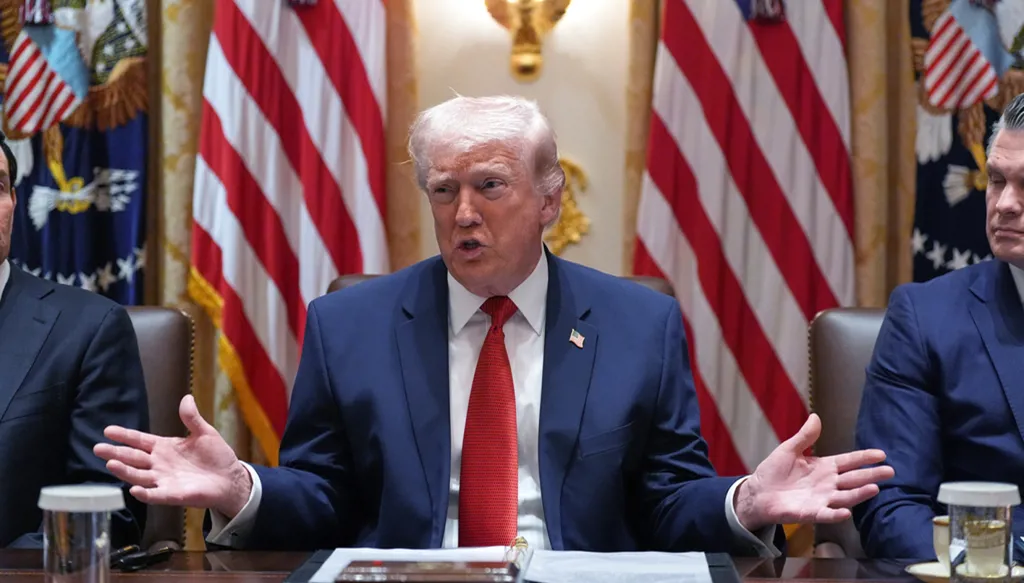


U.S. President Donald Trump said Thursday he will delay a threatened strike on Iran’s energy infrastructure and extend his deadline for Tehran to reopen the Strait of Hormuz until April 6, saying talks to end the war are “going very well.”
The move marks a pullback from Trump’s earlier warning that the U.S. would target Iran’s energy plants if the crucial shipping lane remained closed. Iran has threatened to retaliate against regional infrastructure, including desalination facilities, if the U.S. follows through.
A day after Tehran dismissed Trump’s 15-point ceasefire plan, the president said Iran was “begging to make a deal” and urged its leaders to “get serious soon” about negotiations.
Trump’s announcement on social media came after U.S. stocks fell sharply and oil prices rose, as doubt took over again on Wall Street about a possible end to the war.
The war has killed more than 1,900 people in Iran and nearly 1,100 in Lebanon. Eighteen people have died in Israel, while three Israeli soldiers have also been killed in Lebanon. Thirteen U.S. military members have died, as well as a number of civilians on land and sea in the Gulf region. Millions of people in Lebanon and Iran have been displaced.
UN Security Council to hold closed meeting on Iran
The U.N. Security Council scheduled closed consultation on Iran on Friday morning.
Russia asked for the meeting on U.S.-Israeli attacks on civilian infrastructure in the country, two U.N. diplomats said, speaking late Thursday on condition of anonymity because the meeting is not public.
The United States, which holds the Security Council presidency, scheduled the meeting.
Iran sends letter to UN over threats against Araghchi and Qalibaf
Iran sent a letter to the United Nations over claims that the country’s foreign minister and parliament speaker had been “targets for assassination.”
The letter, dated Thursday and signed by Ambassador Amir Saeid Iravani, focused on media reports that Foreign Minister Abbas Araghchi and Speaker Mohammad Bagher Qalibaf both had been spared for the time being by Israel and the U.S. as negotiations to reach a ceasefire in the war go on.
“The reports indicate the existence of an operational framework contemplating the assassination of the highest-ranking political officials of the Islamic Republic of Iran,” the letter reads.
It added “The conditional nature of the purported ‘suspension’ further underscores that the threat remains real, deliberate and ongoing.”
The letter called any such program “state-sponsored terrorism.”
The war’s opening airstrikes by Israel killed Supreme Leader Ayatollah Ali Khamenei. Other military commanders have been killed as well.
Qalibaf has been considered as a possible negotiating partner to the U.S., while Araghchi has continued diplomatic outreach.
Pakistan is leading an indirect exchange of positions between Tehran and Washington, supported by Egypt and Turkey.