

DIFC to become world’s first AI Native financial centre
The Dubai International Financial Centre said it will become the world’s first AI-native financial center, embedding AI across its legal, regulatory, business and physical infrastructure to drive $3.5 billion in economic impact and create 25,000 jobs.



 Messenger
 Whatsapp
 Threads
 Email
Email
 Print
Print
 X
X
 Facebook
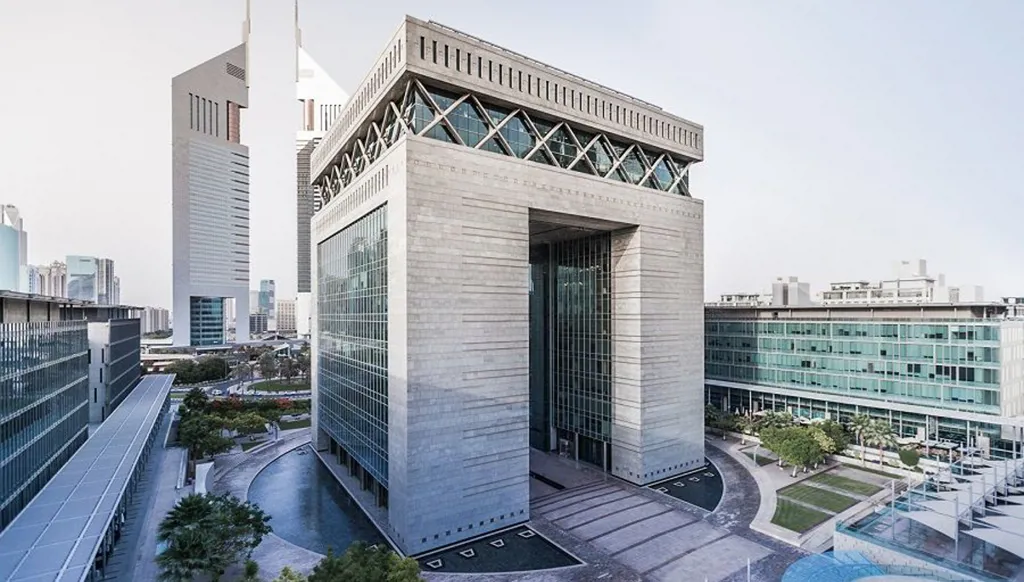


The Dubai International Financial Centre on Tuesday announced it will become the world’s first AI-native financial center, embedding artificial intelligence at a foundational level across its legal frameworks, business environment, talent development, ecosystem infrastructure and physical urban fabric.
While many global financial centers are experimenting with artificial intelligence, DIFC said it is taking a fundamentally different approach. As part of this ambition, DIFC will evolve into an AI-native jurisdiction and destination where artificial intelligence is embedded across legal and regulatory frameworks, business operations, talent development systems, ecosystem infrastructure and the district’s physical environment. Rather than piloting AI at the margins, DIFC said it intends to integrate it into the core operating system of the center.
DIFC said it laid the foundation for AI integration in 2023 by introducing a five-year AI strategy. Data governance policies were established and AI was incorporated as Regulation 10 under the DIFC Data Protection Law. The center has also introduced AI to support client compliance and relationship management.
Through the initiative, DIFC said it is positioned to become an AI role model for the finance industry. Its AI-native program is expected to generate $3.5 billion (AED12.9 billion) in economic benefits and create 25,000 jobs. DIFC said it has an advantage in speed to implementation due to fewer legacy constraints than traditional financial centers.
Operating at scale across sectors, with clients offering a broad range of services, DIFC said it aims to become a global benchmark for AI adoption among leading financial centers.
DIFC said it will provide financial firms with access to advanced AI tools to support operations and plans to export AI governance software and trained talent to the Global South. The jurisdiction will also integrate physical AI, including robotics, autonomous mobility and digital twins, with financial laws and regulation. It said it will be the first financial center to offer a full-stack AI campus combining regulation, training, compute and physical AI.
Essa Kazim, governor of DIFC, said the move “marks a defining step in Dubai’s ascent as a global capital for the future of finance.” He said the initiative reinforces Dubai’s role in setting standards for innovation, trust and competitiveness and aligns with the Dubai Economic Agenda D33.
Arif Amiri, chief executive of DIFC Authority, said the initiative “is not about experimenting with AI at the edges” but embedding it across legal frameworks, regulatory systems, talent development and infrastructure. He said DIFC aims to set a global benchmark for AI governance while delivering economic value and job creation.
Within its legal and regulatory architecture, DIFC said it will establish ethics and governance frameworks addressing both human activity and AI agents and robotics. Across business operations, AI will be embedded into enterprise workflows, compliance systems and financial services delivery.
DIFC said it aims to become a leading global destination for AI-in-finance companies, targeting growth in startup density, venture capital funding and unicorn creation.
To support talent development, DIFC said it will build capabilities for large-scale human-AI-robot collaboration through executive education, regulatory training and technical certification.
Its ecosystem infrastructure will support innovation through hubs, accelerators, venture platforms and partnerships, including AI training programs for local, regional and global talent.
DIFC Authority employees are already supported by specialized AI agents, with further adoption planned to enhance productivity, governance and decision-making.
By 2030, DIFC said a significant portion of the district will feature intelligent buildings, autonomous mobility, service robotics, digital twins and smart utilities, forming a sensor-enabled “city within a city.” Thousands of sensors will be introduced as part of the system.
The center said AI efficiencies are also expected to reduce energy use, with some maintenance and security functions handled by robots.
DIFC cited Dubai’s pro-innovation policies, digital infrastructure, regulatory flexibility and global connectivity as key enablers. The center serves as a financial hub for the Middle East, Africa and South Asia, hosting thousands of companies across banking, asset management, fintech and professional services.
Aligned with Dubai’s AI strategy and the UAE’s broader technology ambitions, DIFC said it aims to translate research into regulation and innovation into deployment at scale.
Its efforts will also be highlighted at the Dubai AI Festival 2026, to be held at Dubai World Trade Centre on Oct. 26-27, 2026, with more than 20,000 participants expected from over 100 countries.