

Navigating uncertainty: Gulf economies hold steady
Financial reserves, energy wealth, and economic diversification give Gulf countries the tools to stay resilient amid regional and global crises.



 Messenger
 Whatsapp
 Threads
 Email
Email
 Print
Print
 X
X
 Facebook
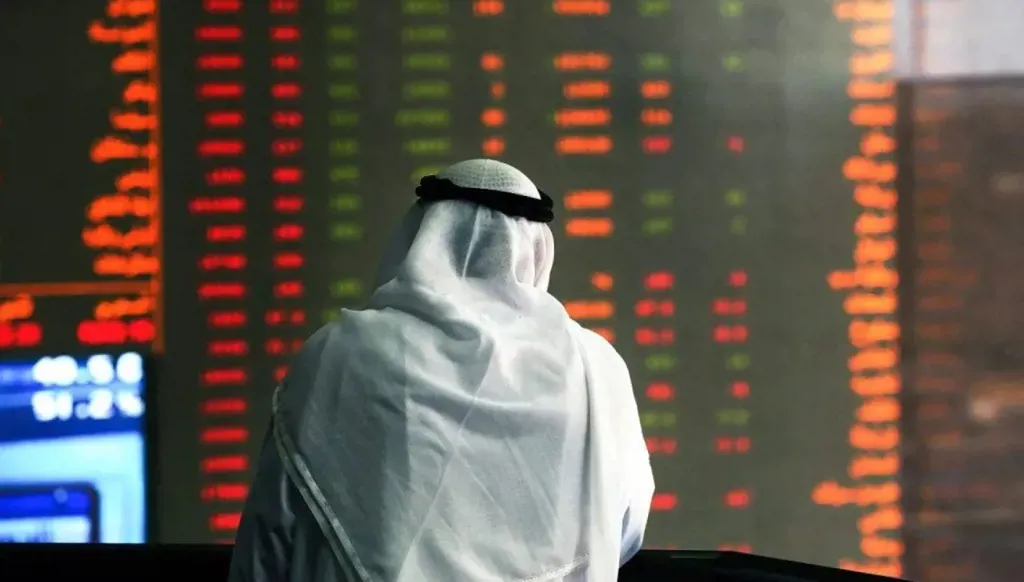


When wars break out in the Middle East, global economic concern quickly turns to the Arabian Gulf. This region is not only geographically close to the hotspots, but it also represents one of the most important hubs of the global economy, due to its central role in energy and trade markets. A look at the Strait of Hormuz alone illustrates this importance. The strait, which connects the Gulf to the Gulf of Oman, sees about 20 million barrels of oil pass through daily, roughly one-fifth of the world’s oil consumption, in addition to about 20 percent of global liquefied natural gas trade. Any military escalation in its vicinity immediately affects energy prices and international financial markets.
The paradox, however, is that Gulf economies so far appear to be relatively more stable compared to many other regional economies and even some global economies that rely on imported energy. This stability does not mean that Gulf countries are immune to risks; rather, it reflects the accumulation of economic and financial strengths over past decades, which have made them more capable of absorbing shocks.
One of the most important of these strengths is the growing size of Gulf economies. Today, the combined GDP of the Gulf Cooperation Council states is approximately 2.5 trillion dollars, making it one of the largest economic blocs in the world. The bulk of this output comes from two main economies: Saudi Arabia and the United Arab Emirates. Saudi Arabia’s economy approaches 1.3 trillion dollars, while the UAE’s economy is around 600 billion dollars. The rest of the Gulf economies are distributed as follows: Qatar about 240 billion dollars, Kuwait about 160 billion dollars, Oman about 110 billion dollars, and Bahrain about 50 billion dollars.
Economic strength in the Gulf is not limited to size. It also extends to the massive financial wealth these countries have accumulated abroad. Gulf sovereign wealth funds are among the largest in the world, with assets estimated at around five trillion dollars. The Abu Dhabi Investment Authority is one of the largest, with assets of nearly one trillion dollars, while Saudi Arabia’s Public Investment Fund is estimated at around 913 billion dollars.
In addition to this investment wealth, Gulf central banks hold large financial reserves that provide an additional layer of economic protection. Saudi Arabia holds 400 to 415 billion dollars in net foreign assets, the UAE 275 to 280 billion dollars, Qatar 35 to 40 billion dollars, Kuwait 35 to 40 billion dollars, Oman 18 to 20 billion dollars, and Bahrain 4 to 5 billion dollars. These financial resources give governments significant capacity to intervene in support of the economy or banking system whenever markets face turbulence.
Public debt levels in most Gulf countries remain relatively low compared to many advanced economies. Public debt in Saudi Arabia is around one-third of GDP, similar in the UAE, and relatively low in Kuwait. In Qatar and Oman, it ranges from 40 to 45 percent of GDP, with a notable exception in Bahrain, where public debt exceeds 100 percent of GDP.
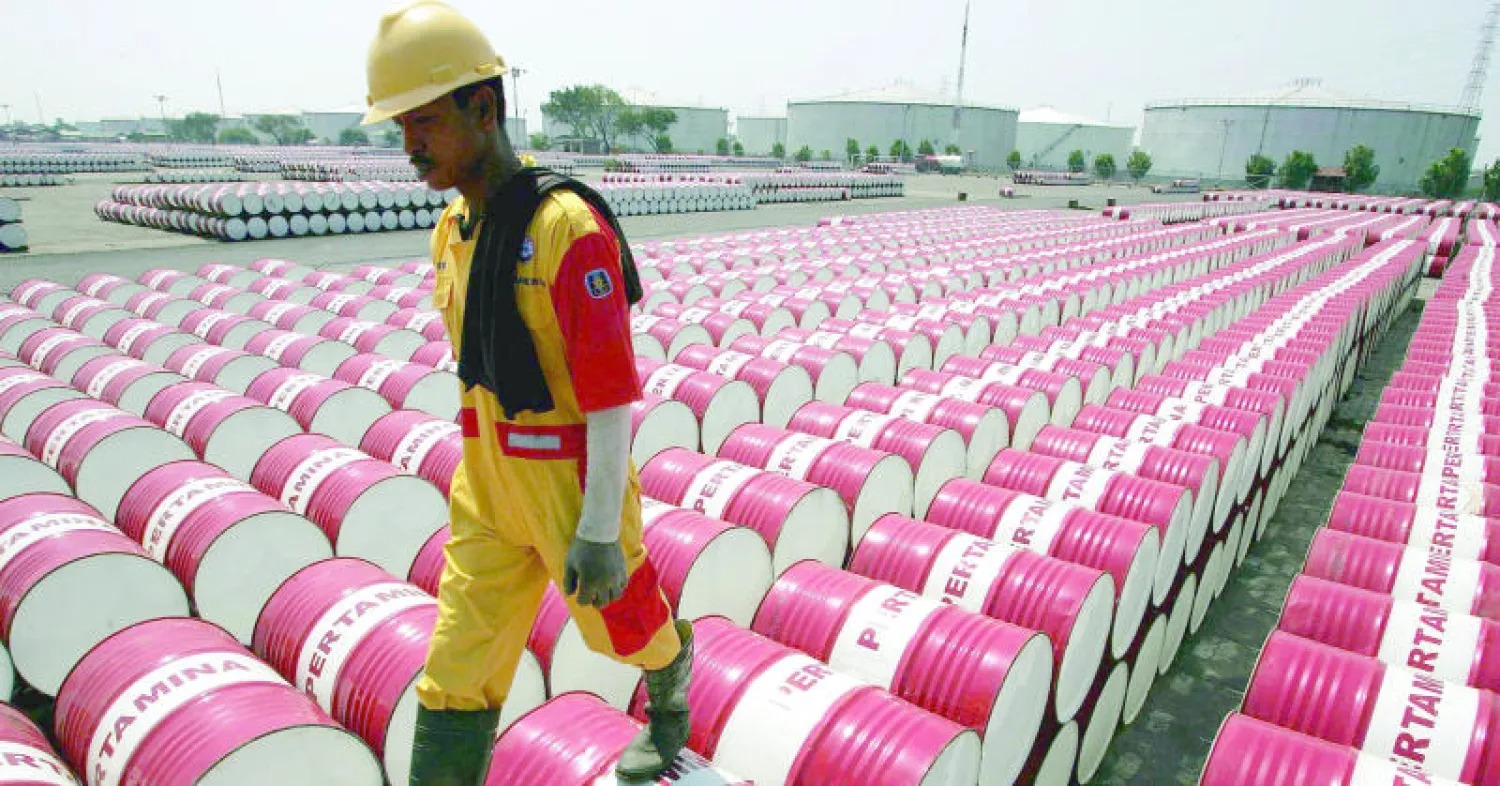
The most paradoxical factor in this equation remains oil itself. Wars in the Middle East often lead to higher oil prices due to fears of supply disruptions. Under normal conditions, Gulf countries collectively produce about 20 million barrels of oil per day, roughly one-fifth of global output. They also hold massive oil reserves estimated at around 500 billion barrels, about one-third of the world’s total reserves.
However, the Gulf’s economic strength today no longer depends solely on oil as it once did. More than a decade ago, most Gulf Cooperation Council countries began implementing broad programs to diversify their economies. Saudi Arabia launched “Vision 2030,” aiming to develop tourism, industry, technology, and logistics sectors, while the UAE has successfully built an economy heavily based on trade, financial services, tourism, and aviation.
These policies are starting to pay off steadily. Today, the non-oil economy represents more than half of Saudi Arabia’s economy and roughly 70 to 75 percent of the UAE’s economy. International institutions estimate that Gulf economies grew by about 3.2 percent in 2025, with growth potentially rising to 4.5 percent in 2026, driven increasingly by non-oil sectors.
The Gulf’s energy infrastructure also provides a degree of flexibility against geopolitical risks. Saudi Arabia has the East-West pipeline, which can transport up to seven million barrels per day to the Red Sea, allowing much of its oil to bypass the Strait of Hormuz. Similarly, the UAE has the Habshan-Fujairah pipeline, with a capacity of about 1.5 million barrels per day, transporting oil directly to the Arabian Sea.
The Gulf’s role is not limited to oil. It is also central to the liquefied natural gas market. Qatar is one of the world’s largest LNG exporters, currently shipping around 77 million tons per year, with production expected to rise to 126 million tons annually by 2027, making it the largest LNG exporter globally.
Still, Gulf economies are not completely immune to the consequences of war. Military conflicts affect several sectors, particularly aviation, tourism, and maritime trade. The region’s tourism sector generates around 367 billion dollars annually, and the Gulf has become a global hub for air transport. For example, Dubai International Airport handled about 92.3 million passengers in 2024.
In conclusion, the apparent stability of Gulf economies during the current war is not absolute. It is the result of their financial and economic capacity to absorb shocks. Large sovereign wealth, financial reserves, high energy revenues, and progress in economic diversification all provide these countries with the ability to withstand crises.