

UAE–India trade set to hit $200 Billion by 2032: A strategic investment opportunity
Strong governance, zero income tax, and major economic partnerships make the UAE a hub for growth and cross-border investments.



 Messenger
 Whatsapp
 Threads
 Email
Email
 Print
Print
 X
X
 Facebook
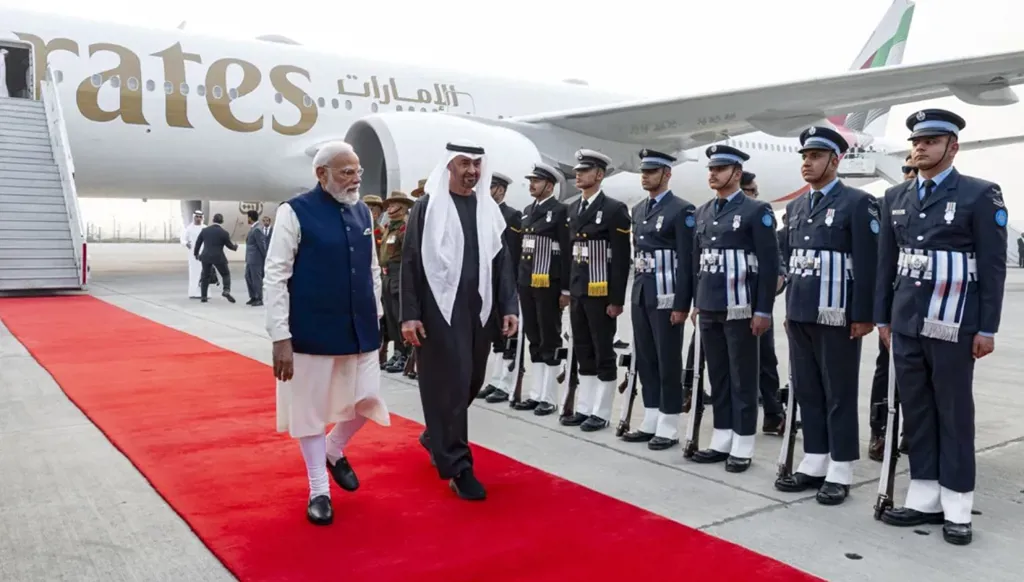


The UAE and India aim to increase their trade volume to around $200 billion by 2032 as part of a growing economic partnership. This reflects the transformation of their relationship from traditional cooperation to a strategic model of integration in trade, investment, and technology. How will this be achieved?
Dr. Sultan Ahmed Al Jaber, Minister of Industry and Advanced Technology and Managing Director and CEO of ADNOC and its Group of Companies, stated in a press interview that the UAE made a strategic decision decades ago to build an open economy. He emphasized that, "in an era where barriers and walls are being constructed, the UAE’s message is clear: building gateways for the world to cross into the future." He added that the UAE offers investors and partners numerous advantages, including credibility, reliability, stability, consistency, strong institutional governance, the rule of law, and stable returns.
Al Jaber added that over the past three years, the UAE has signed 35 comprehensive economic partnership agreements, the first of which was with India. Last year, the country attracted more than $45 billion in foreign direct investment.
He pointed out that India is the primary market for liquefied natural gas produced by the UAE. ADNOC is the largest trusted supplier of liquefied petroleum gas, crude oil, chemicals, and raw materials to India, the world’s third-largest energy consumer. Energy demand there is driven by three main trends: the rise of emerging markets, the extraordinary growth of artificial intelligence, and a qualitative shift in the energy ecosystem.
Al Jaber continued, "With the UAE and India set to double their bilateral trade volume to $200 billion by 2032, the two countries are poised to strengthen their solid and reliable partnership, based on firm principles."
How will the UAE and India double their trade volume?
In the 2025 fiscal year, trade volume between the UAE and India reached $100 billion. The two sides signed a Comprehensive Economic Partnership Agreement in 2022, which led to a 20.5% increase in the UAE’s non-oil trade with India, reaching more than AED 240 billion in 2024, compared to AED 199.3 billion in 2023. This reflects the promising investment and trade opportunities between the two countries, with India being the top destination for the UAE’s non-oil exports.
India is the UAE’s second-largest trading partner, accounting for around 9% of the UAE’s total trade and 14% of its non-oil exports as of September 2025, according to the India Brand Equity Foundation, supported by India’s Ministry of Commerce.
In the 2025 fiscal year, the UAE was India’s third-largest trading partner after the United States and China, with around 3.5 million Indian expatriates living in the country.
Amr Wahib, a market expert, board member of Kaizen Financial Consultations, and an investor in the UAE market, told Annahar that the relationship between the UAE and India is not newly formed but rather a longstanding one that predates the discovery of oil in the UAE. Therefore, he said, it is natural for the UAE to work toward increasing trade with India to $200 billion by 2032.
The market expert added that the UAE chose India for its large and rapidly growing market, as well as its strong workforce and logistical integration. To achieve this goal, bilateral trade between the two countries reached approximately $100 billion in 2024–2025, driven by the Comprehensive Economic Partnership Agreement (CEPA), which eliminated duties on 80% of goods. The plan focuses on strengthening supply chains, cross-border investments, and expanding digital and logistical services, alongside robust growth in food, pharmaceuticals, and electronics. Logistical integration includes projects like "Dholera" in Gujarat—covering an airport, port, and smart city—which attract UAE sovereign funds.
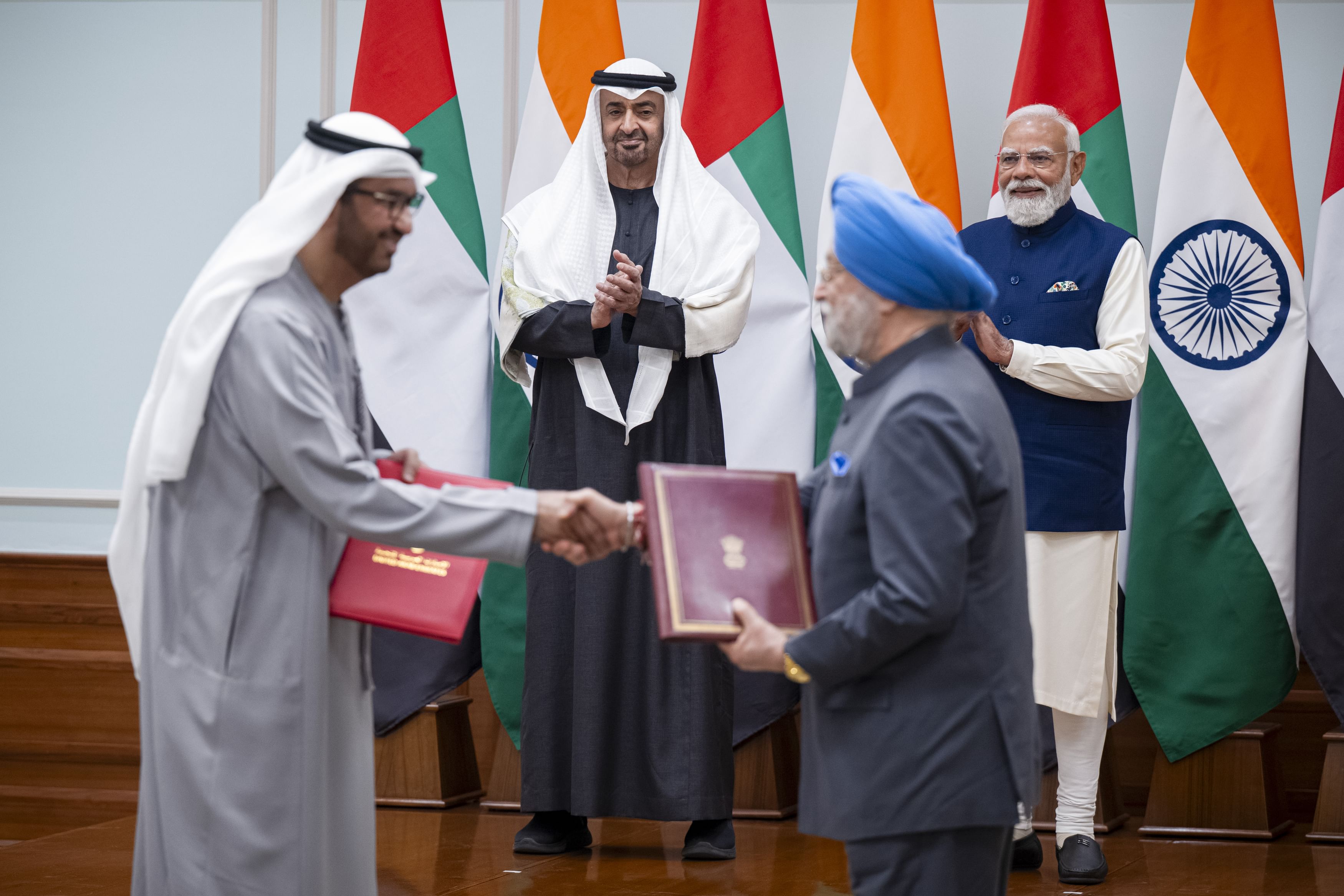
He noted the signing of a ‘Major Partnership’ agreement in January 2026, which includes investment in the Dholera Special Investment Region to develop an international airport, an aircraft maintenance and overhaul facility, a railway linkage, and a pilot training school. The agreement was signed during a bilateral meeting between Indian Prime Minister Narendra Modi and UAE President Sheikh Mohamed bin Zayed Al Nahyan in January 2026.
On the energy front, Wahib highlighted ADNOC Gas’s agreement to export 500,000 metric tons of liquefied gas annually to Hindustan Petroleum for ten years, describing it as a ‘long-term contract’ starting in 2028. According to ADNOC, the value of the liquefied gas contract with India ranges from $2.5 to $3 billion.
With this agreement, the total value of contracts managed and supported by ADNOC Gas rises to AED 73.45 billion (approximately $20 billion). India is currently the company’s largest customer and a key pillar of its liquefied natural gas strategy. The growth of ADNOC Gas’s business is closely tied to India’s success and progress.
In the same context, Wahib highlighted the signing of a letter of intent on investment cooperation between the UAE Ministry of Investment and the Government of Gujarat in India for the development of the Dholera Special Investment Region. He also praised the agreement between the two countries to connect to India’s unified payment platform, while First Abu Dhabi Bank and DP World are launching operations in Gujarat International Finance Tech (GIFT) City.
Jamal bin Saif Al Jarwan, Chairman of the Advisory Council of the College of Economics and Management at Al Qasimia University, said that the UAE is an attractive destination for foreign investments, whether from India or other countries. It is one of the few countries in the world that does not impose personal income or wealth taxes and is characterized by political and security stability, economic openness, ease of business setup, strategic geographical location, and high-quality infrastructure.