

Saudi Arabia: Benchmarking the public-private partnerships in 2026
Saudi Aramco raised $4 billion from an oversubscribed bond sale, highlighting the deep pool of liquidity available to the Kingdom’s prime assets.



 Messenger
 Whatsapp
 Threads
 Email
Email
 Print
Print
 X
X
 Facebook
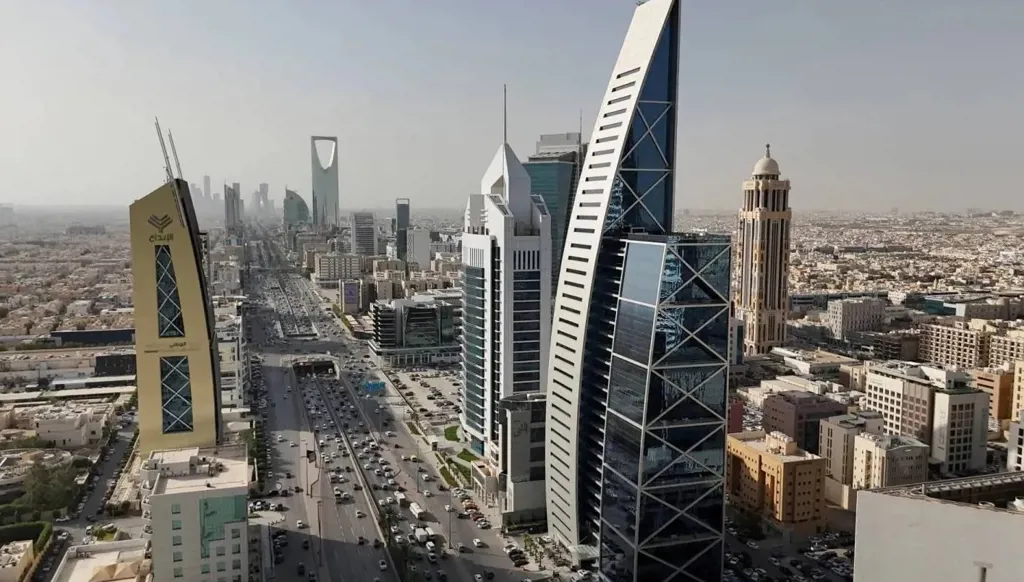


The National Privatization Strategy (NPS) was formally unveiled in January 2026. This milestone represents a key turning point in the economic history of the Kingdom of Saudi Arabia. With the support of the National Center for Privatization & PPP (NCP), Saudi Arabia is now seeking to attract more than $64 billion (SAR 240 billion) of direct private capital investments by 2030. This mandate represents a structural transformation of the Saudi state through optimizing 18 sectors of the economy through over 220 public-private partnership (PPP) opportunities in accordance with "Vision 2030".
Since it began operation, the NCP has overseen the execution of a project pipeline comprising more than 200 approved initiatives, generating approximately $213 billion in overall investment, and successfully delivered 90 signed contracts associated with asset sales and PPPs.
This foundational period has demonstrated the viability of private sector integration in traditionally state-dominated sectors.
Managing Growth
By enabling the private sector to assume the operational and financial responsibility of more projects, the government keeps the "Vision 2030" objectives on track in a more disciplined manner without the need for political will.
The shift toward the private sector is also driven by a pragmatic focus on returns: The Public Investment Fund (PIF), the primary engine for "giga-projects", is refocusing its domestic strategy on projects with immediate economic impact, such as minerals, artificial intelligence, and tourism. By allowing the private sector to take over the operational and financial scope of more projects, the government maintains the momentum of Vision 2030 while imposing a level of market discipline that political will alone cannot provide.
The National Privatization Strategy has identified 18 priority sectors where private sector participation is expected to yield the highest economic, social, and fiscal impact. These sectors cover a broad spectrum of the economy, from industrial resources to social services.
| Sector | Primary Objectives and Strategic Focus |
|---|---|
| Environment, Water, & Agriculture | Enhancing water security and circular economy through desalination and wastewater reuse |
| Transport & Logistics | Establishing the Kingdom as a global hub via rail connectivity and airport expansions |
| Health | Modernizing delivery through long-term care facilities, imaging services, and university hospital O&M |
| Education | Replacing rented buildings with advanced government facilities and specialized colleges |
| Defense | Enhancing industrialization, localization, and operational efficiency of military production facilities |
| Hajj & Umrah | Improving pilgrim experience and increasing facility capacity through private operation |
| Communications & IT | Accelerating digitization and ensuring robust infrastructure for emerging technologies |
| Sports | Developing world-class venues for the 2034 FIFA World Cup and 2027 AFC Asian Cup |
| Human Resources & Social Dev. | Improving service quality for social security and nursing home beneficiaries |
| Industry & Mineral Resources | Fostering a flexible national industrial economy and establishing smart industrial cities |
| Media | Leveraging private expertise for broadcasting infrastructure and high-quality film production facilities |
| Municipalities & Housing | Improving urban infrastructure, waste management, and public market health controls |
| Interior | Enhancing security services and safety methodologies through private innovation and expertise |
| Energy | Integrating renewable energy into land ports and industrial zones via PPP models |
| Finance | Strengthening the investment ecosystem and expanding financial services participation |
| Zakat, Tax, & Customs | Modernizing customs facilities and land port power generation via hybrid renewable solutions |
| Royal Commission for AlUla | Developing tourism-focused infrastructure and services in a specialized archaeological zone |
| Royal Commission for Riyadh City | Managing large-scale urban transit and infrastructure projects in the capital |
18 Targeted Sectors for Strategic Privatization (Annahar)
Financial Strategy and Capital Market Integration
To fund the $64 billion expansion, Saudi Arabia has become more active in global debt markets. In January 2024 alone, it raised $22 billion to support Vision 2030 projects, including $11.5 billion through a four-part bond offering.
Saudi Aramco raised $4 billion from an oversubscribed bond sale, highlighting the deep pool of liquidity available to the Kingdom’s prime assets.
The Public Investment Fund (PIF) plays a complementary role in this financial architecture. It aims to grow its assets to over $2 trillion by 2030 while injecting at least $40 billion (SAR 150 billion) annually into the local economy.

Investment Incentives
The National Investment Strategy seeks to increase net FDI flows to $103 billion annually by 2030. To achieve this, the Ministry of Investment (MISA) has streamlined the investor journey:
● Licensing Speed: The approval period for investor licenses has been reduced from days to hours.
● Tax Holidays: 30-year corporate income tax exemptions are provided for companies relocating their regional headquarters to Riyadh.
● Ownership Freedom: 100% foreign ownership is now permitted in major sectors such as healthcare, education, and various industrial manufacturing fields.
● Alternative Dispute Resolution: Explicit rights for investors to pursue arbitration through the Saudi Center for Commercial Arbitration (SCCA), providing a neutral, internationally recognized forum for conflict resolution.
The National Privatization Strategy of 2026 is a definitive statement of intent. By targeting $64 billion in private capital across 18 sectors, Saudi Arabia is not just selling assets; it is inviting the global and local private sectors to become permanent stakeholders in the Kingdom’s future. The transition from the "foundational" phase to the "execution" phase is marked by a clear-eyed focus on operational efficiency, fiscal discipline, and service quality.
As the Kingdom moves toward the 2030 milestone, the success of these 220+ contracts will define Saudi Arabia as a global reference point for public-private partnerships, ensuring that the diversification of the national economy is as sustainable as it is ambitious.