

The "oil" of the 21st century at the crossroads of economics and politics



 Messenger
 Whatsapp
 Threads
 Email
Email
 Print
Print
 X
X
 Facebook
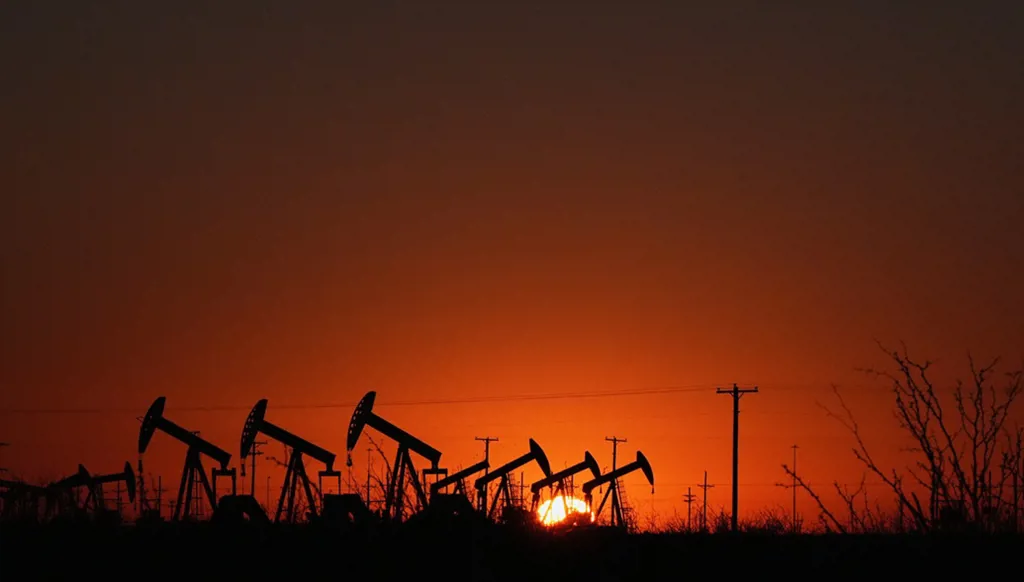


While oil has long underpinned the global economy and served as a lever of political power, the 21st century has ushered in a new resource untethered from geography: data. No longer just a stream of numbers or a byproduct of digital activity, data has become strategic capital, transforming both economies and societies. This view is underscored by Dr. Violla Makhzoum—university professor and director of the Arab Democratic Center in Lebanon, and editor-in-chief of the Journal Index of Exploratory Studies— who shared this perspective with An-Nahar.
Data between oil and the digital economy
Makhzoum notes that the description of data as “the oil of the 21st century” traces back to British expert Clive Humby in 2006, when he likened it to crude oil: both are useless without refinement. She adds that international institutions, including the European Parliament and the World Bank, have reinforced this analogy in reports that position data as the core engine of the digital economy and innovation. Yet, she stresses a fundamental distinction in the nature of the resource: unlike oil, which is finite and exhaustible, data is renewable—its value grows as collection, analysis, and utilization expand.
From secondary outputs to knowledge capital
Makhzoum outlines the evolution of data from a marginal archive to knowledge capital capable of guiding economic choices and public policy. Advances in computing power and the declining cost of storage have opened the door for artificial intelligence and machine learning to unlock unprecedented applications, such as tailored products and services, enhanced operational efficiency, and date-driven policy modeling. This transformation, she emphasizes, is not merely technological but carries deep economic and social implications.
Artificial intelligence and cloud computing
Makhzoum argues that the true shift in elevating data from raw numbers to global economic force came with the convergence of cloud computing and artificial intelligence. Cloud technologies removed barriers of storage and access, while AI introduced analytic depth that allowed the extraction of patterns, trends, and predictions with direct strategic value. She explains that this integration has paved the way for new economic models—from platform-based businesses to fully data-driven industries—that render data an indispensable strategic asset for institutions and states.
The geopolitical dimension: from energy to data
On the geopolitical level, Makhzoum observes that control over data may soon outweigh the influence once held by control over traditional energy sources. Just as oil shaped global power dynamics in the 20th century, data now forms the backbone of economic, social, and military decision-making. She notes that technology giants such as Google, Amazon, and Tencent possess more data than many governments, granting them a transnational influence of escalating significance. She adds that “data sovereignty” is emerging as a pressing ethical and legal concern, one that could eventually lead to regulatory models or international coalitions reminiscent of OPEC to oversee this critical asset.
Since data is no longer merely the fuel of the digital economy, it has become the primary driver of transformation in the Fourth Industrial Revolution. As reliance on data deepens in policy-making and market governance, Makhzoum believes the standing of countries and corporations in the new global order will depend on their ability to collect, analyze, and deploy data with both efficiency and innovation.