

Iraq’s battle against corruption
How corruption became entrenched in state institutions and why confronting it requires rebuilding trust, enforcing the law, and restoring the authority of the state.




 Messenger
 Whatsapp
 Threads
 Email
Email
 Print
Print
 X
X
 Facebook
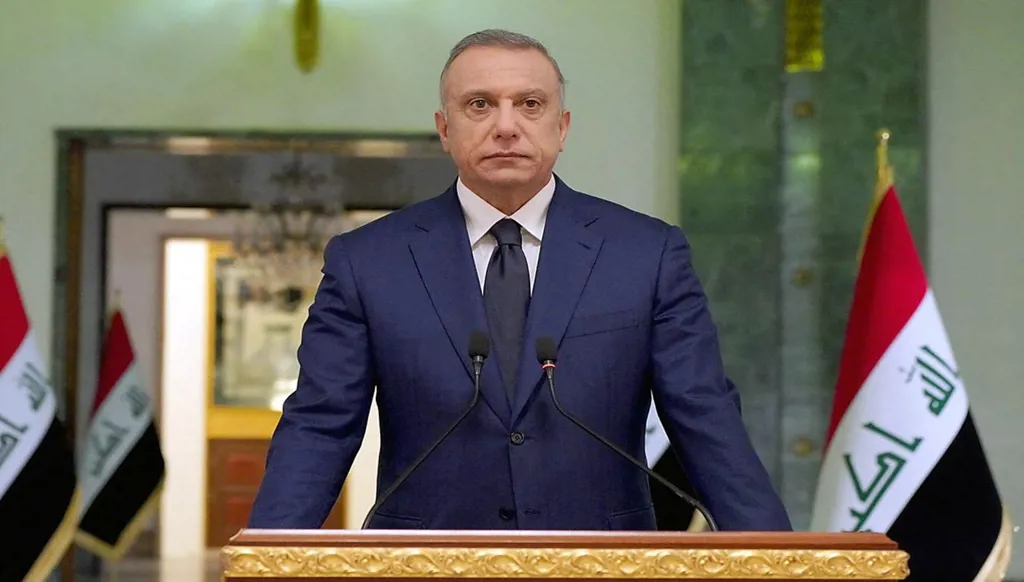


Mustafa Al Kadhimi, Prime Minister of Iraq (2020 to 2022)
“The battle against corruption, which has been delayed for far too long, is no less fierce than the battle against terrorism, if not even more intense and harsher.” This was stated in the address of the supreme religious authority on December 15, 2017, after the declaration of victory over the “ISIS” organization.
This comparison was not made as part of a moral exhortation or rhetorical framing. Rather, it reflected a precise insight into the nature of the threat confronting the Iraqi state. Terrorism challenges the state from outside its institutional structure, while corruption penetrates deep within it, cloaking itself in the legitimacy of the state and exploiting its laws, resources, and institutions to reshape centers of influence in a way that serves its own networks and interests.
Collective awareness often tends to rally against visible enemies, whereas confronting corruption appears more complicated and difficult, as it positions itself within the very mechanisms of administration, decision making, and the economy. It then gradually transforms into an entrenched element in the equations of power and into a social culture that grants the seizure of public funds political, partisan, or sectarian cover, after stripping it of its criminal nature and giving it justifying descriptions.
Political transformations and the entrenchment of the corruption system
From this perspective, corruption in Iraq has become a comprehensive system of influence that goes beyond administrative violations or financial abuses. It has evolved into a mechanism for producing power, circulating wealth, and providing protection. It extends horizontally through public contracts, border crossings, the banking sector, services, and land, while becoming vertically entrenched within decision making circles and centers of influence.
The historical roots of this phenomenon cannot be confined to the period following 2003. Institutional fractures began to emerge in the early 1990s, when wars and economic sanctions drained the state’s structure, stripped public service of its symbolic value, and gave rise to parallel systems imposed by the necessities of survival.
With subsequent political transformations, power sharing arrangements became intertwined with institutional fragility, decision making centers multiplied, and the informal economy expanded. As a result, corruption shifted from isolated individual practices into an interconnected network of interests that exchange protection and continuously reproduce themselves.
This system cannot be examined separately from weapons operating outside the constitutional framework or from the deliberate cultivation of political ignorance. Corruption requires forces capable of obstructing the law when it approaches its networks, and it also requires a mobilizing discourse that confuses public perception whenever the truth comes close to being revealed. In this way, illicit wealth, uncontrolled weapons, and media misinformation come together as interconnected elements of a single structure aimed at undermining the state and exhausting its ability to enforce sovereignty.
The suppression of public awareness is one of the fundamental pillars on which corruption systems rely to maintain their presence. A citizen deprived of accurate knowledge, excluded from understanding public spending mechanisms, and unable to distinguish between facts and propaganda becomes an open arena for manipulation, influence, and the creation of false convictions. Therefore, confronting corruption requires establishing a culture of knowledge, expanding access to information, and strengthening tools of social oversight, in a way that reinforces accountability as an essential pillar of the state structure.
When integrity becomes an unfamiliar behavior
When corruption reaches this level of complexity, it reshapes the maps of wealth and influence outside constitutional frameworks. It creates networks that exchange protection, purchase silence, and exploit fear. Its consequences go beyond the control of public resources to affect national trust itself. The system of values gradually undergoes a transformation, where integrity appears as an unusual behavior, competence becomes a burden for those with vested interests, and favoritism becomes the shortest path to rights and gains.
When I had the honor of assuming responsibility as Prime Minister in 2020, Iraq stood at an extremely sensitive crossroads, facing the overlap of a severe financial crisis, an unprecedented collapse in oil prices, the repercussions of the COVID 19 pandemic, and accumulated security and political complexities. At that time, corruption networks had already consolidated their reach within and beyond state institutions, creating systems of protection that were difficult to penetrate.
From the very first moment, the path was clearly defined: restoring the state’s standing, rebuilding its ability to perform its functions, and restoring confidence in its institutions in line with the aspirations of the Iraqi people. This could not be achieved without launching profound economic reforms, pursuing an institutional confrontation with corruption, and subjecting all actors, regardless of the extent of their influence, to the authority of the law.
Based on this vision, the independence of the judiciary was strengthened, oversight bodies were supported, and files that had remained beyond accountability for a long time were reopened. Legal measures were also taken against entities that had treated their influence as a permanent immunity and had dealt with the state as though it were an open space for private interests.
The cost of approaching corruption strongholds
The experience has shown, beyond any doubt, that approaching major corruption strongholds triggers successive waves of political pressure, organized smear campaigns, and attempts to distort facts, until the debate shifts from holding the accused accountable to putting those who exposed the facts on trial. Amid this environment, narratives are reshaped in a way that portrays the defender of public funds as the one under accusation, while those involved in violating them are presented as victims.
We faced intertwined interests, weak political support, the mixing of public funds with partisan considerations, attempts to obstruct legal procedures, and conflicting agendas within state institutions. Nevertheless, the notion of untouchable areas was dismantled, and the belief that certain names or files stood above the authority of the law was broken.
The experience proved that political will, when combined with an independent judiciary and strong professional institutions, has the ability to penetrate even the most complex structures. However, this path still requires institutional accumulation that transforms the fight against corruption into a permanent approach to state governance, rather than a temporary response linked to individuals or specific periods.
Today, national duty requires supporting every serious effort undertaken by the government, in coordination with the judiciary, to pursue those involved in corruption, protect national wealth, and reinforce the supremacy of the law.
The fight against corruption does not belong exclusively to any government, cannot be claimed as the achievement of any party, and cannot be reduced to a single individual. It represents a national obligation where the interests of the state and the future of society intersect. Turning it into a tool for political rivalry or a means of settling disputes only strips it of its purpose and gives corruption networks additional space to reposition themselves and develop new mechanisms of protection.
The success of this path remains dependent on comprehensiveness, neutrality, and adherence solely to the law. It requires moving from pursuing individuals to dismantling the structures that produce corruption, tracking financial flows, recovering stolen assets, and closing legislative and administrative loopholes that allow the recycling of illegitimate influence. The ultimate goal is an Iraq that controls its own decisions, safeguards its wealth, and lays the foundations for lasting stability and sustainable development, restoring citizens’ trust in their state.
Disclaimer: The opinions expressed by the writers are their own and do not necessarily represent the views of Annahar.