

Algeria’s diplomatic breaks: Escalation without results
From Mali to Spain and France, Algeria’s strategy of cutting ties and applying pressure has repeatedly ended with a return to normal relations, without achieving its stated objectives or changing its partners’ positions.



 Messenger
 Whatsapp
 Threads
 Email
Email
 Print
Print
 X
X
 Facebook
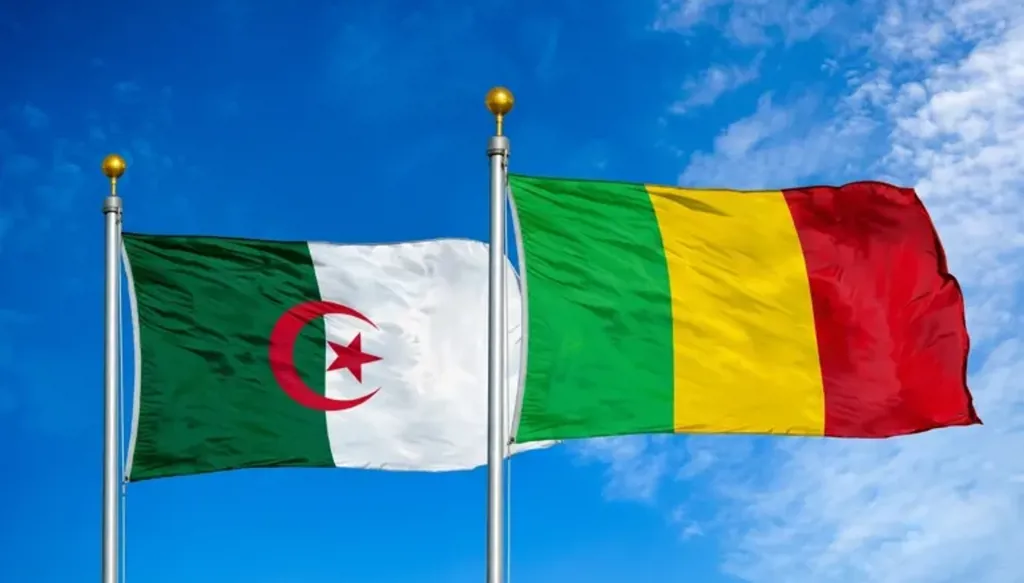


There is a French saying that goes, “All that fuss over a single egg!” It certainly applies to Algerian-Malian relations, which returned to normal a few days ago after 15 months of tensions. This period of friction resulted in Algeria recalling its ambassador from Bamako, closing Algerian airspace to Malian aircraft, and suspending security coordination between the two countries, which share a border of more than 1,300 kilometres. Mali took the same measures in return.
Yet tensions between the two countries have now eased, and their relations have returned to their previous state, as though nothing had happened, without achieving the desired outcome.
The deterioration of Algeria’s relations with Mali followed by their return to normal is not a new pattern. It had previously occurred with Spain and France. In March 2022, Spanish Prime Minister Pedro Sánchez openly announced his support for Morocco’s autonomy initiative, describing it as “the most serious, realistic and credible basis” for resolving the Western Sahara dispute.
At the time, Algeria reacted strongly and launched a fierce media campaign against Spain’s position in support of Morocco. It recalled its ambassador from Madrid, suspended the Treaty of Friendship, Good Neighbourliness and Cooperation signed with Spain in 2002, and froze trade relations.
Despite these measures, the Madrid government did not retreat one step from its position in support of Morocco. At the same time, it made sure to maintain dialogue with Algeria, considering it an important partner in the energy sector.
What is noteworthy is that signs of a thaw between Madrid and Algiers began to emerge quickly. Relations between the two countries returned to their previous state, while Spain’s position on the Western Sahara issue remained unchanged.
The same scenario was repeated with France following President Emmanuel Macron’s announcement in July 2024 that his country recognised Morocco’s sovereignty over Western Sahara. Algeria then entered into a battle of wills with Paris, recalling its ambassador, intensifying its hostile media rhetoric against France, freezing numerous official visits, and allowing security, economic cooperation and migration issues to be affected.
Despite Algeria’s escalation, the French position remained unchanged, just like the Spanish position. It was further strengthened by visits from French officials to Moroccan Sahara and the announcement of cooperation projects and investments, in a clear confirmation that a strategic shift had taken place in French policy towards the Western Sahara issue.
Ultimately, Algeria’s use of diplomatic severance as a means to achieve its stated objective did not yield even the slightest result in pushing Spain and France to change their positions on Morocco’s autonomy initiative. On the contrary, their positions became clearer and more firmly established than they had been before.
Returning to the tensions in Algerian-Malian relations, everything began in early April 2025, when Algeria announced that it had shot down a reconnaissance drone belonging to the Malian army in a border area, after it had allegedly violated Algerian airspace by around two kilometres. Algeria then announced the closure of its airspace to all flights arriving from or heading to Mali. However, the Bamako authorities rejected the Algerian account regarding the drone, insisting that it had been flying inside Malian territory. They considered its downing a hostile act and, in turn, closed their airspace to Algerian aircraft. The rest of what happened is well known.
The downing of the drone was merely the final straw. Relations between the two countries had already been experiencing months of tensions due to growing disagreements following the transitional authorities in Mali’s decision to end the implementation of the “Algiers Peace Agreement” signed in 2015. This was the agreement brokered by Algeria between the Bamako government and armed groups in the north of the country. Mali had also repeatedly criticised Algeria, accusing it of interfering in its internal affairs and sheltering opposition figures, while Algeria viewed Mali’s military approach to addressing the northern crisis as a threat to regional stability and as undermining the prospects for a political solution.
Despite the restoration of relations between Algeria and Mali, the main points of disagreement have not been fully resolved. The situation appears closer to a diplomatic normalisation aimed at limiting the repercussions of the disputes rather than a comprehensive political settlement that would eliminate the causes of tension.
Meanwhile, Bamako has continued to develop its relations with Morocco, announcing on several occasions its support for Morocco’s autonomy plan. It has also continued to participate in the Moroccan initiative aimed at enabling Sahel countries to gain access to the Atlantic Ocean.
The reality on the ground has shown Algeria that pursuing a policy of rupture with the three countries failed to change their positions and ultimately resulted in the gradual restoration of relations with them. The question now is: when will its rupture with Morocco come to an end, and when will Algeria respond to the calls for an “outstretched hand” repeatedly extended by Moroccan King Mohammed VI to Algeria’s rulers?
Disclaimer: The opinions expressed by the writers are their own and do not necessarily represent the views of Annahar