

The Red Sea threat has changed: The Houthis and the new geography of regional pressure
While Houthi attacks on maritime traffic have declined, their ability to disrupt navigation remains a strategic tool. The Red Sea has evolved from a battlefield into a bargaining space within a wider regional struggle linking Yemen, the Gulf, the Bab el Mandeb, and the Strait of Hormuz.



 Messenger
 Whatsapp
 Threads
 Email
Email
 Print
Print
 X
X
 Facebook
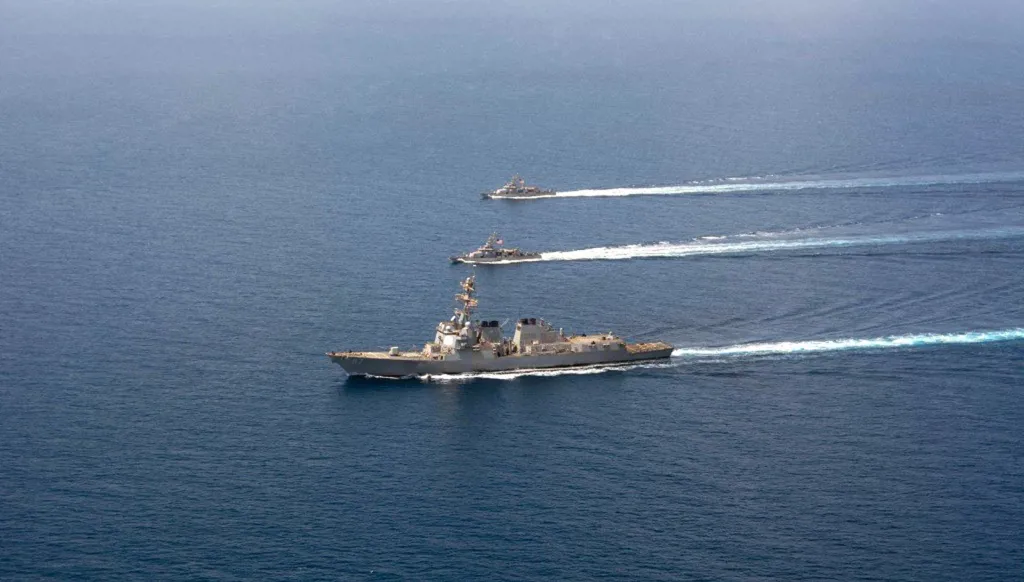


It is easy to fall into the illusion that the Houthi threat to maritime navigation in the Red Sea has diminished. For months, images of burning ships and missile attacks have no longer been at the forefront of news coverage as they were during the peak of the crisis. Yet this calm does not mean that the threat has disappeared. It may instead indicate that the threat has become more complex and less predictable.
The latest developments in the Gulf, along with the mutual escalation between the United States and Iran around the Strait of Hormuz, have brought a broader question back into focus: Could the Bab el Mandeb Strait once again become a channel for Iranian pressure through the Houthis, or has the group developed its own calculations that go beyond simply carrying out Tehran’s agenda?
The reality is that the American and Israeli strikes against the Houthis in 2024 and 2025 achieved partial military success. They weakened their capabilities and targeted a significant part of their military and economic infrastructure, but they failed to eliminate their ability to threaten maritime navigation.
Although large scale attacks on commercial vessels have halted, the capability to resume them remains. This explains why shipping and insurance companies continue to treat the Red Sea as a high-risk area, despite the decline in direct military operations.
An important observation here is that the Houthis have not abandoned their ability to threaten maritime traffic. Instead, they have retained it as a tool of deterrence and pressure. The threat itself has become a political instrument, even in the absence of actual attacks.
The paradox is that the group demonstrated an unexpected degree of restraint during the recent Iran related war. While other factions linked to Iran took part in the escalation, the Houthis refrained from expanding the confrontation in the Red Sea or from launching widespread attacks against Gulf countries. This decision appears to have reflected political calculations at both the domestic and regional levels rather than weakness.
The Houthi leadership understands that any direct confrontation with Saudi Arabia could undo years of unofficial contacts and efforts to maintain the current de-escalation. Moreover, returning to a full-scale war in Yemen is not necessarily in its interest as it seeks to rebuild its military capabilities after the recent strikes.
However, this does not mean that the Red Sea has become safer. The real danger no longer lies solely in the possibility of a missile or drone attack against a vessel, but rather in the transformation of maritime routes into instruments of geopolitical bargaining. The developments in the Strait of Hormuz in recent weeks have shown that using maritime passages as political leverage is no longer just a theoretical threat. It has become part of the tools of regional conflict.
In recent days, warnings have grown over the possibility that Iran could expand its pressure campaign to include the Bab el Mandeb through the Houthis if the confrontation with the United States and its allies continues. Even so, this option remains more of a reserve card than an imminent decision.
Two years ago, assessments suggested that the absence of a coordinated international response to Houthi attacks would not only prolong the Red Sea crisis but also undermine the very principle of freedom of navigation. At the time, concerns focused on the possibility of other armed groups emulating the Houthis. However, what happened later was far more significant, as the idea of applying pressure on global trade moved from a non-state actor to a major regional power that used the Strait of Hormuz as a strategic card.
In this sense, the Bab el Mandeb and Hormuz are no longer two separate issues. Instead, they have become part of a single equation known as the “geography of pressure.” If Hormuz represents the Gulf’s energy lifeline, then the Bab el Mandeb represents the gateway through which this lifeline reaches global markets. Whoever has the ability to threaten one of them can influence the other, even indirectly.
Inside Yemen, the situation remains highly complex. The war has not ended, but it is no longer an open war either. The internationally recognized Yemeni government suffers from internal divisions, while the decline in coordination among its allies has reshaped the balance of power. Meanwhile, the Houthis appear more cohesive than their opponents, although they seem less willing to risk another large-scale war.
The absence of an effective international diplomatic initiative has also gradually transformed the Yemen issue into a matter managed by regional powers, which are increasingly inclined to handle the crisis according to their immediate security priorities rather than pursue a broader international framework.
The Houthis may not actually be able to close the Red Sea, but they can make it more costly. Full control over one of the world’s most important maritime passages exceeds the group’s military capabilities, especially given the presence of American, European, and international naval forces. However, disrupting navigation does not require a complete closure. It is enough to raise the level of risk to increase insurance premiums, force shipping companies to alter their routes, and reduce traffic through the Suez Canal, as was already seen during the peak of the crisis.
Therefore, the success of the Houthis is not measured by the number of ships they target, but by the scale of the economic losses they can impose without firing a single shot.
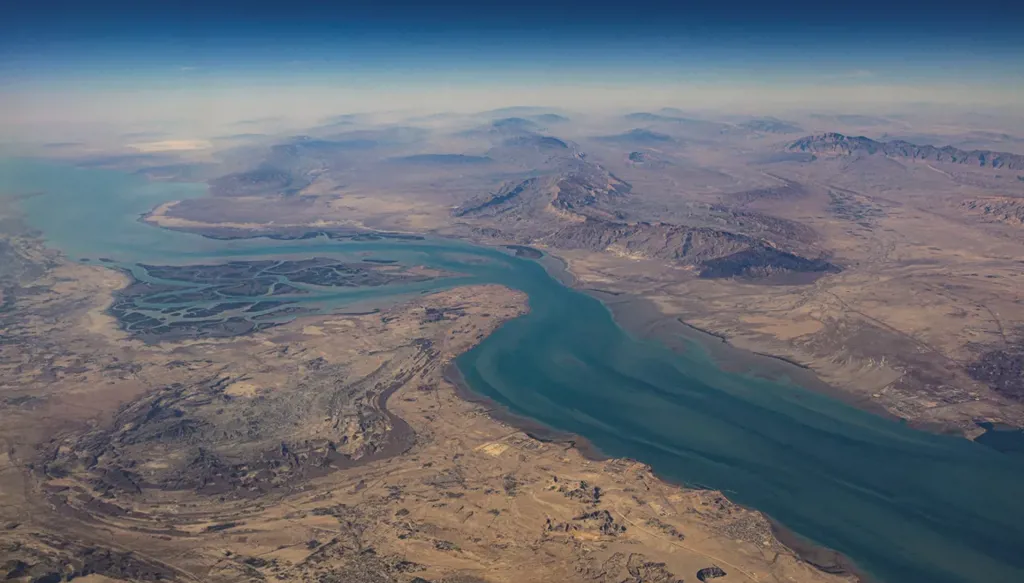
The Houthi threat has not ended, but it has changed. The group is no longer necessarily seeking an open maritime confrontation, but rather to preserve the ability to use it when needed. The Red Sea is no longer merely a theater of military operations; it has become a bargaining tool within a broader regional conflict stretching from Yemen to the Gulf, and from the Bab el Mandeb to the Strait of Hormuz.
Therefore, any discussion of a return to stability in the Red Sea would remain premature unless the root causes of the Yemeni crisis itself are addressed and an international framework is rebuilt that is capable of protecting freedom of navigation as a global interest, rather than as an issue tied to a war or a temporary regional crisis.
Disclaimer: The opinions expressed by the writers are their own and do not necessarily represent the views of Annahar