

Iran’s failure to recognize when to stop
From Napoleon and Hitler to Hezbollah and Hamas, history shows that unchecked ambition often turns victories into defeats. Iran risks repeating the same mistake by mistaking endurance for victory.




 Messenger
 Whatsapp
 Threads
 Email
Email
 Print
Print
 X
X
 Facebook
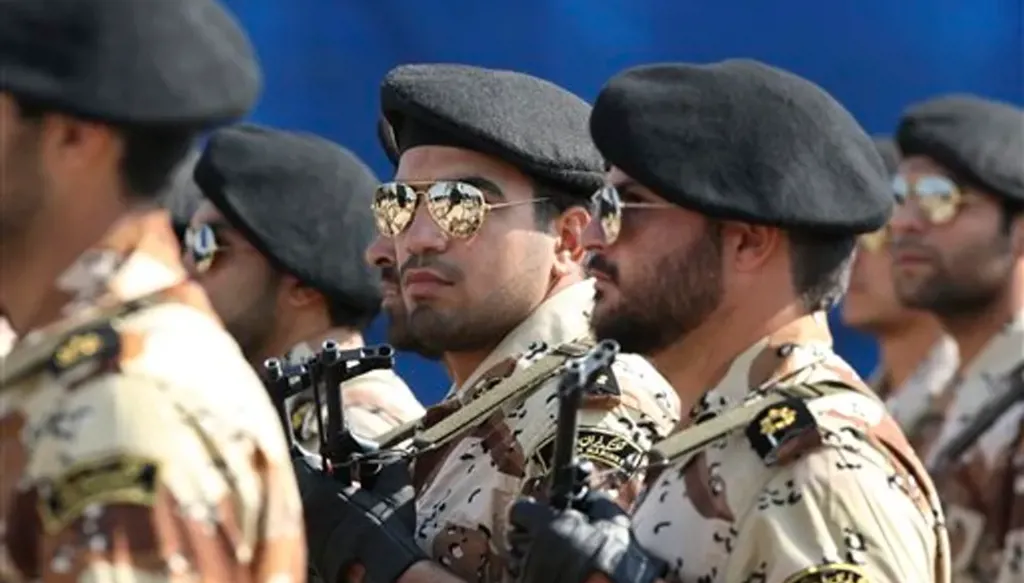


Throughout history, the problem with warrior leaders has always been that most of them do not know when to stop.
During his youth, Napoleon Bonaparte criticized Alexander the Great (356 to 323 BC) and the English military commander Oliver Cromwell (1599 to 1658) because they were unable to restrain their military ambitions. Bonaparte described that ambition as a “fever” that consumes the person carrying it before eventually consuming him personally. Nazi leader Adolf Hitler is another example of blind expansion, as he decided to occupy Stalingrad simply to satisfy his personal ego, far removed from any military objective. Athens also displayed great arrogance during the Peloponnesian War (431 to 404 BC), which led to its destruction, as well as the death of the philosopher Socrates as a result. The list goes on, all the way to Iran.
Iran after the war
Iran emerged from the recent war with its regime intact and retaining its enriched uranium. Regarding the latter issue, US President Donald Trump spoke about reducing the level of uranium enrichment inside the country rather than moving it outside its borders. Trump also expressed, on one occasion, his understanding of Iran’s desire to maintain its missile program, while the issue of its support for its proxies remained largely outside the negotiations. Indeed, gradually, the negotiations began to focus on the issue of reopening the Strait of Hormuz, away from the fundamental issues affecting the security of the region and the world.
Finally, after the Iranians began testing the patience of the US president, Trump ordered strikes on military positions belonging to the “Islamic Revolutionary Guard Corps,” in addition to reinstating the naval blockade on Iran. The world then saw new maritime drones used by the Americans against Iranian ports, in a low-cost tactic that may expand in the future. But why did the situation reach this turning point in the first place?
The vast gap in Iran’s perceptions
Iran was not satisfied with what it had achieved in the war, which was already more than most expectations. It could have offered Trump a “beautiful deal,” one that was relatively easy to reach given his clear and primary focus on the nuclear program and the safety of maritime navigation. But Iran chose instead to focus on publicly breaking the US president’s resolve. This is a dangerous task when dealing with someone like Trump. In other words, since the ceasefire, Iran has been negotiating the terms of America’s surrender. It is still making a fundamental mistake: its survival does not mean an American defeat. The “Islamic Revolutionary Guard Corps” is not dealing with a zero-sum game here.
Tehran benefited from the lack of prior American planning, particularly regarding Hormuz, and from the ease with which the Venezuelan experience was assumed to be transferable to the Iranian battlefield. It also benefited from Trump’s rapid loss of interest in the war. However, American mistakes are not enough to claim victory. It is not America that has suffered losses amounting to hundreds of billions of dollars, lost senior political and military leaders, or faced a maximum pressure campaign that lasted seven years. Nor is America the one exposed to a naval blockade and significant international isolation. Iran’s belief that its resilience equals victory is not only misplaced, but could also prove costly.
Iran and the nearby lesson
Some of Iran’s proxies were supposed to have provided a lesson on the importance of recognizing the moment to stop. Hezbollah did not realize that its strong performance in the July 2006 war would not be repeated, because wars have their own circumstances that are not identical. The group was not satisfied with the victory it achieved in 2000, so it continued expanding in the region until it was exposed militarily in front of Israel.
