

Iran’s Lebanon gamble: Between the illusion of resistance and the reality of state collapse
The Shiite duo continues to rely on Tehran’s promises despite the devastation of war, while its own community increasingly questions whether this path serves resistance or merely prolongs conflict, occupation, and the weakening of the Lebanese state.



 Messenger
 Whatsapp
 Threads
 Email
Email
 Print
Print
 X
X
 Facebook
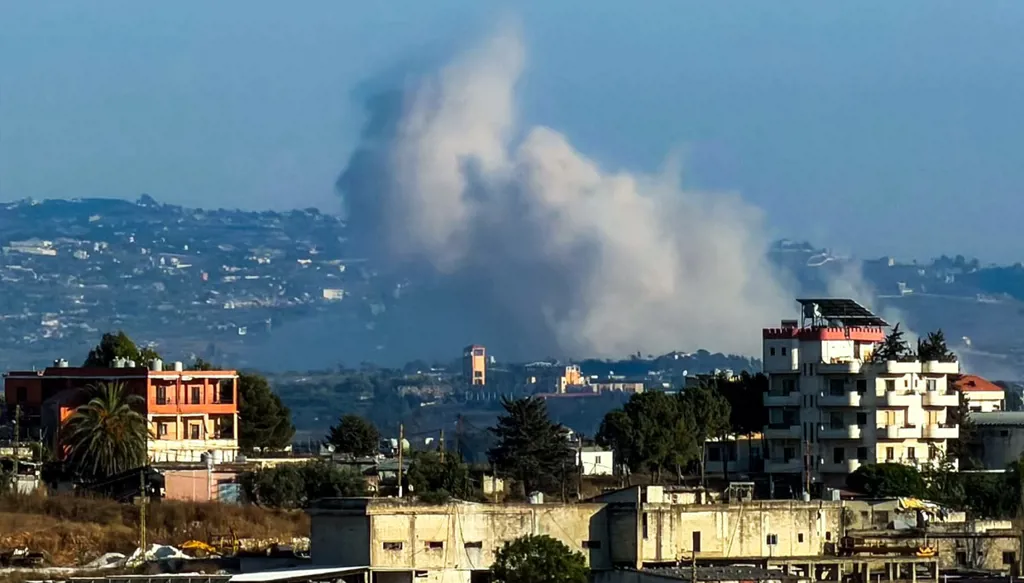


The matter is crystal clear: Iran is selling the “Shiite duo” illusions about its ability to impose an Israeli withdrawal from the south. The duo knows this very well, yet it continues to go along with these illusions. It knows that Iran is offering it more of what it has already experienced over two consecutive years: bombardment, incursions, killings, displacement, destruction, and occupation... Yet it still accepts this path. Why? Is it for the sake of “resistance,” whose limits and outcomes have become evident? Or because the weapons of “Hezbollah” justify its “project” of seizing control of the state? Or because it has become a prisoner of these weapons, even if the “Iranian project” drives it toward suicide, or toward undermining the Lebanese entity and destroying the foundations of the state?
Much has been said about the “environment” that supports the party, while little has been said about the environment that supports the “movement.” It does not appear that the “duo” takes into account what its own community truly wanted from October 8, 2023, until March 2, 2026, nor what it wants today, amid the resumption of the American Iranian war and the possibility that the party may seek a religious ruling to justify its return to “support operations.”
There is no doubt that the “environment” supports the “duo” because of sectarian affiliation, but in all circumstances, it does not see it as an alternative to the state. Perhaps it has now realized that the duo is gambling with it and with the future of its children, and that it is unable to restore its properties and livelihoods or promise it a return to its hometowns. After all, it is itself demanding that the state secure the return of the displaced and rebuild what was destroyed. Nevertheless, it will not refrain, if the order comes from Tehran, from any adventure that would further increase the scale of suffering, destruction, and losses. In reality, the “environment” is asking, before anyone else, why the “duo” is insisting that the state join the “Islamabad track,” even though Iran itself is complaining about its collapse.
If the choice is between the United States and Iran, which one would the Lebanese state choose to help it stop the war and end the occupation? And if the American option remains open to positive possibilities, even if only theoretical, for addressing the crises in which Lebanon is mired, what can the Iranian option offer? It is true that America is not a guaranteed or reliable “mediator,” especially when Israel is on one side and any other party is on the other. However, it at least reflects the same concern that the Lebanese themselves express regarding the authority of the state and its army as the embodiment of the Lebanese entity’s existence and survival. Iran, on the other hand, has consistently proven, through all of its regional interventions, that it represents a project aimed at undermining the state and its institutions. It has become Israel’s counterpart in poisoning the region’s atmosphere and working to weaken its security and stability. Depending on Iran has become no different from depending on Israel, as both disregard peoples and their aspirations to live in peace.
The wager on “experimental zones” may be exaggerated, but it is currently the only option available, and it can be built upon if it succeeds. Who benefits from its failure? More precisely, who benefits from sabotaging it? Israel views the “experimental zones” plan as an impossible test and will continue to impose conditions in order to avoid ever recognizing it, even if the American side acknowledges that Israel has begun losing the justification for its occupation and may be forced to withdraw, even gradually. As for Iran and “its party,” they have shown no willingness to give this experiment any “chance.” This would require assuming responsibility toward Lebanon and the Lebanese people, but they are concerned only with maintaining a battlefield, even if such fighting means bringing back occupation, because occupation prolongs the life of “resistance.” With this mindset, Iran wants to play the “Lebanon card.”
Disclaimer: The opinions expressed by the writers are their own and do not necessarily represent the views of Annahar