

Renewed Iran-US confrontation: Escalation or strategic miscalculation?



 Messenger
 Whatsapp
 Threads
 Email
Email
 Print
Print
 X
X
 Facebook
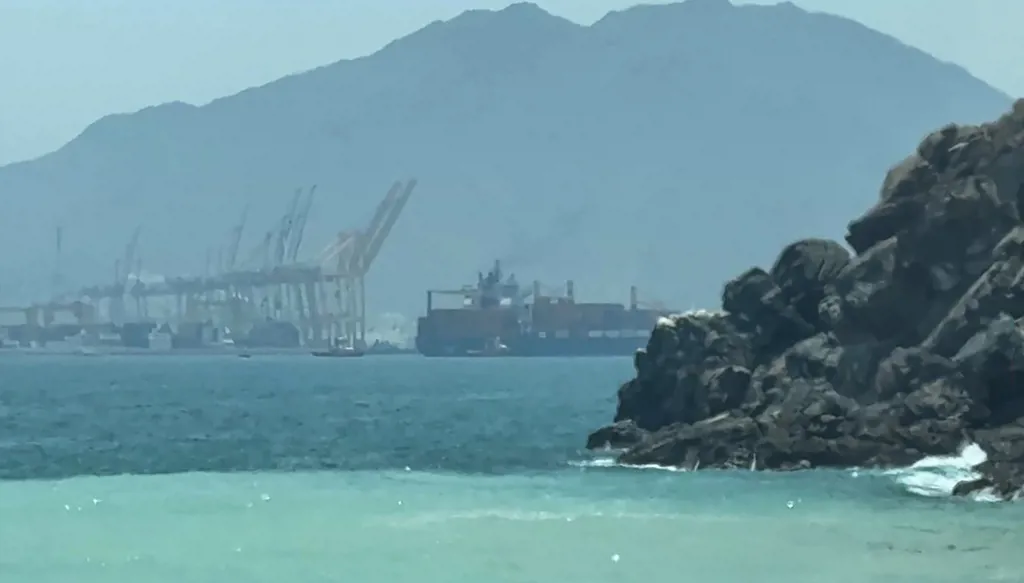


A new round of military confrontation between Iran and the United States has begun under the theme: control of the Strait of Hormuz.
Iran's new leadership is determined to go all the way in its attempt to preserve its strongest card, the Strait of Hormuz. The strategic waterway provides a significant level of deterrence and resistance against US and Israeli efforts to force it to abandon key strategic assets, such as the nuclear file, missile program, and its regional proxies.
According to experts on Iranian affairs, the regime's new leadership, particularly the Islamic Revolutionary Guard Corps, has prioritized ideology over state interests, as it sees the former as a guarantee for the regime's continuity and the interests of its decision-makers. It is betting on the weakening resolve of the US leadership and its loss of domestic support to continue its military operations against Iran, as well as on divisions between Washington and European leaders, and on Gulf leaders' growing frustrations with the war's effects, pressuring Washington to end it.
Iran considers the Gulf countries as America's weak point because it sees their attempts at mediating to stop the war and their lack of counterattacks against it as signs of American weakness and frustration. As a result, Tehran has increased its targeting of Gulf countries, hoping they will exert more pressure on Washington to halt the war.
Additionally, closing the Strait of Hormuz will lead to higher oil prices, exacerbating inflation in the West and America, which President Donald Trump seeks to curb to improve Republican chances in the upcoming congressional elections in November. Furthermore, high inflation and shocks to the energy sector will increase the suffering of US allies in Europe and Asia, which in turn will press Trump's administration to end the war under Iranian terms.
Some analysts believe the regime seeks escalation for domestic purposes, as it is aware of the economic challenges the country faces due to the war. The funds frozen abroad won't be enough to cover even a small part of the reconstruction costs and revive the economy, especially given the strict conditions Washington has set for lifting restrictions, limiting purchases to food and medical supplies only. The escalation will help mobilize the ideological support within the regime's popular foundation, which it needs to consolidate governance and suppress any internal opposition movements.
However, the regime's move to impose control over the Strait of Hormuz could be a fatal strategic mistake, adding to the strategic missteps committed by the "Resistance Axis" since October 7, 2023, leading to a catastrophic deterioration in its position. Using the Strait of Hormuz card in this manner, at a time when the world is facing a severe energy crisis, may provoke a counterreaction from world and regional countries.
No country wants the fate of a strategic and vital waterway, along with its national security, to be subject to the whims of an ideological and reckless regime like today's Iran. This could solidify the conviction among many actors to form an international military coalition to control the strait and strip the regime of its remaining sources of power in preparation for compliance or downfall.
NATO leaders' statements were clear in rejecting Iran's dominance over the strait, especially as Tehran continues to hint at pushing the Houthis to also close the Bab al-Mandeb Strait as well. The frequent threats from a state exaggerating its capabilities might not deter other powers but could lead them to a radical counter-response that might go beyond securing the strait to removing the threat source entirely.
Washington is expected to reimpose a naval blockade on Iran, expanding it into a land blockade by destroying main bridges, roads, and railway lines connecting Iran by land to surrounding countries. Recent U.S. airstrikes reveal preparations for imposing a maritime blockade and destroying railway bridges north of the country. Likewise, Trump might resort to his previous threat of near-total destruction of critical infrastructure, including power plants and oil refineries. Such a move, coupled with total blockade, will lead to unprecedented internal chaos that will bring down the regime.
The regime has long practiced brinkmanship policies in its approaches and strategies to outsmart or deceive its adversaries, but today it might actually fall into the abyss. This current confrontation will end either with the world and region accepting Iran's terms to impose its dominance over the Strait of Hormuz or with a joint international military action to control the strait by force and overthrow the regime.
As the framework agreement has failed, and intermediaries have become military targets for the regime, undermining the prospects of diplomacy.
Disclaimer: The opinions expressed by the writers are their own and do not necessarily represent the views of Annahar.