

More than a football competition: Politics and the 2026 World Cup
From refereeing controversies to visa restrictions and geopolitical messaging, the tournament highlights football's growing role in international politics.



 Messenger
 Whatsapp
 Threads
 Email
Email
 Print
Print
 X
X
 Facebook
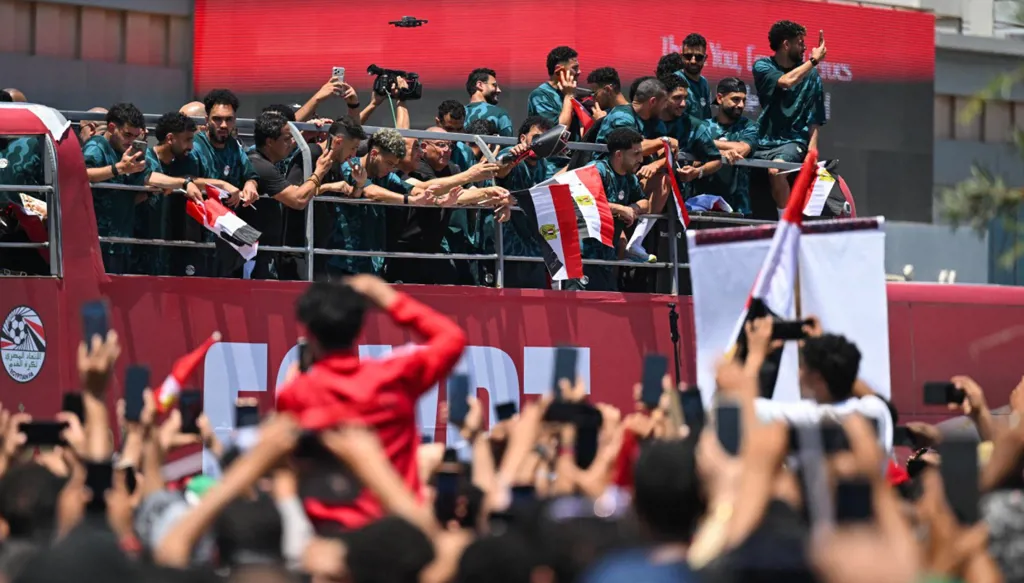


As the 2026 World Cup approaches its final stages, international attention is no longer focused solely on which team will lift the trophy. Instead, it has expanded to a broader question about the evolving relationship between politics and football.
Held for the first time across three host countries—the United States, Canada, and Mexico—the tournament has not only showcased technical and organizational advances in staging the world's biggest sporting event, but has also highlighted the growing intersection of sport with political, security, and economic considerations. As such, it offers an important case study for understanding transformations in the contemporary international system.
This convergence is no longer an exception but a reflection of a broader reality: football has evolved beyond the boundaries of a popular sport into a global industry closely linked to the interests of governments, multinational corporations, media organizations, and investment funds. It also plays a direct role in shaping the international image and standing of nations.
The World Cup is no longer merely a sporting competition; it has become an arena where issues of national sovereignty, security, immigration, the economy, and public diplomacy intersect, explaining the increasing presence of politics within the tournament.
From the outset, the competition witnessed issues related to entry procedures and cross-border movement for some participants. Debate also emerged over the impact of migration and visa restrictions on the participation of certain refereeing personnel, reviving longstanding questions about the extent to which the sovereign policies of host nations can influence the management of international sporting events.
Statements by President Donald Trump regarding a disciplinary incident involving a U.S. national team player also attracted widespread political and media attention, underscoring how football has become part of official political discourse and how the tournament is no longer insulated from the domestic and international messages conveyed by political leaders.
Similarly, arrangements concerning the accommodation of some teams and their travel between the three host countries sparked discussion about whether multi-nation tournaments can provide equal logistical conditions for all participants. This highlighted the reality that managing an event of this scale is influenced by political and administrative factors that extend well beyond traditional sports organization.
The most prominent issue in the international debate, however, centered on several controversial refereeing decisions, raising questions about sports governance and confidence in international institutions. The discussion was not limited to a single country or team but spread across international media and sporting circles, reflecting the growing sensitivity of global public opinion to issues of fairness and transparency in the management of major competitions.
The debate gained particular significance in Egypt after refereeing decisions during Egypt's match against Argentina triggered widespread reactions that extended beyond the sporting arena, leading to calls for greater transparency in the match management system. In Egypt, as in many other countries, the national football team represents far more than a sports team; it is one of the country's strongest symbols of national identity. Consequently, any controversy surrounding its matches in major tournaments quickly resonates in the broader public sphere, expanding into discussions about justice, governance, and the effectiveness of international institutions.
From a political economy perspective, football has become an integral part of a vast global industry shaped as much by market dynamics as by the rules of the game. Just as the international system reflects disparities in power among states, football also reflects differences in fan bases, media influence, and economic weight among national teams.
This reality is evident in television audiences, broadcasting rights, sponsorship revenues, and investment levels, placing greater responsibility on international sporting bodies to strengthen transparency and ensure that economic inequalities do not become a permanent source of doubt over the integrity of competition.
Perhaps the most important contribution of the 2026 World Cup to scholars of international relations lies not in its sporting outcomes but in what it has revealed about the changing relationship between politics and football. Once regarded primarily as an instrument of soft power, football has increasingly become an arena where economic interests, political calculations, and geopolitical rivalries converge.
It is also a testing ground for the ability of international institutions to preserve their neutrality and credibility. From this perspective, strengthening sports governance, reinforcing the independence of refereeing, and establishing higher standards of transparency are no longer purely sporting objectives. They have become essential requirements for preserving the legitimacy of one of the world's most influential transnational institutions and maintaining trust in a game that is now as much a part of international political dynamics as it is of global sporting culture.
Disclaimer: The opinions expressed by the writers are their own and do not necessarily represent the views of Annahar.