

Iran’s regime crisis cannot be solved through talks with Washington
Beyond sanctions relief and temporary deals, Iran faces internal divisions, economic pressures, and a legitimacy crisis that negotiations alone cannot resolve.



 Messenger
 Whatsapp
 Threads
 Email
Email
 Print
Print
 X
X
 Facebook


It's important to view the ongoing negotiations between Washington and Tehran from a broader perspective than the details of temporary agreements, frozen funds, or the easing of some sanctions. The key question is not whether the Iranian regime will achieve limited tactical gains, but whether these gains can address its structural crisis. The answer, based on the reality of the regime and its long experience, is no.
The crisis of the Wilayat al-Faqih system does not stem solely from financial shortages, sanctions pressure, or recent military setbacks, but from its fundamental conflict with Iranian society and with a more present and organized resistance both inside and outside the country. Therefore, whatever understandings emerge from the negotiating table cannot resolve the regime’s structural ailment.
Following the recent agreement, the regime appears weaker than it was months ago. It lost Ali Khamenei, who served as the “tent pole” and the center of balance among the different factions. Several levels of Revolutionary Guards leadership and security circles suffered significant blows, while its naval, air, missile, and nuclear capabilities were damaged, and the effectiveness of its affiliated groups across the region declined. Alongside these losses, massive economic damage has accumulated, while social and living crises inside Iran have deepened. Yet the most dangerous factor is not merely these losses themselves, but the widening internal divisions.
The situation within the ruling establishment is no longer limited to tactical disagreements; it reflects a deeper conflict between two opposing visions on how to preserve the regime. One side believes survival depends on continuing the path of confrontation and rigidity, while the other considers reaching an understanding with Washington and buying time to be the least costly option. This contradiction is evident in the differing positions within the leadership, and in the alignment of figures such as Ghalibaf, Araghchi, Pezeshkian, and Mohsen Rezaei on one side, and the camp of Mojtaba Khamenei, some lawmakers, and hardline circles on the other.
At the center of this crisis stands Mojtaba Khamenei, who lacks the ability his father possessed to control the different factions and impose dominance. He inherited a position weighed down by crises, but he did not inherit legitimacy, experience, or the authority to make decisive choices. As a result, any attempt by him to manage the balance between the factions appears temporary and fragile, and could become an additional factor in intensifying internal conflict rather than containing it.
As for the funds the regime may receive, whether through the release of frozen assets or the easing of certain restrictions, they will not solve its underlying problems. Iran’s experience in this regard is clear. Under Ahmadinejad, the regime had access to hundreds of billions of dollars in oil revenues.
After the 2015 nuclear agreement with the United States, it gained substantial financial resources and economic opportunities. Yet people’s living conditions did not improve, and uprisings did not stop. The issue was not only a lack of money, but rather a political and economic system based on extracting wealth from society and directing resources toward repression, the Revolutionary Guards, military projects, and Tehran’s affiliated groups abroad.
Even if the regime receives tens or hundreds of billions of dollars, these resources are unlikely to be directed toward addressing poverty, unemployment, and inflation. The regime’s structural priorities will remain rebuilding its security and military apparatus, missile and nuclear capabilities, and restoring its regional networks. Therefore, any new resources may only raise public expectations without having a real impact on people’s lives, turning them into an additional source of anger rather than a factor of stability.
For this reason, any understanding reached is unlikely to easily transform into lasting agreements. The regime cannot abandon the tools it considers essential for its survival: the nuclear program, missiles, control over the Strait of Hormuz, and its affiliated groups, particularly in Lebanon, Iraq, and Yemen.
At the same time, the United States and the international community cannot ignore these issues, as they directly affect regional security, energy supplies, navigation, and global stability. This is where the dilemma lies: each side wants the other to retreat. Yet the regime cannot withdraw from these files without shaking the foundations of its survival. A genuine retreat would require reconciliation with those it has portrayed as enemies for decades, abandoning slogans that have shaped its identity for 47 years, and engaging with those its supporters describe as the killers of Soleimani and Khamenei.
Such a retreat may not end the crisis but could trigger a larger internal explosion within the regime itself. If it refuses to retreat, tensions will inevitably return, potentially leading to renewed military confrontation or regional escalation. In this context, negotiations appear to be only a temporary bridge within a prolonged crisis without a definitive solution.
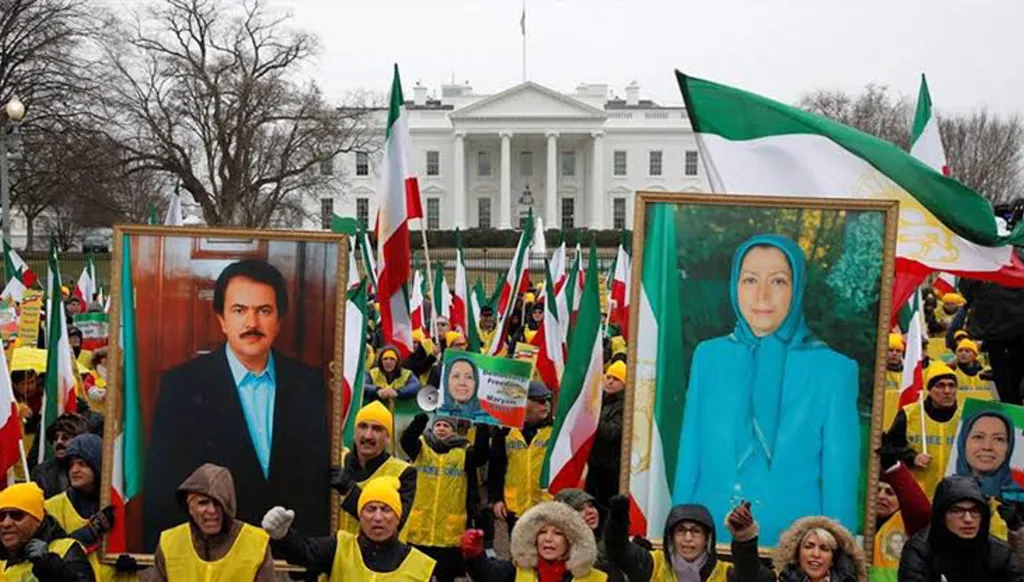
Against this backdrop, the Iranian resistance has stated that it welcomes an end to the war and any understanding that alleviates the suffering of the Iranian people. However, it simultaneously rejects any agreement that would allow the regime to rebuild itself or finance its machinery of repression and war. It also stresses that any international agreement must not overlook the halting of executions, the killing of protesters, and the accountability of the regime for its crimes against the Iranian people.
The central issue is that the regime’s real battle is not being fought at the negotiating table, but inside Iran itself. There, it faces a society that has moved beyond fear, a history of successive uprisings, accumulated social anger, and an organized resistance capable of transforming popular discontent into a political movement.
Therefore, when diplomatic illusions fade, war fails to produce a solution, and sanctions alone lose their effectiveness, the most realistic path remains change from within through the Iranian people and their organized resistance. As for the project of the deposed Shah’s son, despite the setbacks it suffered during the recent period, it cannot be considered completely over.
It continues to be used by regime elements and some external circles as a tool to disrupt the course of uprisings and resistance, and as an attempt to revive a false binary between the Shah and the mullahs. However, recent developments have weakened this project, exposed its limitations, and created wider space for the slogan “Neither Shah nor Mullah” as the clearest expression of the demand for a democratic republic.
The conclusion is that the negotiating table cannot resolve the existential crisis facing the Iranian regime. It may provide it with additional time, limited financial resources, or temporary relief, but it cannot restore Khomeini’s legacy, unify its factions, restore its social legitimacy, or end its conflict with the Iranian people. The regime’s real illness lies within, and the remedy it fears is not an agreement with the outside world, but an organized uprising from within.