

UAE condemns Iranian missile attack on oil tankers in Strait of Hormuz
The UAE Ministry of Defence says two national tankers were targeted by Iranian cruise missiles, leaving one person dead and eight injured, while Abu Dhabi vows to take all necessary measures to protect its security and sovereignty.



 Messenger
 Whatsapp
 Threads
 Email
Email
 Print
Print
 X
X
 Facebook
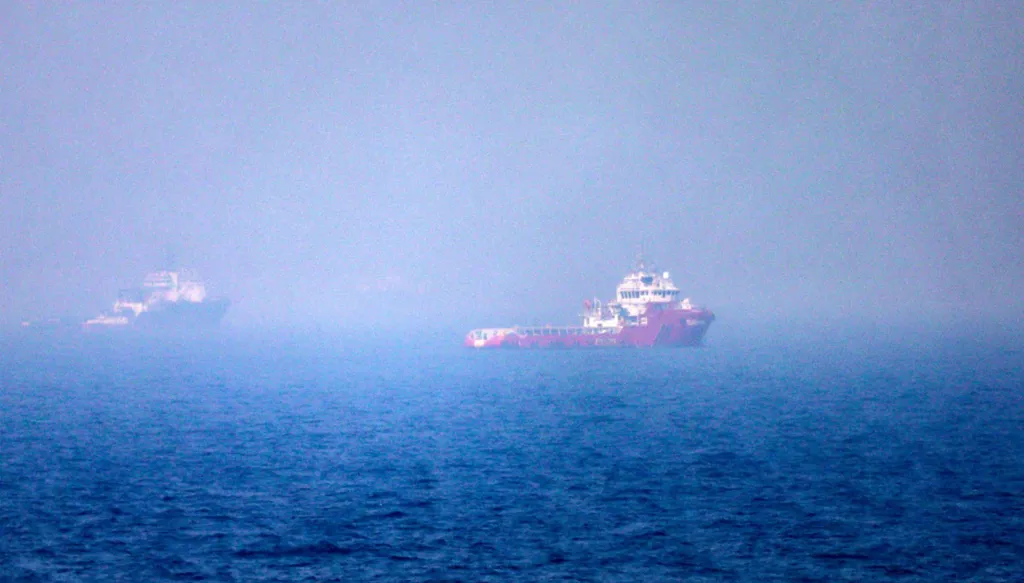


The UAE Ministry of Defence announced on Tuesday that the two national carriers, “Mombasa” and “Al Bahiya,” were targeted by two Iranian cruise missiles in the southern passage of the Strait of Hormuz, within Omani territorial waters.
In a statement, the ministry said that “the attack resulted in the death of one crew member aboard the Mombasa tanker, who was of Indian nationality, and the injury of eight others, including four with serious injuries. Six of the injured are Indian nationals and two are Ukrainian nationals. The attack also caused material damage to both tankers as a result of fires breaking out onboard, which have since been brought under control.”
The Ministry of Defence condemned this “blatant attack, which represents a serious violation and a clear breach of international law and threatens the security and stability of the region.”
It stressed that “the state reserves its full right to respond to this escalation and to take all necessary measures to protect its territory, its people, and residents, in a manner that safeguards its sovereignty, security, and stability, while protecting its national interests and capabilities.”

The ministry stated that it was “on full alert and fully prepared to deal with any threats,” adding that it was taking all necessary measures to firmly confront anything aimed at undermining the country’s security and stability.
The ministry also called on the public to “obtain information from official sources in the state and avoid spreading rumors or unverified information.”
For its part, Iran’s Islamic Revolutionary Guard Corps announced that two oil tankers had been hit in the Strait of Hormuz after ignoring warnings issued by the maritime security monitoring center.
It added that the US military had encouraged ships and pushed some of them to attempt to cross through a route it described as “illegal” in the Strait of Hormuz.
It said that “passing through the mine laid route will lead to losses, delay the reopening of the Strait of Hormuz, and cause a global energy crisis.”
Meanwhile, the UAE Ministry of Foreign Affairs expressed its “strong condemnation and denunciation of the aggressive Iranian attacks that targeted the two oil tankers.”
In a statement, it confirmed that “this aggressive Iranian attack resulted in the death of one Indian national and the injury of eight others, including four with serious injuries, six Indian nationals and two Ukrainian nationals.” It also expressed its sincere condolences and sympathy to the victim’s family and to the Republic of India and its people, while wishing a speedy recovery to the injured.
The ministry affirmed that “this aggressive Iranian attack constitutes a blatant violation of United Nations Security Council Resolution 2817, which emphasized freedom of navigation and rejected the targeting of commercial vessels or the disruption of international maritime routes.”
It stressed that “targeting commercial navigation and using the Strait of Hormuz as a tool for pressure or economic blackmail constitutes acts of piracy and poses a direct threat to the stability of the region and its peoples, as well as to global energy security.”
The UAE also stressed “the need for Iran to halt these aggressive attacks, ensuring its full commitment to ending all hostile actions and to reopening the Strait completely and unconditionally, in a way that achieves regional security and stability and protects the global economy and trade.”