

Could a wider conflict with Iran reshape Hezbollah's role in Lebanon?
From the Strait of Hormuz to Lebanon, growing instability fuels debate over Tehran's regional influence and Hezbollah's future.



 Messenger
 Whatsapp
 Threads
 Email
Email
 Print
Print
 X
X
 Facebook
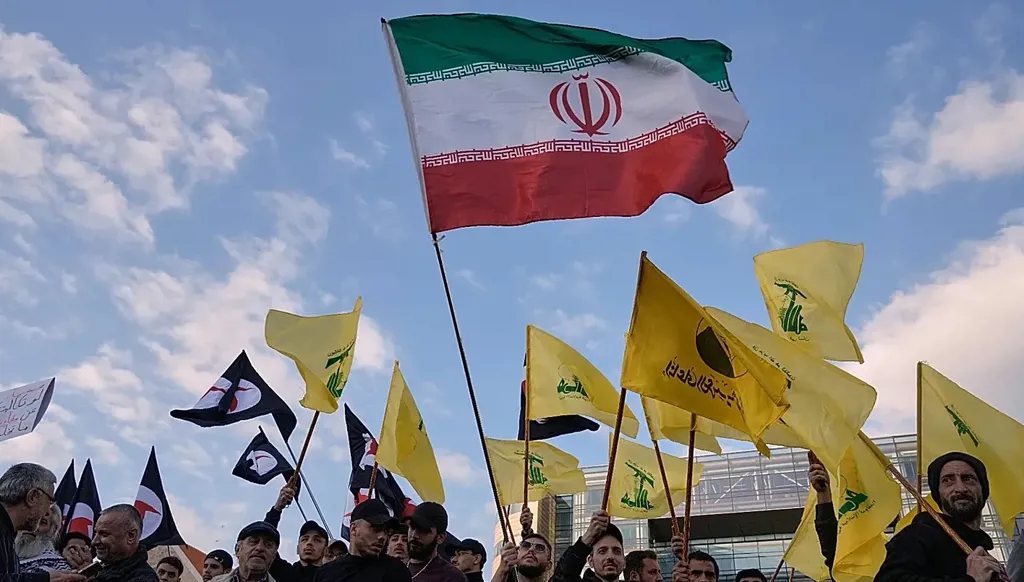


The region will not witness calm unless there is a profound change in the structure of the Iranian regime or its collapse. It has entered a phase of widespread instability following the regime's shift toward open aggression against neighboring countries and much of the world.
The international community cannot ignore the financial and security blackmail taking place in the Strait of Hormuz as though nothing has happened. As a result, the region, from the Arabian Gulf to the Levant, is likely to see significant escalation that could ultimately place the overthrow of the Iranian regime on the agenda of regional countries and NATO, led by the United States.
The same principle that applies to the Iranian regime, whether it survives or falls, also applies to Hezbollah under all circumstances. There is no place for an armed organization deeply tied to Iran on Lebanese soil. There will be no return to the era of Iranian control through Hezbollah, nor any revival of Lebanon as an Iranian platform.
Accordingly, the path of direct negotiations between Lebanon and Israel will continue under American sponsorship, while the Lebanese state will not yield to the intimidation practiced by Hezbollah and its supporters.
In any case, Hezbollah has no political or popular support beyond its own constituency. All other segments of Lebanese society strongly oppose its behavior, its choices, and, above all, its illegal and illegitimate weapons. In addition, a significant segment within its own supportive environment rejects Hezbollah's logic.
As a result, the party is incapable of building a supportive front on which it can rely to confront decisions made by the Lebanese state. Even those who align with it from outside its base remain confined to narrow margins of political maneuvering that ultimately serve the party's narrative.
Should the regional situation escalate into a new war between the United States and Iran, the conflict is unlikely to remain limited. NATO countries could become involved under the banner of confronting Tehran's attempts to use the Strait of Hormuz for extortion, given the implications for global energy and food security. The international community cannot tolerate the ongoing violations in the Strait of Hormuz, which undermine international law and the principle of freedom of navigation through international waterways.
Iran's dispute with the world extends far beyond the Strait of Hormuz. The nuclear file remains unresolved, the ballistic missile program is entirely absent from negotiations, and the dismantling of Iran's affiliated groups, foremost among them Hezbollah, is not being seriously addressed, as though these issues have been set aside in Iran's favor. In reality, however, they lie at the heart of the rogue behavior that characterizes the Iranian regime's conduct.
On the Yemeni front, Iran's objective may be to ignite additional fronts in an effort to distract the United States and intimidate NATO member states, particularly those that have come to view the Iranian regime as beyond reform.
In Lebanon, Hezbollah's only option is to integrate into the state's project. Otherwise, the alternative is investment in a third, more brutal war.
Disclaimer: The opinions expressed by the writers are their own and do not necessarily represent the views of Annahar.