

Lebanese Parliament to hold legislative session amid divisions on general amnesty and Rome negotiations
As a new round of Lebanese Israeli negotiations gets under way in Rome under US sponsorship, political divisions over the general amnesty law intensify ahead of a key parliamentary session.



 Messenger
 Whatsapp
 Threads
 Email
Email
 Print
Print
 X
X
 Facebook
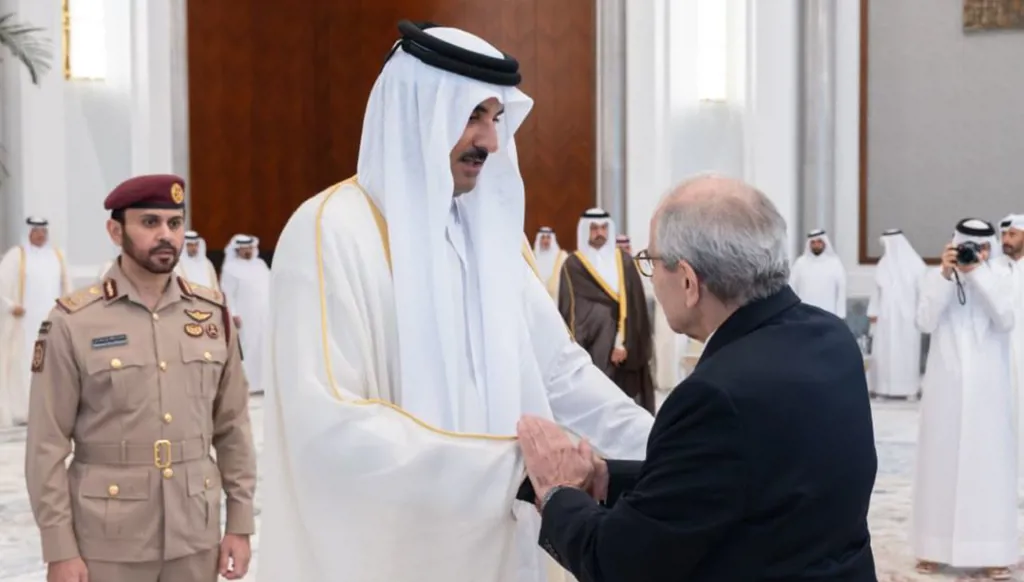


While attention was divided between the Italian capital, Rome, where the sixth round of Lebanese-Israeli negotiations under US sponsorship is being held today, and southern Lebanon, where Israeli attacks on towns and villages continue alongside ongoing land clearing operations, Parliament Speaker Nabih Berri's announcement of a legislative session to be held tomorrow, Wednesday, and the following day, Thursday, has brought the stalled general amnesty file back into focus.
The issue has increasingly taken on a Sunni sectarian dimension, as several Sunni MPs headed to the Grand Serail to meet with the Prime Minister before he proceeded to Baabda Palace to meet with the President and discuss the matter. At the same time, a number of MPs threatened to boycott the parliamentary session if the general amnesty bill was not included on the agenda. Deputy Speaker of Parliament Elias Bou Saab responded quickly, stating that boycotting parliamentary sessions is a serious matter and that anyone who chooses to boycott should bear responsibility for that decision.
Rome negotiations
A new round of negotiations is scheduled to begin today at 10:00 a.m. local time in Rome. The Lebanese delegation includes former Ambassador Simon Karam, Lebanon's Ambassador to Washington Nada Mouawad, and retired Air Force Brigadier General Ziad Akl, who is participating in his capacity as an adviser to the President.
The negotiations will focus on consolidating the ceasefire and discussing how to implement the pilot areas formula in Lebanon, alongside ongoing coordination between the US Central Command delegation, the Lebanese Army, and the parallel political talks. The discussions will also address the formation of working committees to resolve several issues, including border demarcation and verification of the handling of weapons.
According to available information, and based on directives from President Joseph Aoun, the Lebanese delegation in Rome will work toward ensuring that the meetings conclude with a timetable for launching the implementation of the pilot areas, including all required conditions, namely the withdrawal of the Israeli army, the redeployment of the Lebanese Army, and the start of reconstruction efforts.
Diplomatic sources said that the US administration, specifically the US Department of State, will closely monitor the negotiations in detail. If the talks reach an impasse, the discussions may be moved to Washington.
The legislative session
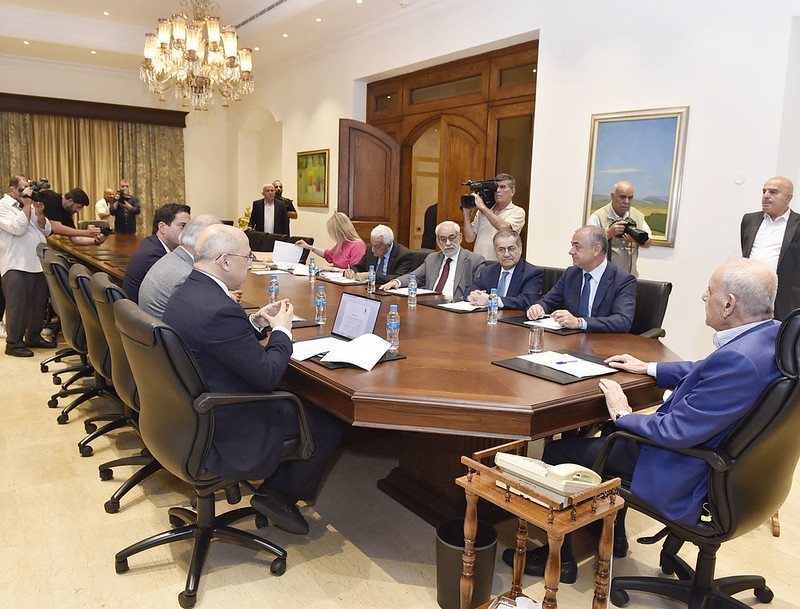
In Beirut, Speaker Nabih Berri, following a meeting of Parliament’s Bureau, called for a legislative session on Wednesday and Thursday. After the meeting, MP Elias Bou Saab said: “Regarding the agenda, as you know, a plenary session had previously been scheduled and an agenda had already been set. The session was postponed, and since then additional draft laws have been approved by the committees and the joint committees. These have also been added to the agenda for the session that will be held on Wednesday.”
In response to a question about whether the general amnesty law was included on the agenda and about the calls to boycott the session, he replied: “I reiterate today that this law requires consensus. If there is no consensus on this law, it will face complications. What we have learned from the Speaker is that the Prime Minister contacted the Speaker of Parliament and conveyed the same position. If consensus is not reached, we should return to studying it or reconsider it.”
He added: “As for the issue of threatening to boycott parliamentary sessions, this is not new. Some people resort to it every time, but I tell you that this matter is very serious.”