

U.S. Strikes and Iran's Strategic Control of Strait of Hormuz
Washington targets more than 300 Iranian sites after attacks on commercial shipping, while Tehran seeks to use control of the Strait of Hormuz as a strategic bargaining tool amid growing regional and international pressure.



 Messenger
 Whatsapp
 Threads
 Email
Email
 Print
Print
 X
X
 Facebook
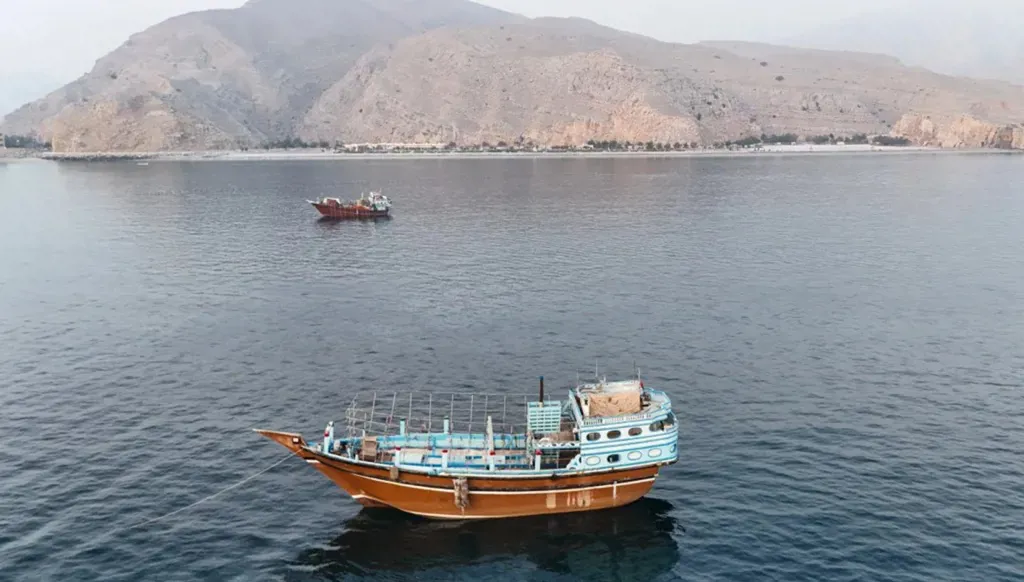


The U.S. Central Command conducted three rounds of military strikes between the week of July 7 and Sunday, July 12, targeting more than 300 sites across Iranian territory in response to attacks by the "Revolutionary Guard" on commercial ships and tankers attempting to transit the Strait of Hormuz. The latest incident involved a Cypriot-flagged container ship crossing near the Omani coast. According to the Central Command, the vessel sustained significant damage to its engine room, a fire broke out on board, and one crew member was killed. Meanwhile, the "Revolutionary Guard" claimed the ship had failed to follow the designated route and that it fired a "warning shot" that forced the vessel to stop.
Continuous Escalation!
Amid this military escalation, Iran launched a multi-stage operation using ballistic missiles and drones, targeting sites in Qatar, Oman, Kuwait, Bahrain, and Jordan, while the UAE intercepted additional missile and drone threats with its air defenses.
This escalation, along with the disruption of safe and uninterrupted navigation through the Strait of Hormuz, harms the economies of the Gulf Arab states, while also placing pressure on Iran's own ability to export oil and increasing the number of countries affected worldwide. It also brings Gulf, Asian, and European positions closer to supporting unrestricted freedom of navigation without Iranian control or conditions, while providing Washington with a political basis to continue targeting Iranian naval capabilities, which it considers an ongoing threat.
Iranian politicians believe Hormuz has become a strategic trump card capable of increasing the cost for their adversaries. However, this view overlooks a key point: the consequences of this strategy extend beyond the United States to Iran's Gulf neighbors and major oil-importing countries that rely on the strait, such as China and India. As a result, the medium- and long-term political and economic costs for Iran are also expected to be significant.
Hormuz in Exchange for Nuclear
From the perspective of the "Revolutionary Guard," the strategic value of the Strait of Hormuz lies in dispersing attack capabilities against tankers through missiles, drones, and fast boats while politically denying responsibility. The objective is to keep the strait in a state of persistent uncertainty, allowing limited maritime traffic without imposing a complete closure.
The U.S. strikes targeted this equation, particularly after reports from within Iran attributed the recent attacks to a "rogue element" within the system. This narrative places Tehran in a difficult position both practically and legally. If the country's leadership does not exercise full control over the operating units in the strait, then its commitments lose their credibility.
The diplomacy promoted by Iranian Foreign Minister Abbas Araghchi is likewise undermined by the "Revolutionary Guard's" attacks on oil tankers and Gulf Arab states. Tehran appears to present a clear contradiction in its foreign policy behavior, one that goes beyond a simple division of roles, reflecting instead conflicting policies, competing decision-making centers, and a determination by the more hardline faction to impose a new reality on the ground. In particular, a segment of politicians and security officials now believes that firm control over Hormuz represents more durable and effective strategic capital than the nuclear program, which has suffered extensive destruction.
An influential current within the core of the Iranian regime believes it must capitalize politically and militarily on the war, convinced that Iran emerged victorious and can establish a "new deterrence equation." This approach pays little attention to the substantial risks involved in attempting to impose a new reality by force on its Arab neighbors. As Iran continues pursuing this strategy, it is likely to deepen its isolation and face growing resistance from neighboring states, which possess their own means of exerting pressure and preventing the Strait of Hormuz from becoming a permanent hostage under Iranian control.
Disclaimer: The opinions expressed by the writers are their own and do not necessarily represent the views of Annahar.