

The battle for trade corridors: Iran between the Strait of Hormuz and the IMEC challenge
A railway bridge strike in northern Iran reveals a broader struggle over the future of global trade routes, as a US backed corridor seeks to bypass Tehran’s strategic geography.



 Messenger
 Whatsapp
 Threads
 Email
Email
 Print
Print
 X
X
 Facebook
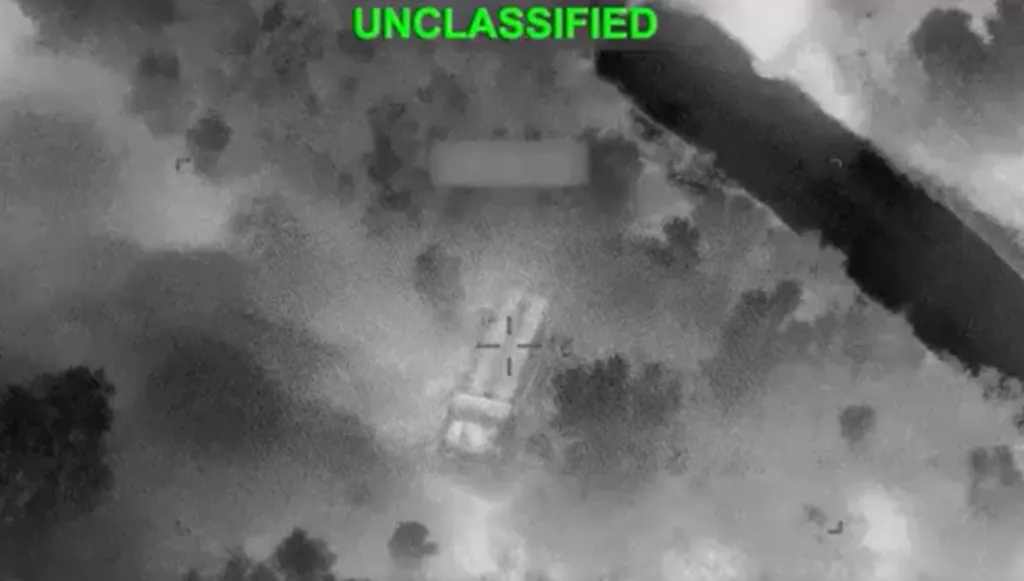


When the United States bombed the railway bridge in Golestan Province in northern Iran, attention turned to the number of missiles used and the extent of the damage. But perhaps the real question was entirely different: why target a bridge that Iran could repair within days?
If the goal was to cut the land route linking Iran to Russia and China, then the strike does not achieve its objective. However, if the message was that any Iranian attempt to bypass the American blockade would not be safe, then the meaning becomes different.
The United States is not only saying that it can shut down Iranian ports but is also implying that any land corridor Tehran may rely on in the future would itself become part of the target list if the confrontation requires it.
In this sense, the strike does not appear to be an attempt to destroy a bridge, but rather a declaration of a new concept of blockade: a blockade that begins at sea and does not end on land. But this is only half the story.
On September 9, 2023, the United States, India, and the European Union, along with Saudi Arabia, the United Arab Emirates, France, Germany, and Italy, announced the India Middle East Europe Economic Corridor (IMEC). On the surface, the project appeared to be a network of ports and railways. At its core, however, it was a project aimed at reshaping the world’s economic geography, to the point that its designers nicknamed it the “Bridging Continents.”
Goods would depart from Indian ports, cross the Arabian Sea to the UAE, then move through a railway network to Saudi Arabia, then Jordan, eventually reaching the Port of Haifa on the Mediterranean Sea, before being shipped to Europe, and vice versa.
The project is not limited to transporting containers. It also includes electricity lines, fiber optic cables, and green hydrogen pipelines, making it a trade, energy, and data corridor all at once. Most importantly, it completely bypasses Iran.
For four decades, part of Iran’s regional weight has been based on geography. Its location made it a potential bridge between Asia and Europe, while also giving it the ability to influence one of the world’s most important maritime passages, the Strait of Hormuz. If IMEC succeeds, part of this importance could gradually decline.
This will not happen overnight, and Iran’s geographical significance will not disappear. However, the project introduces, for the first time, a strategic alternative that does not pass through Iranian territory and does not depend on Iranian influence.
For this reason, the project is viewed in the West not merely as an infrastructure investment, but as part of a broader redistribution of economic influence in the Middle East. Did October 7 change the equation?
Less than a month after the announcement of IMEC, the October 7 war broke out, following an attack launched by Hamas on the Gaza envelope. The process of Saudi Israeli normalization, which was a key pillar of the political environment needed to implement the project, effectively came to a halt. Iranian celebrations were extremely intense. The Islamic Republic of Iran called on all of its “allied” groups to enter the war, leading to Lebanon’s entanglement through Hezbollah, Iraq’s through the Popular Mobilization Forces, Syria’s through the “Iranian occupation,” and Yemen’s through the Houthis.
As a result, the project entered a long period of dormancy and lost its political momentum after losing the regional environment it required. Many believed it had been swept away by the war.
In recent months, specifically after Iran turned the Strait of Hormuz into a weapon in its war against the United States, the project has quietly but effectively returned to the spotlight.
In June, European leaders confirmed during the G7 meetings that the project represented one of the necessary options for building safer trade routes that are less vulnerable to disruptions.
In April 2026, European Commission President Ursula von der Leyen called for accelerating strategic connectivity projects between Asia and Europe. This came at a time when the United States was expanding its strikes against Iran’s logistical infrastructure.
In this context, the US targeting of the railway bridge in Iran’s Golestan Province acquired a significance that went beyond the military dimension. The bridge is located on the land route connecting Iran with Turkmenistan and Kazakhstan, extending to Russia and China. This route had seen increased use after trade movement through Iranian ports declined.
Although Washington did not officially link the strike to the IMEC project, targeting one of Iran’s most important land corridors coincided with the return of the competing project to the forefront, reflecting the intensifying competition over global trade routes. Thus, two major projects are now facing off.
The first is led by China and Russia, with Iran relying on its geographical position as a key hub connecting Asia and Europe.
The second is backed by the United States, the European Union, India, and several Arab countries. It aims to establish a new network passing through the UAE, Saudi Arabia, Jordan, and Israel, eventually reaching Europe without passing through Iran.
Therefore, Tehran is no longer facing only military and economic pressure. It is also confronting a project that could gradually reduce its geopolitical importance if it succeeds.
Disclaimer: The opinions expressed by the writers are their own and do not necessarily represent the views of Annahar