

Syria's new momentum and the challenges of state-building
Diplomatic gains have strengthened Syria’s position, but internal stability depends on institutions, law and national unity.



 Messenger
 Whatsapp
 Threads
 Email
Email
 Print
Print
 X
X
 Facebook
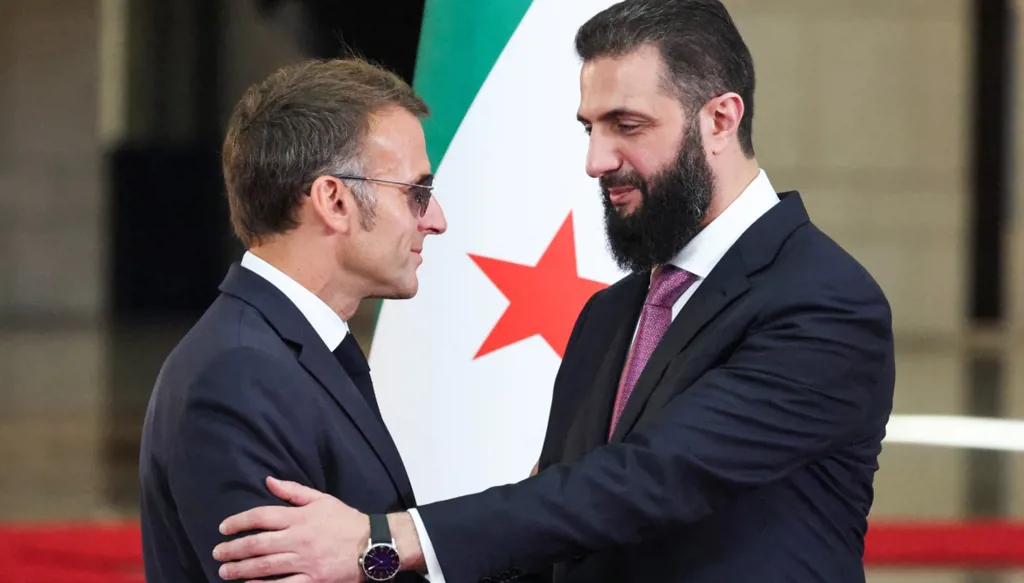


In recent days, Syria’s transitional leadership has managed to achieve several positive advances in its standing, as well as in its international and regional legitimacy. These developments were urgently needed to strengthen its stability and deepen confidence in it, both domestically and abroad.
Perhaps the most important of these advances was, first, the establishment of a “Joint Lebanese Syrian Higher Committee” on 2 July 2026. This came during a visit to Beirut by Syria’s Foreign Minister Asaad Al Shaibani for this purpose. During the visit, he also signed, with Lebanese Prime Minister Nawaf Salam, memorandums of understanding and agreements between the two countries in the political, diplomatic, economic, financial, judicial and security fields, based on the principle of “respecting the sovereignty and independence of Lebanon and Syria, and full equality between the two states.”
This step can be considered a transformation and a historic and qualitative opening in the relationship between the two neighbouring countries, particularly given that Lebanon was subjected to Syrian dominance under the Assad regime for three decades from 1976 to 2005, and then to Iranian dominance through Hezbollah for two decades from 2005 to 2025.
Second, French President Emmanuel Macron made an official visit to Syria on 7 July 2026, accompanied by a large delegation of business leaders and executives from industrial companies. This unprecedented visit was the first by a leader of a major Western country to Syria since President Al Sharaa took power following the collapse of the Assad regime at the end of 2024.
The importance of this visit lies in the fact that, in addition to political issues, it addressed economic cooperation, support for Syria’s stability and reconstruction, while the French side was keen to reaffirm its position on transitional justice, the establishment of state institutions based on the rule of law and the constitution, and the protection of minority rights.
However, what stood out during this visit was the level of warmth and hospitality displayed in the meetings between the French and Syrian presidents, which was reflected in the tours they took while walking through the capital Damascus, despite the negative atmosphere caused by terrorist attacks.
Third, Syrian President Ahmed Al Sharaa was invited to participate in the NATO summit held in Ankara on 8 July 2026. This is a notable step indicating the strengthening of Syria’s position at both the regional and international levels, as well as the confidence that Western countries are seeking to place in the Syrian leadership within the broader political, security and economic regional framework of the Middle East.
This also includes Syria’s positioning within the transformations taking place in the global transport and supply chain network, as a strategic hub and a key junction in the Middle East between East and West, particularly after the Strait of Hormuz crisis.
Fourth, perhaps the most significant of these developments was the meeting with US President Donald Trump, who has consistently affirmed his support for Syria’s stability and announced the removal of Syria from the list of countries supporting terrorism. This is an extremely important step for Syria, both politically and economically.
During that meeting, President Trump, as usual, made no secret of his admiration for President Al Sharaa and his confidence in him. However, the matter did not end there, as the Syrian president also met in Ankara with a delegation of members of the US Congress, as well as the US presidential special envoy for Syria and Iraq, Tom Barrack.
These meetings had political, economic and security dimensions, particularly given that Barrack is the leading architect, within the Trump administration, of US policies towards Syria, Lebanon and Iraq, in addition to serving as the US ambassador to Turkey.
This suggests that Syria has now secured a firm position at the international, regional and Arab levels, particularly in relation to the Arab Gulf states, Lebanon and Jordan. However, this position does not eliminate Syria’s need for internal stability in political, economic, security and social terms, nor should it overlook its need to confront or overcome the challenge posed by Israeli policies in the region and towards Syria itself.
The Syrian leadership should understand that, despite all its external achievements and successes, Syria also needs to strengthen the transformation of authority into a state and to empower it in the true sense of the word, meaning a state based on institutions and the rule of law, without delay or justification for any reason. This requires it to clearly define its direction in this regard, first and foremost towards its own people, before anyone else.
What Syria as a state also needs is to ensure that Syrians become a people in the full sense of the word, rather than groups or minorities divided along sectarian, ethnic or tribal lines. The unity of Syria as a state with sovereignty does not stem solely from the unity of its territory and geography, but also from the unity of its citizens and their awareness of themselves as a people made up of individual, free, independent and equal citizens. This is Syria’s greatest source of strength, and it is what protects it against external challenges, including the Israeli challenge.
Disclaimer: The opinions expressed by the writers are their own and do not necessarily represent the views of Annahar.