

Twenty years since July 2006 War: Hezbollah and State challenges
Three wars over two decades reshaped Lebanon’s political and military landscape, transforming the balance of power from Hezbollah’s peak in 2006 to renewed debates over sovereignty, state authority, and control of weapons.



 Messenger
 Whatsapp
 Threads
 Email
Email
 Print
Print
 X
X
 Facebook
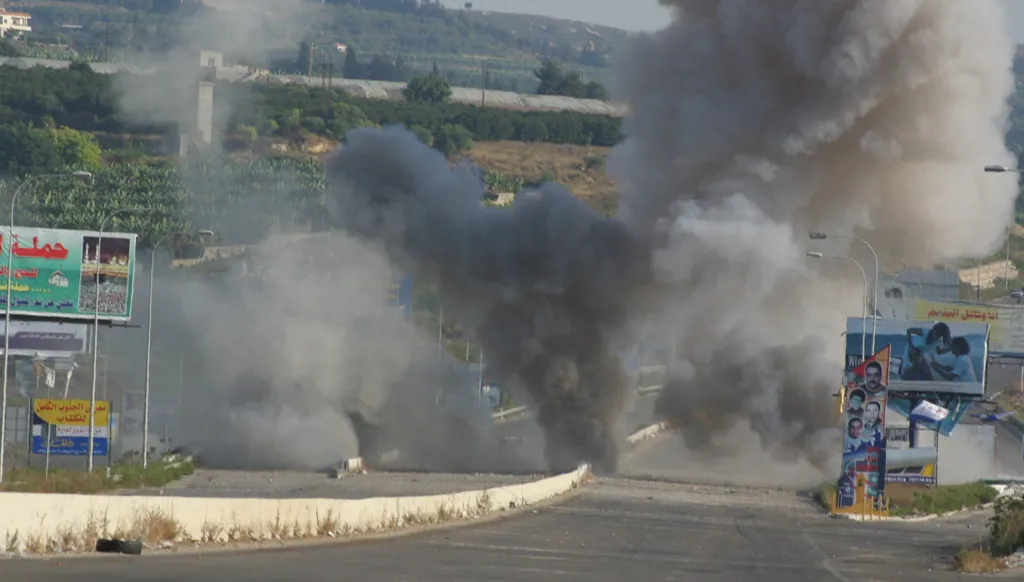


Every war in Lebanon’s history has been preceded by the belief that it would be the last, but experience has proven otherwise. Since the July 2006 war, Lebanon has not experienced lasting stability. Instead, it has moved from one confrontation to another, as if the first war had been nothing more than the beginning of a long trajectory that, twenty years later, led to a fundamental shift in the balance of power and in the political and military realities, both inside Lebanon and across the region.
During these two decades, Lebanon went through three pivotal wars: the July 2006 war, then the war in support of Gaza, and finally the war in support of Iran. Each had its own circumstances and objectives, but together they formed interconnected stages of a single trajectory. While the July 2006 war represented the peak of Hezbollah’s rise and that of the Resistance Axis, the two subsequent wars carried clear signs of the beginning of the decline of this trajectory under the pressure of military and regional transformations.
The July War: The Peak of Hezbollah's Rise
When the war broke out on 12 July 2006, Israel announced that its objective was to eliminate Hezbollah’s military capabilities and recover the two soldiers captured on the border. After 33 days of fighting, the war ended without Tel Aviv achieving its declared goals, while Hezbollah managed to withstand the offensive and continued launching rockets until the final hours.
Within Israel, the performance of the political and military leadership came as a major shock, prompting the government to establish the “Winograd Commission” to investigate the handling of the war. Its report concluded that responsibility lay with the highest political and military levels, in a rare admission of the scale of the failure that accompanied the confrontation.
In contrast, Hezbollah emerged from the war at the height of its power. The phrase “Divine Victory” became the slogan of the period, and its Secretary General Hassan Nasrallah emerged as the most prominent and influential Arab figure, not only among the Shiite community but also across the wider Arab public. The party gained unprecedented political and popular influence inside Lebanon, while strengthening its position within the Iran led axis, benefiting from its close alliance with the Syrian regime, which provided it with strategic depth as well as supply and arms routes.
Despite the extensive destruction that affected the southern suburbs of Beirut, southern Lebanon, and Lebanese infrastructure, along with thousands of casualties and displaced people, Hezbollah succeeded in turning the outcome of the war into political capital that lasted for years.
At the same time, the war produced a new arrangement through the adoption of UN Security Council Resolution 1701 and the deployment of the Lebanese Army south of the Litani River in cooperation with UNIFIL forces, marking the beginning of a new phase in the management of the southern border, without resolving the internal debate over the future of Hezbollah’s weapons.
The "Support for Gaza" War: The Beginning of Erosion
Seventeen years later, the south returned to war, but the situation was completely different.
The confrontation that began under the slogan of “supporting Gaza” did not turn into a short war. Instead, it became a prolonged war of attrition, during which Israel systematically targeted Hezbollah’s leadership and military infrastructure, using unprecedented intelligence and technological capabilities.
The most significant turning point was the assassination of Secretary General Hassan Nasrallah, an event considered the most serious in the history of the party since its establishment. He was not merely an organizational leader, but the architect of Hezbollah’s political and military project for more than three decades, the symbol of the “July Victory” in the collective consciousness of its supporters, and one of the most influential figures in Lebanese and regional political life. Therefore, his absence was not simply a leadership loss, but a moral, political, and organizational blow that struck at the core of the party’s identity and symbolism.
The losses were not limited to the leadership. A large number of military and field commanders were assassinated, while military and logistical structures were subjected to successive strikes. Meanwhile, southern Lebanon witnessed widespread displacement and extensive destruction affecting entire villages, at a time when Lebanon was already experiencing an unprecedented financial and economic collapse, making the cost of the war far greater than that of 2006.
Politically, the war brought the issue of Hezbollah’s weapons back to the forefront of domestic and international debate. After years of focus on maintaining the deterrence equation, the international community shifted toward calling for the full implementation of Resolution 1701, strengthening the role of the Lebanese Army, and limiting decisions of war and peace to state institutions, considering this an essential condition for any future stability.
The "Support for Iran" War: A Shift in the Strategic Environment