

Iran buries Khamenei as fresh US strikes fuel regional tensions
Thousands gather in Mashhad to lay Ayatollah Ali Khamenei to rest more than four months after his death, amid renewed strikes, escalating threats, and growing tensions over the future of the conflict.



 Messenger
 Whatsapp
 Threads
 Email
Email
 Print
Print
 X
X
 Facebook
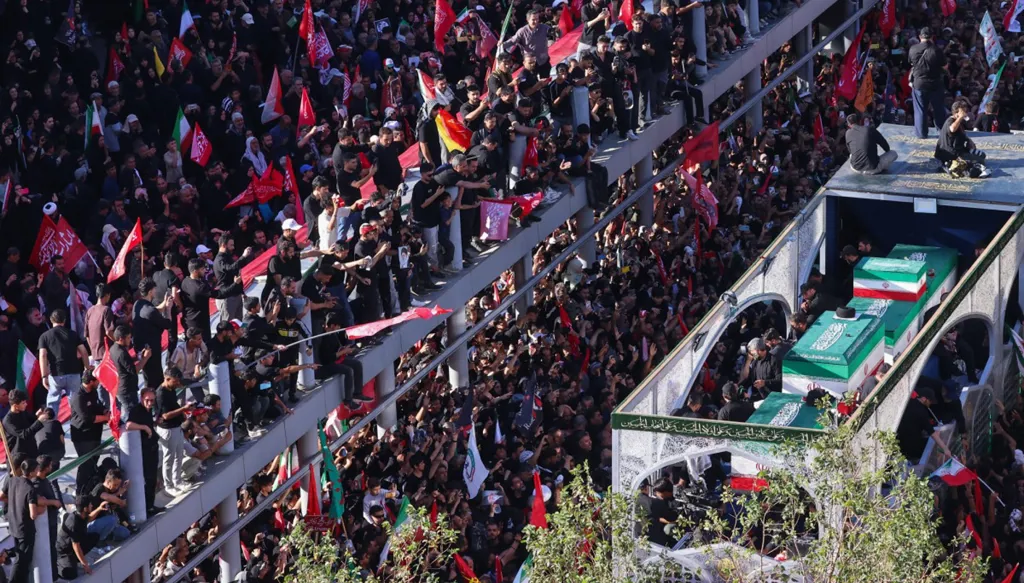
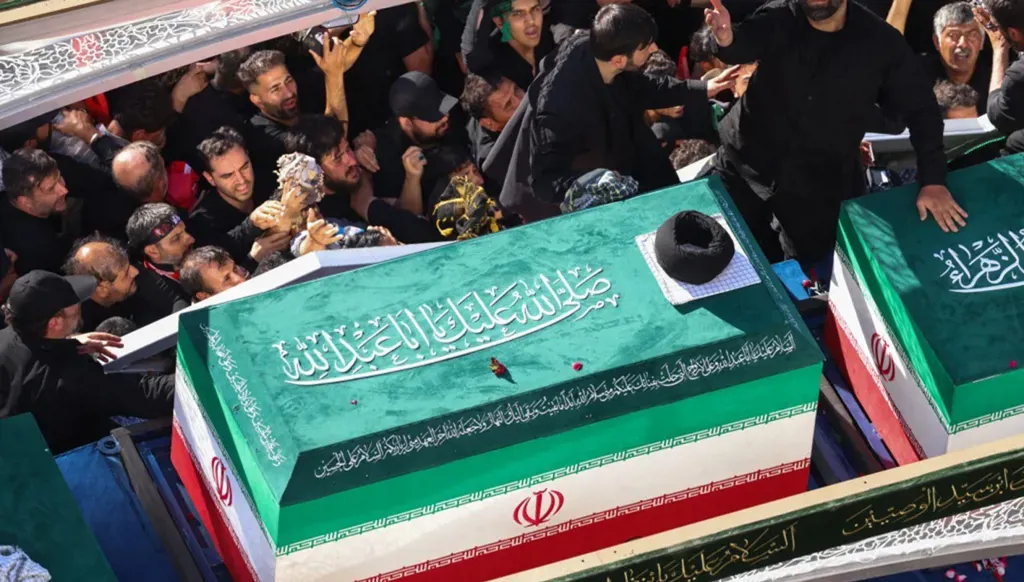
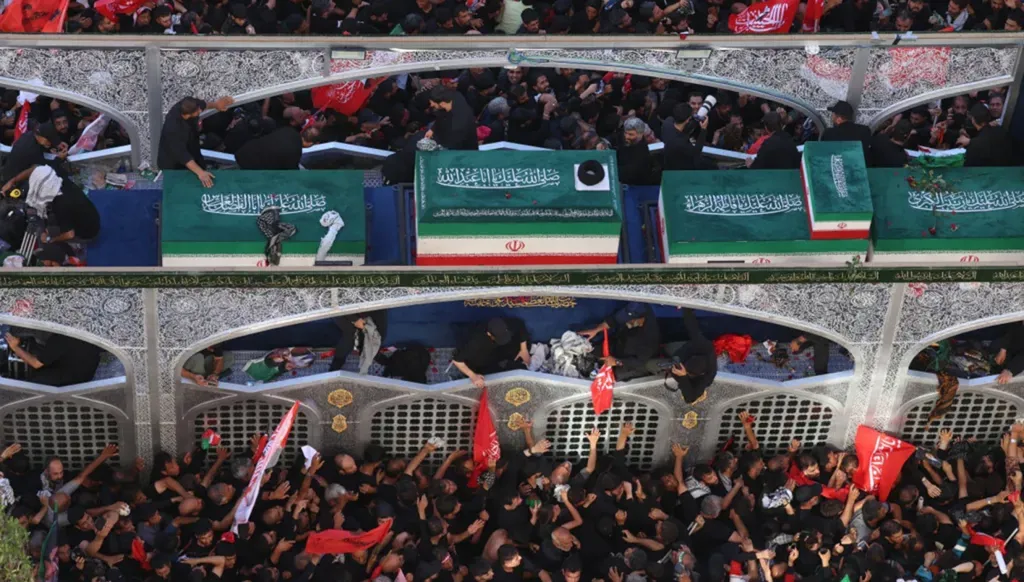


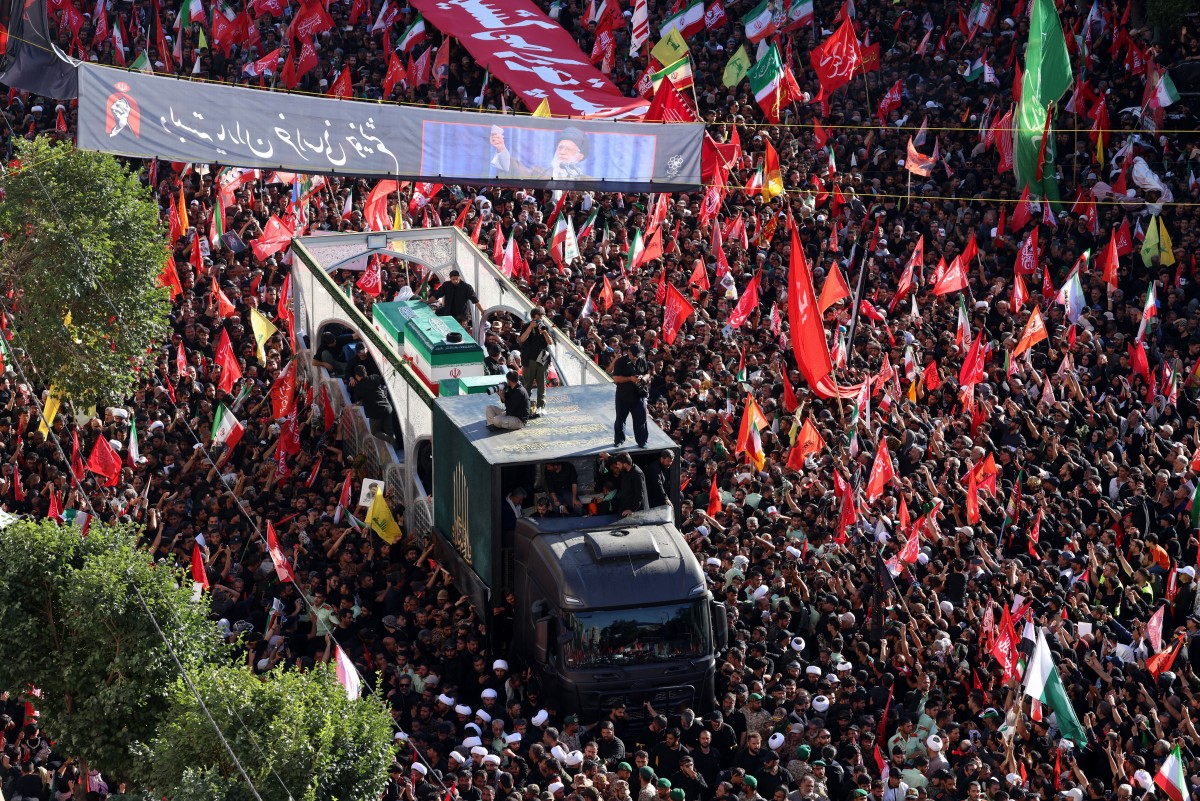
Iran on Friday held the funeral for the body of its former Supreme Leader, Ayatollah Ali Khamenei, laying him to rest more than four months after he was killed in an airstrike, as two days of tit for tat attacks between the United States and Iran raised fears of a return to a full-scale war.
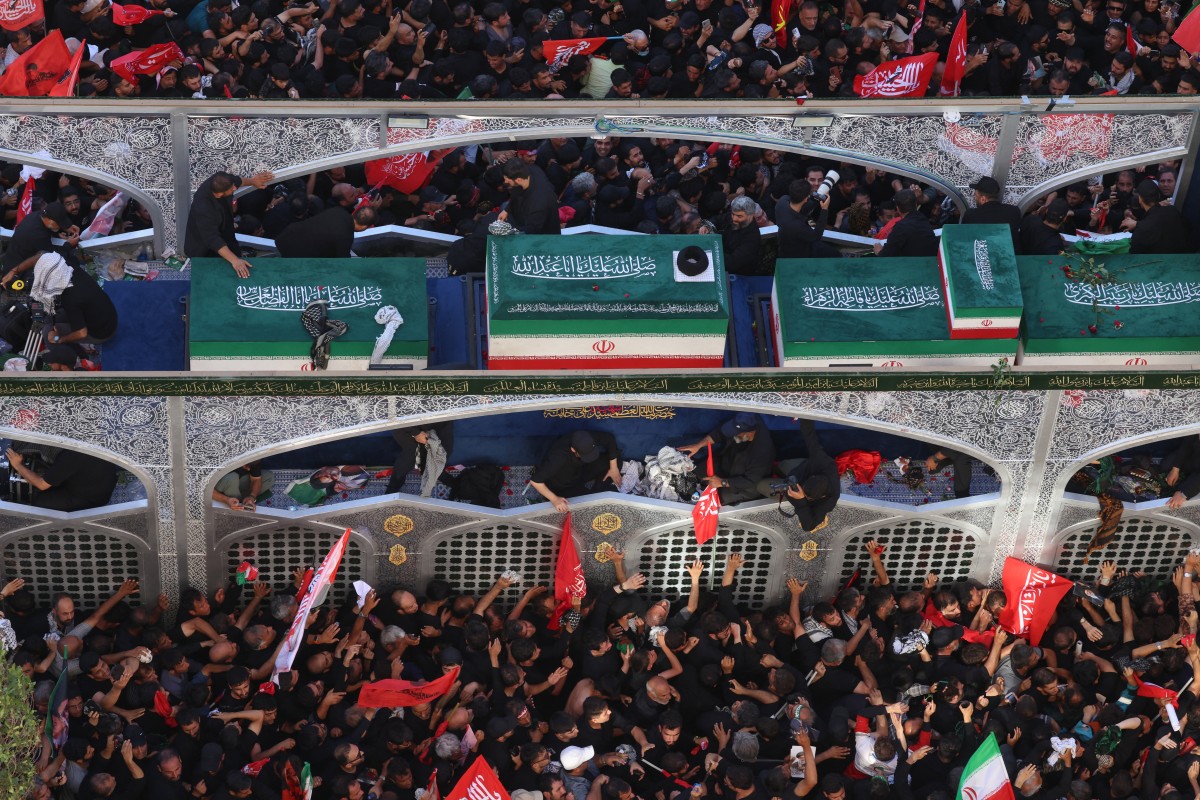
Mourners carried the coffin of Khamenei, which was wrapped in the Iranian flag, in a procession inside the Imam Reza Shrine in his hometown of Mashhad, eastern Iran, before he was buried. His son and successor, Mojtaba Khamenei, did not appear at the burial ceremony.
The state-run radio and television broadcaster reported that “the pure body of the martyred leader of the revolution was laid to rest in the Dar al Dhikr portico at the Imam Reza Shrine.”
The US bombardment has killed 17 people and wounded 93 others in Iran since hostilities resumed the previous day, despite the memorandum of understanding reached between the two sides to halt the conflict, according to the latest figures released by the Ministry of Health.
The renewed hostilities are undermining the ceasefire, which US President Donald Trump said had “ended.” He expressed his anger at Iranian leaders, describing them as “sick people” with whom he no longer wanted to “deal,” while at the same time leaving the door open for his negotiating team to continue talks.
Trump wrote on social media above an image he posted showing what appeared to be a strike on a site in Iran: “This is retaliation for the strikes Iran carried out against ships yesterday. If this happens again, it will be much worse!”
Washington accused the Iranian military of carrying out strikes on Tuesday against at least three vessels in the strategic Strait of Hormuz, where maritime traffic has since slowed significantly, according to data from the maritime tracking platform Kpler.
Iran has rejected a return to the situation that existed before the war and insists on its right to impose fees on ships using the waterway.
Iranian chief negotiator and Speaker of the Parliament Mohammad Bagher Qalibaf said on Thursday that the Strait of Hormuz would only be reopened under “Iranian arrangements.”
He wrote on X: “The United States has not yet learned that intimidation tactics and breaking promises no longer come without consequences,” adding: “I will be clear: if you strike, you will be struck.”
Iran’s official IRNA news agency reported on Thursday that a US Israeli projectile hit a military facility on the outskirts of Bushehr. However, the US Department of Defense told Agence France Presse that it had not carried out any strikes on Iran “in the past few hours.”
Trump held a phone call on Thursday evening with Israeli Prime Minister Benjamin Netanyahu to brief him on “recent US moves in the Gulf,” according to a statement from Netanyahu’s office.
The conversation took place “as part of regular communications” between the two leaders, who reaffirmed their commitment to “continuing coordination between their two countries in various fields,” according to the statement.
The Wall Street Journal reported on Thursday, citing unnamed sources, that Israel had also informed the United States that its intelligence services had detected a new Iranian plot to assassinate Trump.
Suppressing news of the event?
US military officials said that around 90 Iranian military targets had been struck in the latest attacks, including air defense systems, missile storage sites, and drone facilities.
However, Iran accused the United States of targeting civilian infrastructure, including bridges and the railway line linking Tehran and Mashhad in the northeast, in an attempt to divert attention away from the funeral ceremony of former Supreme Leader Ayatollah Ali Khamenei.
In a statement, the Islamic Revolutionary Guard Corps said that US forces had targeted “in an anti civilian act, two bridges in the eastern provinces leading to the city of Mashhad, in an attempt to suppress and conceal news of this unprecedented event from the eyes of the world.”
It added that such actions would instead increase global public awareness and strengthen people’s determination to confront “the Great Satan.”
The strikes also hit the “vicinity” of the nuclear power plant in Bushehr Province, in the south, which had previously been targeted during the war, according to an Iranian official.
In response, Iran targeted sites in Bahrain and Kuwait, where at least one person was injured, as well as Qatar, which is involved in mediation efforts to end the conflict. Air raid sirens also sounded in Jordan, which announced that it had intercepted Iranian missiles.
Crowds gather for Khamenei’s funeral
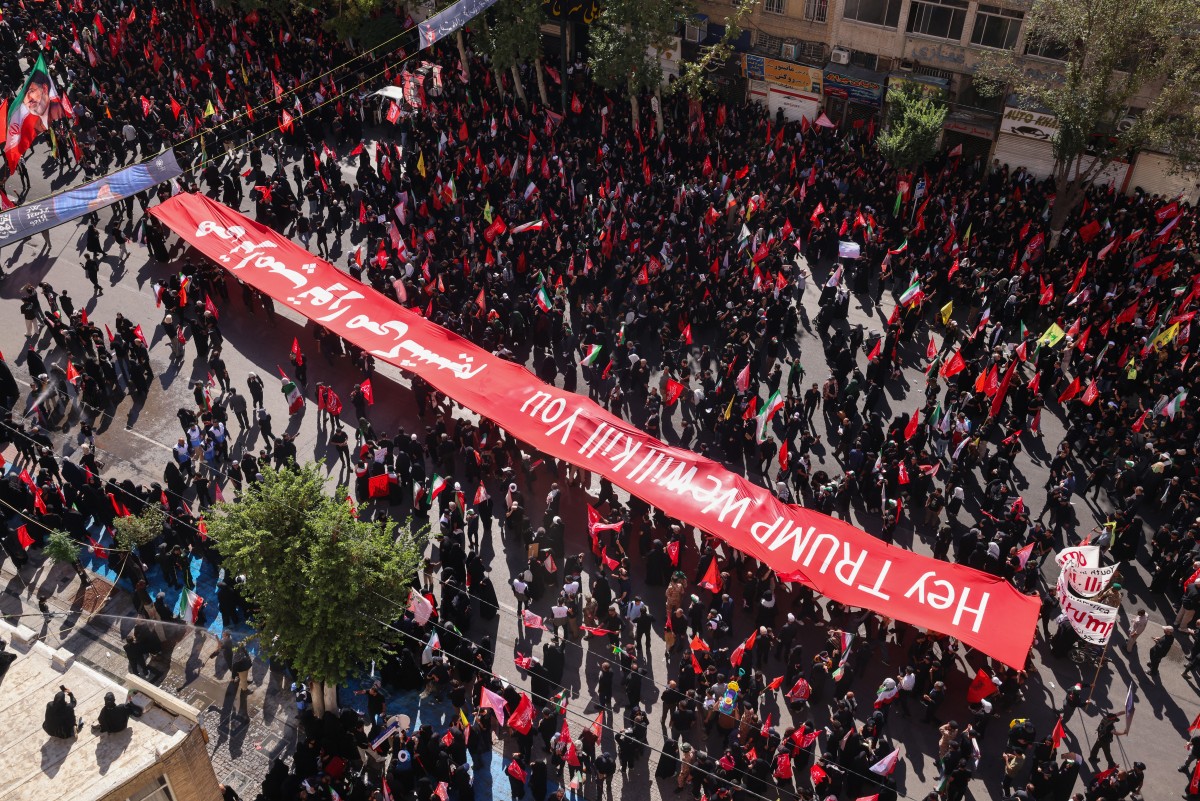
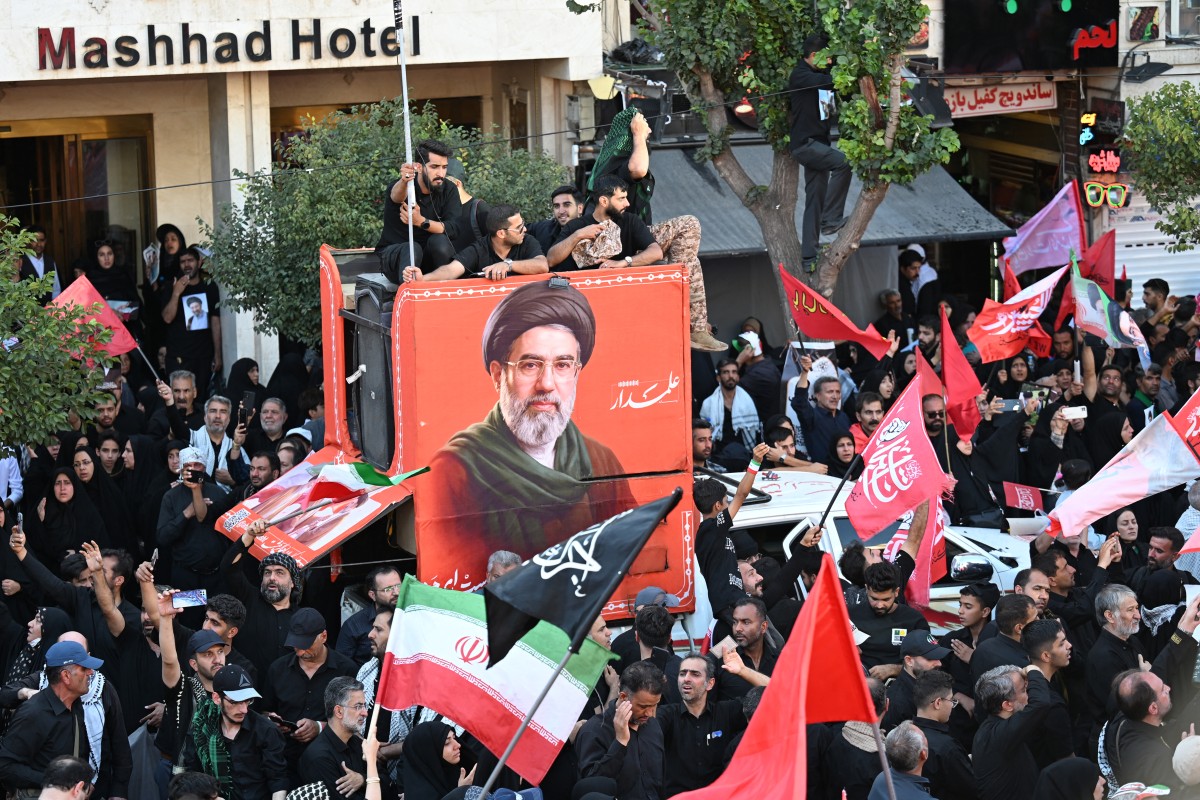
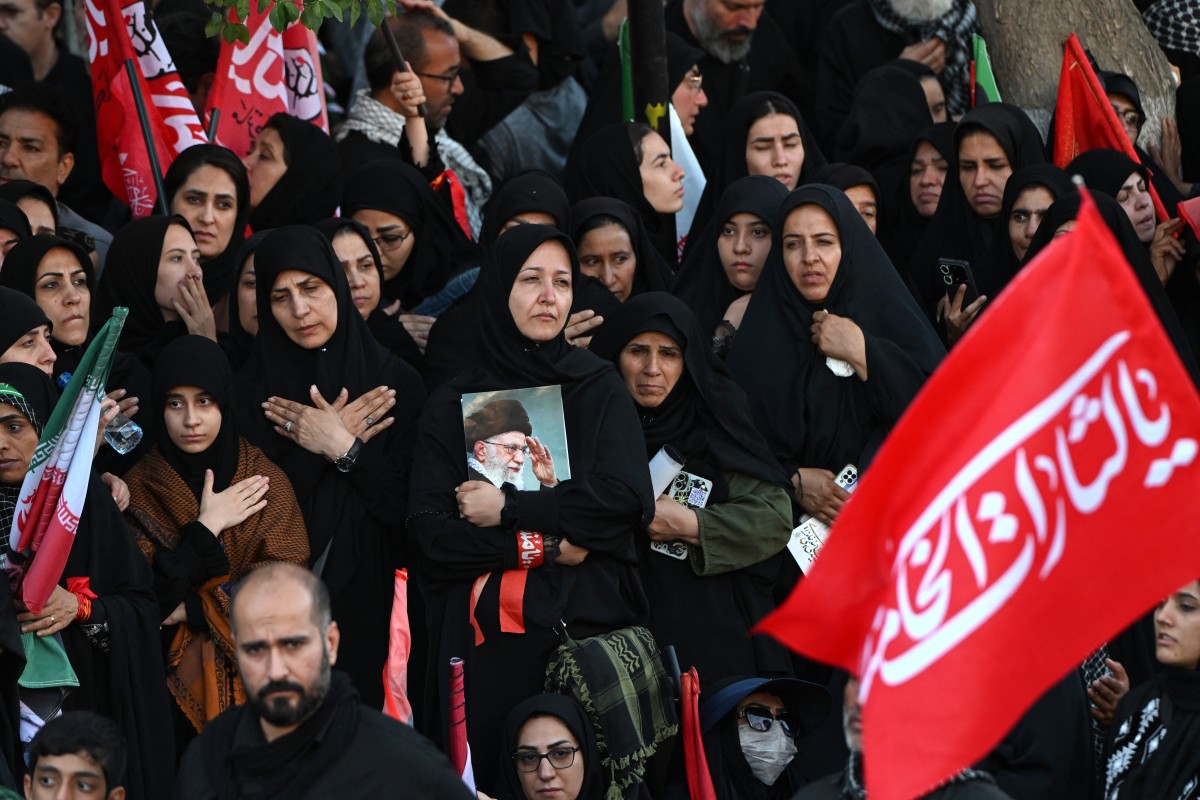
However, the tense atmosphere did not dampen the enthusiasm of supporters of the Islamic Republic, many of whom traveled to the city of Mashhad to attend Khamenei’s burial, six days after funeral processions that drew millions of people in several cities across Iran and Iraq.
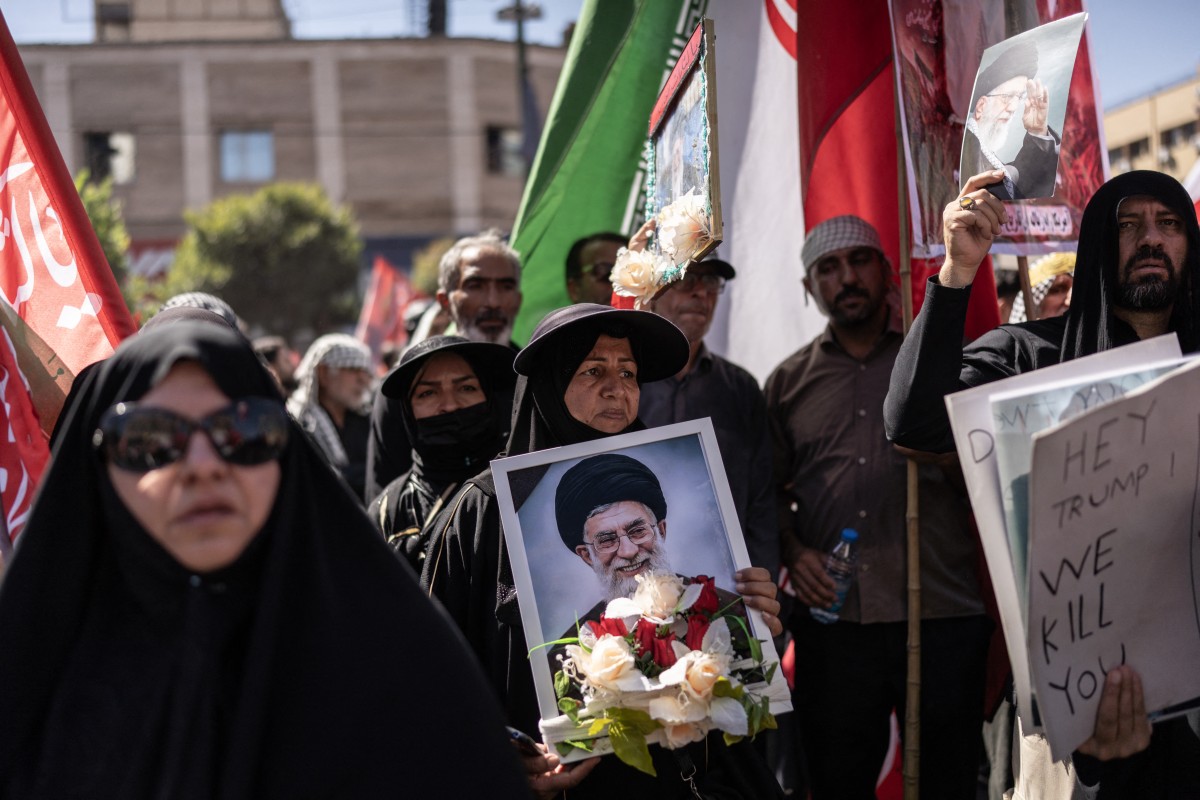
Women of different ages, wearing black cloaks, gathered along the avenue leading to the Imam Reza Shrine, the holiest site for Shiites in Iran.
In this structure, adorned with multicolored polished tiles and topped by two golden domes and minarets, prayers were held for the body of the Supreme Leader, who was killed in the first US Israeli strikes on February 28 at the age of 86, after spending nearly 37 years leading the Islamic Republic.
Mourners had been arriving in Mashhad throughout the night and in the hours before the funeral ceremony began. Some carried huge portraits of Khamenei, while others chanted religious hymns.
“Everyone here is calling for revenge. I do not know what is happening diplomatically, or whether a decision has been made to move forward on that path, but everyone is raising red flags as a sign of their desire for revenge,” said Mohammad Afsharian, a 41 year old shop owner.
He added: “Even if we reach an agreement with the United States, we will still have problems with Israel,” whose Defense Minister Israel Katz said on Thursday that the country was prepared to strike Iran “for the third time if necessary” and “with greater force.”
The resumption of strikes pushed oil prices higher on Wednesday, but they stabilized on Thursday at around $78 per barrel for Brent crude from the North Sea, the international benchmark for oil prices.
Ipek Ozkardeskaya, an analyst at Swissquote, said that “markets have become accustomed to tensions and disruptions in the Strait of Hormuz.” She added that “the element of surprise has become much less significant than it was at the beginning, which also limits excessive reactions from investors.”