

After UNIFIL’s withdrawal: Who will fill the security vacuum in south Lebanon?



 Messenger
 Whatsapp
 Threads
 Email
Email
 Print
Print
 X
X
 Facebook
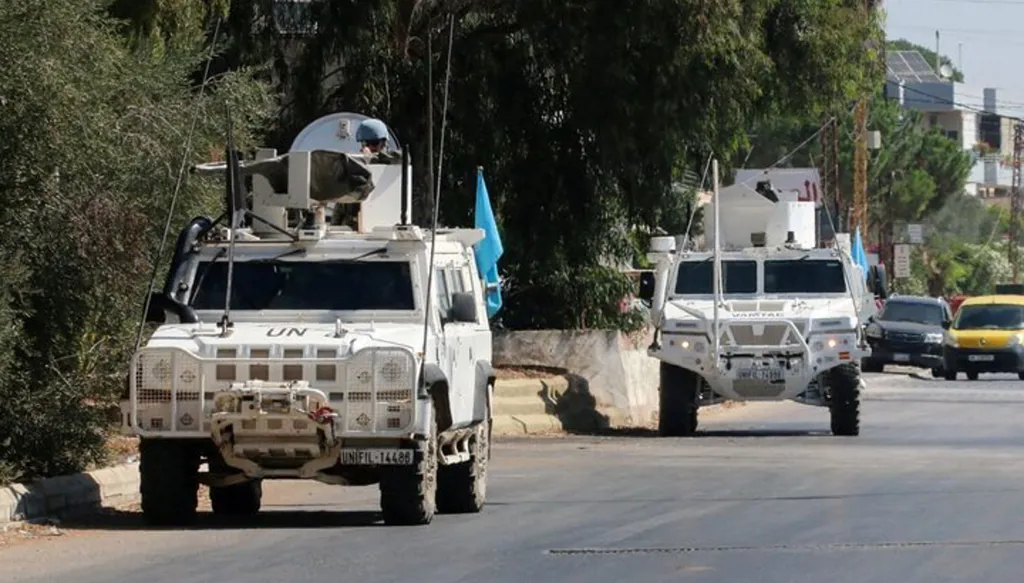


The end of the mission of the United Nations Interim Force in Lebanon (UNIFIL) is not merely a milestone in the history of one of the longest-running UN peacekeeping missions; it represents a strategic shift that will require a redefinition of the security framework in South Lebanon.
With the anticipated withdrawal of the international force, attention during the 36th NATO meetings in Turkey is focused on the parties that could fill the potential vacuum. While the United States has ruled out deploying ground troops, within the European Union, particularly France and Italy, discussions are emerging over the creation of a new mission aimed at supporting the Lebanese Army and overseeing the implementation of the security arrangements stemming from the trilateral framework agreement between Lebanon and Israel under U.S. auspices.
The new agreement assigns the Lebanese Army a central role as the sole legitimate institution responsible for extending the state’s authority over all Lebanese territories, through a program aimed at developing military and security capabilities that would gradually lead to the disarmament of non-governmental armed groups. However, translating these provisions from paper into practice presents complex challenges, foremost among them the question of how to provide international guarantees that would enable the Lebanese state to carry out this mission without creating a new form of external guardianship.
According to international sources, while Washington does not consider European participation a priority within its strategy towards Lebanon, it does not appear opposed to it, provided that it complements rather than competes with American efforts. The trilateral agreement itself refers to the role of “international partners” in supporting Lebanon’s sovereignty, while a recent G7 statement issued in France called for the provision of appropriate international security guarantees, paving the way for a multilateral approach in which European actors could play a key role.

Meanwhile, sources indicate that the United Nations has begun studying the future shape of its presence in Lebanon following the end of UNIFIL’s mandate. Secretary-General António Guterres has proposed three options with varying scopes and missions, ranging from a limited mission of around 1,500 personnel to another exceeding 4,000 individuals. These proposals would preserve essential functions, including monitoring the ceasefire, facilitating military coordination between Lebanon and Israel, supporting the Lebanese Army, and following up on the implementation of UN Security Council Resolution 1701.
However, these proposals do not appear to fully align with the American vision. For years, Washington has expressed reservations about the performance of international forces, which it believes have failed to fully fulfill their mandate. The United States argues that prolonged reliance on such forces has limited the development of the Lebanese Army’s role in the south. Therefore, the American administration favors a more limited model focused on empowering the Lebanese Army rather than replacing its role, explaining its cautious approach toward any expanded UN mission.
This has brought renewed attention to the possibility of an independent European mission that would remain consistent with the United Nations framework without being part of it. European Union foreign policy chief Kaja Kallas announced that efforts are underway to prepare a new mission for Lebanon, while France and Italy have revealed consultations to establish an international coalition to support the transitional phase following UNIFIL’s withdrawal. Although the final structure of these initiatives remains unclear, they reflect European willingness to assume part of the responsibility for maintaining stability in Lebanon.
Such a mission is not expected to include combat operations or direct confrontations with Hezbollah. Instead, it would likely focus on strengthening the Lebanese Army’s capabilities, providing technical assistance and training, and contributing to security sector reform, similar to European Union missions in Iraq or its maritime operations in the Mediterranean.
According to sources, the added value of any European role lies in its ability to address gaps that may emerge following UNIFIL’s withdrawal, particularly in border monitoring, combating arms smuggling, and strengthening Lebanon’s naval capabilities. The border with Syria remains a key route for smuggling operations, while Lebanon currently relies heavily on UNIFIL’s naval component to monitor its territorial waters, creating a potential gap once the UN mission ends.
However, the success of any European initiative will depend on the level of coordination with the United States, the United Nations, and the Lebanese government. European countries must first develop a clear vision defining the nature, objectives, and capabilities of their mission, moving beyond political announcements that are not supported by sufficient resources. Washington, for its part, will need to unify its initiatives toward Lebanon and avoid overlapping security frameworks that could complicate the implementation process.
The greatest challenge remains establishing a reliable mechanism to verify the implementation of disarmament arrangements. The absence of a third party trusted by all sides has been one of the reasons behind the failure of previous initiatives. This makes the involvement of European actors in monitoring and evaluation efforts a possible option, if accepted by the parties concerned.
For Lebanon, the challenge is no less significant than the need for international support. The state must clearly define the needs of its army and demonstrate that its request for external assistance is intended to strengthen national capabilities rather than outsource its security responsibilities. Protecting international missions and holding violators accountable will be key indicators of the state’s seriousness in managing this new phase.
At the same time, Israel remains concerned about ensuring the success of arrangements that would strengthen the Lebanese Army’s role, despite growing tensions in its relations with the European Union. Experience has shown that continued military operations inside Lebanese territory or maintaining a long-term presence only reinforces the arguments of forces that justify keeping their weapons under the pretext of resisting occupation. Supporting Lebanese state institutions remains the most sustainable option for ensuring border security.
In conclusion, UNIFIL’s withdrawal will not mark the end of the international role in Lebanon, but rather the beginning of a different phase: a transition from maintaining stability to building state institutions. If Europe succeeds in establishing a mission coordinated with the United Nations and the United States, while remaining aligned with Lebanese state priorities, it could become a cornerstone in restoring sovereignty. However, if political calculations prevail and competing initiatives multiply, the vacuum left by the departure of the international force could mark the beginning of a new period of uncertainty rather than an opportunity to strengthen the Lebanese state and restore its monopoly over legitimate arms.
Disclaimer: The opinions expressed by the writers are their own and do not necessarily represent the views of Annahar.