

Pakistan’s diplomatic rise: From message carrier to Middle East mediator?
After its role in facilitating contacts between Washington and Tehran, Islamabad is seeking a broader diplomatic footprint through a potential mediation effort in Libya, but turning dialogue into lasting political agreements remains the real test of its emerging influence.



 Messenger
 Whatsapp
 Threads
 Email
Email
 Print
Print
 X
X
 Facebook
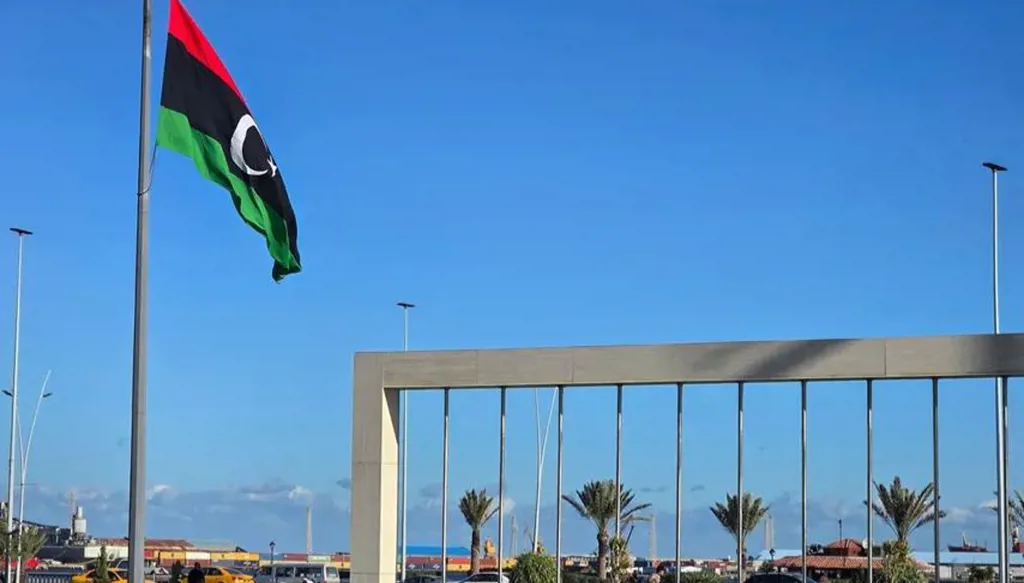


Which mosquito bit Pakistan, pushing it to embark on a series of mediation efforts here and there and join the club of international mediators?
After finally succeeding in playing a calm and balanced role in communications between Washington and Tehran, Pakistan is once again returning to the diplomatic spotlight, but this time through the Libyan-Libyan channel, with reports emerging about Pakistani mediation between eastern Libya, led by Field Marshal Khalifa Haftar, and the Government of National Unity in Tripoli, headed by Abdul Hamid Dbeibeh.
Has Islamabad become a new diplomatic player whose role must be seriously considered in the issues and files of the Middle East, or does its role remain limited to simply relaying and exchanging messages?
Pakistan’s role in Libya is not merely a rumor or newspaper and website speculation. Rather, it is a confirmed reality that is expected to be officially announced in the form of a formal initiative or a political agreement.
Although the parties to the Libyan crisis, as well as Islamabad, have not yet issued any official confirmation, as the saying goes, there is no smoke without fire. There is clearly a diplomatic effort taking shape and developing, pending the announcement of its results and outcome.
Since late 2025, Islamabad, according to Reuters, has begun undisclosed contacts and mediation efforts between eastern Libya and the Tripoli government. These efforts included meetings and the exchange of messages between the two sides in an attempt to explore the possibility of reaching a new political formula that would end the state of division in Libya.
According to Pakistani sources, the two sides of the Libyan crisis asked Pakistan to work on bringing their viewpoints closer together, all with American approval and support from Saudi Arabia, Qatar, and Turkey.
One might ask: why Pakistan and not another country, given its geographical distance from Libya? The answer is that Islamabad has military and diplomatic relations with Libya dating back to the 1970s. In recent years, these ties have witnessed growing cooperation, particularly with the military leadership in eastern Libya.
At the same time, the Dbeibeh government opened direct channels of communication with Islamabad. Arab media reports also stated that Pakistan’s army chief, Field Marshal Syed Asim Munir, held contacts with the Tripoli government.
Another key factor supporting Pakistan’s role is that Islamabad maintains strong and close relations with the United States and several Gulf countries. In addition, its record is free of interference or involvement in Libya’s internal affairs, which gives it a degree of neutrality compared with other mediators. However, resolving the Libyan crisis is neither easy nor straightforward, given its complexity and the many challenges stemming from the long rule of Colonel Muammar Gaddafi and the political vacuum left behind after his fall.
Pakistan’s role gained prominence during the crisis between Washington and Tehran, a crisis that continues despite the relative calm that has emerged. Although Pakistan was not the only mediator involved in this crisis, its participation in the process gave it unprecedented diplomatic momentum and visibility. It also reinforced its image as a country capable of bringing together conflicting parties that are difficult to bring to the same negotiating table.
It is obvious that the success of any mediation effort is not measured merely by the launch of communications, but rather by its ability to produce workable and implementable agreements. This applies whether it concerns the Iranian file or the Libyan crisis, which continues to face major internal and regional complexities. This is especially true given that, to this day, no final settlement has been reached between Washington and Tehran, nor have the contacts with the Libyan parties evolved into a clear and defined political agreement. Therefore, it is still too early to consider Pakistan an established international mediation power.
The fact that conflicting parties are turning to Pakistan reflects, on the one hand, a major and tangible shift in its diplomatic standing, while also highlighting its ambitious attempt to move from its traditional role in South Asia toward a broader role in Middle Eastern affairs. In my view, this is a legitimate aspiration. In this context, one cannot overlook the historic and enduring rivalry with India, which is one of the factors contributing to shaping this direction.
Although the US Iranian crisis differs from the Libyan crisis in terms of nature, context, and political circumstances, both share a common need for mediators capable of rebuilding trust between the parties.
The crisis between Washington and Tehran is a conflict between two states that can be contained through negotiations, whereas the Libyan crisis remains far more complex due to the overlapping local, regional, and international actors involved. Therefore, Islamabad’s success, if it is achieved, will not be measured solely by its ability to open channels of dialogue, but by its capacity to bring a definitive end to the exhausting and destabilizing political division in Libya, a division that affects the entire North African region.
Disclaimer: The opinions expressed by the writers are their own and do not necessarily represent the views of Annahar