

What Khamenei’s Funeral Crowds Really Reveal About Iran



 Messenger
 Whatsapp
 Threads
 Email
Email
 Print
Print
 X
X
 Facebook
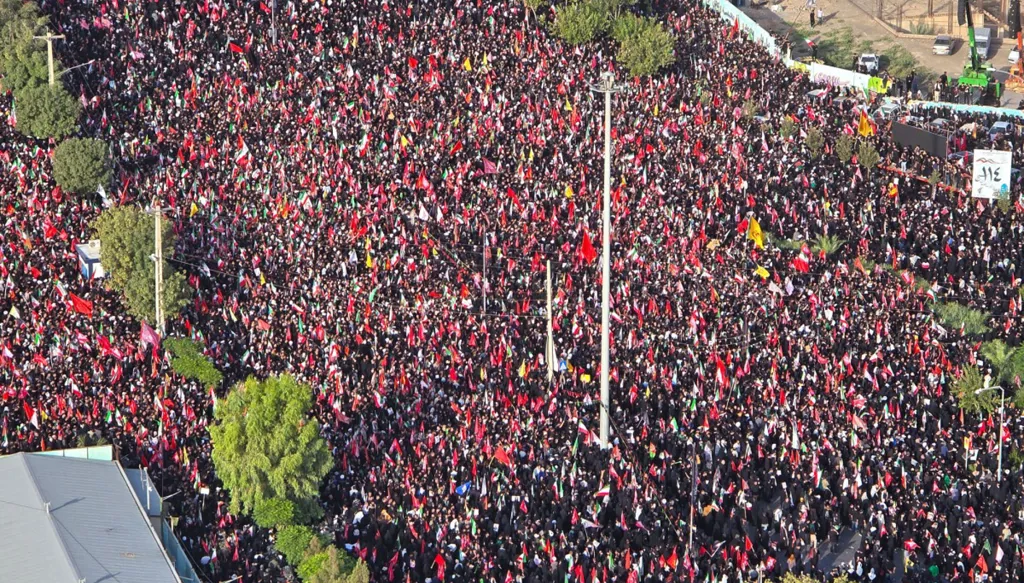


The crowds attending the funeral ceremonies of the late Iranian Supreme Leader Ali Khamenei have reignited debate within Iran and abroad over the political and social significance of the spectacle. Supporters of the regime viewed the turnout as evidence of continued national unity behind the Islamic Republic, while opponents argued it resulted from extensive state mobilization and the vast resources deployed by government institutions. Between these competing narratives lies a more complex question: Does the size of the crowd truly reflect the level of popular support for the regime?
Viewed through the lens of political and social sciences, the answer is less straightforward. Crowds, regardless of their size, are not sufficient on their own to gauge public opinion or measure the legitimacy of a political system. Iranian society, with its political, social, and cultural diversity, cannot be reduced to a single scene or interpreted in black-and-white terms. From this perspective, this report examines the range of factors that shaped the event.
Undeniable Popular Presence
The large public turnout at the mourning ceremonies, funeral prayers, and processions held over several days in Tehran and Qom drew the attention of international media and exceeded the expectations of many observers, particularly following the bloody events of recent months, most notably the January protests that left a significant number of casualties.
According to reliable information from Iranian officials, the ceremonies were deliberately held over several days and across different cities to reduce the risk of incidents caused by massive crowds. At the same time, this approach also contributed to increasing the overall number of participants to nearly millions. As a result, denying the existence of genuine popular participation does not align with what was widely observed.
At the same time, it is equally undeniable that military, government, and religious institutions, along with the Tehran Municipality, mobilized their human and logistical resources to maximize attendance, spending substantial sums on transportation, accommodation, hospitality, and facilitating participants' access to the ceremonies.
The Social Base of the Regime
The Iranian regime retains a cohesive and active social base composed of religious, military, and social networks, including religious organizations and the Basij, all of which possess strong mobilization and coordination capabilities. These networks place their human resources at the regime's disposal whenever necessary, particularly when the leadership is involved.
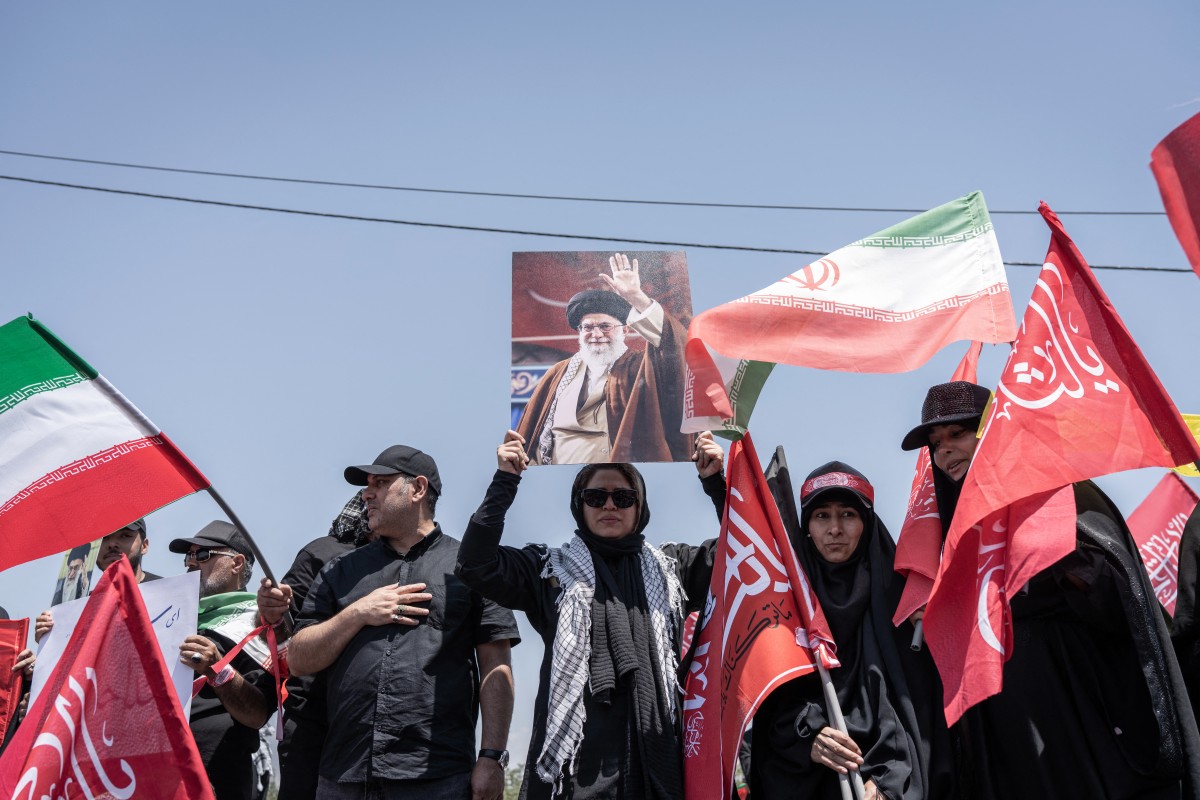
Throughout his years in power, Khamenei worked to strengthen and consolidate this social base. Among its key components are the Maddah, who have played an increasingly prominent role in mobilization in recent months. During the funeral, many carried flags reading "Ya latharat Khamenei," calling for retribution against those they described as the assassins of the "Leader of the Revolution." More hardline factions also chanted slogans against advocates of negotiations with the United States, particularly President Masoud Pazeshkian and Foreign Minister Abbas Araghchi.
The Element of Victimhood
One of the main factors behind the high turnout was the events of recent months following the US-Israeli attack on Iran and Khamenei's killing on the first day of the war inside his home, alongside several members of his family, including his daughter, her husband, his son's wife, and his granddaughter. These events reinforced his image as a victim, a concept that carries deep symbolic weight in both Iranian and Shia culture, where the killing of leaders alongside their families evokes powerful feelings of grief and sympathy.
The regime's media apparatus also played an influential role in reinforcing this narrative, particularly during the month of Muharram, by drawing parallels between Khamenei's death and the martyrdom of Imam Hussein and his family. This comparison strengthened the narrative among large segments of the religious public and encouraged many to attend the funeral.
The Image of Strength
The performance of the Iranian armed forces during the recent war also reinforced an image of strength among part of the Iranian public. The failure of the United States and Israel to achieve key objectives, including toppling the regime or gaining access to Iran's uranium stockpiles, along with Iran's closure of the Strait of Hormuz, strengthened the perception that Tehran had withstood unprecedented military pressure.
Many Iranians associated these outcomes with the policies and decisions Khamenei made throughout his leadership, believing he had prevented Iran from being divided or occupied and had overseen the development of military capabilities that denied the US and Israel their ultimate objectives. For many, participation in the funeral reflected respect for Khamenei personally rather than endorsement of every policy pursued by the regime.
Presence Does Not Mean Complete Satisfaction
Some have interpreted the massive turnout at Khamenei's funeral as proof of overwhelming support for his policies and broad satisfaction with the regime's performance over the past decades. Reality, however, appears far more nuanced.
In recent days, Annahar spoke with numerous funeral participants, many of whom said they continue to feel anger and grief over the killings of thousands of protesters on January 8 and 9 and still demand truth and accountability.
Several participants expressed lasting sorrow over the young lives lost during the regime's bloody crackdown while simultaneously feeling anger over the killing of their country's leader by foreign adversaries. Anti-Reza Pahlavi slogans were therefore widespread during the funeral after he called for protest demonstrations to coincide with the ceremonies.
Many Iranians also continue to express, both on social media and in everyday conversations, that they do not want the war to continue and instead seek improved relations with the outside world, including the United States. Many reject Khamenei's policy of permanent hostility toward Washington and do not support extremist slogans, including calls to kill President Donald Trump under the banner of revenge.
A Diverse Society That Cannot Be Simplified
Khamenei's funeral ceremonies once again demonstrated that Iranian society is more complex than the narratives promoted by either supporters or opponents of the regime. The vast crowds filling the streets do not prove that most Iranians support the government, just as the widespread protests of recent months do not mean that all Iranians oppose it.
Iran presents a society in which national, religious, and political identities overlap, while public attitudes shift in response to both domestic and external developments. A citizen may protest against the authorities over economic or political grievances, then attend the funeral of a state leader after perceiving that the country has come under foreign attack, only to return to the streets later if those same economic and political problems remain unresolved.
At the same time, the regime continues to rely on an organized social and ideological base that regards defending the Islamic Republic as both a religious and political duty and sees preserving the Guardianship of the Islamic Jurist as part of its core beliefs. Once again, this constituency demonstrated its capacity to mobilize at critical moments.
Ultimately, the millions who attended Khamenei's funeral cannot be viewed as participating in a political referendum on the legitimacy of the regime, nor can the event be dismissed as merely a state-orchestrated spectacle. Rather, the turnout reflected a combination of religious, national, emotional, political, and organizational factors, underscoring the complexity of Iranian society. Understanding the country's transformations therefore requires a deeper analysis than simply counting funeral attendees or protesters, as both represent only part of a much broader reality.