

From Hormuz to Lebanon: A region on the brink
As US-Iran tensions escalate and diplomacy falters, fears are mounting that the next regional conflict could extend far beyond the Gulf.



 Messenger
 Whatsapp
 Threads
 Email
Email
 Print
Print
 X
X
 Facebook
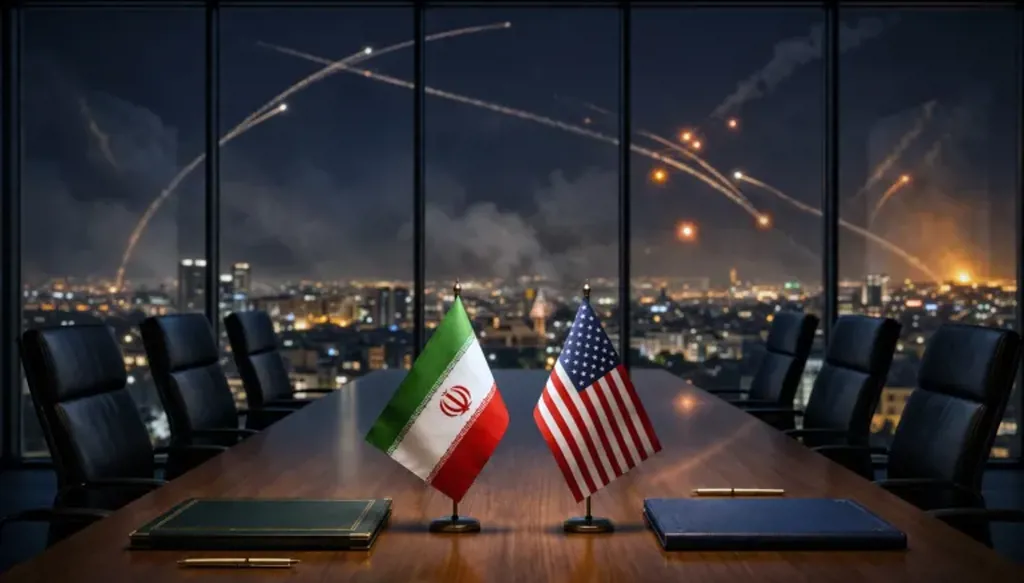


When the European Union Aviation Safety Agency warns international airlines about the risks of flying through the Iranian, Iraqi, and Lebanese airspace, it indicates that the geopolitical assessment of a leading European aviation safety authority, which monitors tens of thousands of flights to, from, and across Europe, points to dramatic developments that could occur in the foreseeable future.
Anyone following the rapidly unfolding developments between the United States and Iran since Tuesday night into Wednesday can only recognize how critical the regional situation has become, especially as both President Donald Trump and the Iranian leadership speak of the collapse of the memorandum of understanding between the two countries and the breakdown of the ceasefire.
The situation is therefore extremely serious, particularly because the current developments are undermining the diplomatic track, especially given the wide gap between Washington and Tehran on their positions and approaches across all major issues. As a result, the likelihood of a new war breaking out between the two sides in the foreseeable future is very high, due to the ongoing dispute over sovereignty in the Strait of Hormuz, Iran’s nuclear program, and the other major outstanding issues.
There is another key issue for Iran, one that it places at the top of its list of disputes: Lebanon. There, Iran is engaged in a struggle with the United States, Israel, and the Lebanese state to preserve what remains of its influence and its security and military presence, while simultaneously attempting to rebuild the security and military capabilities of its Lebanese proxy, Hezbollah.
This is precisely what prevents the Lebanese state from fulfilling its main commitments under the trilateral framework agreement with Israel and the United States. It is also what provides Israel with a justification for prolonging its control over occupied Lebanese territory in the south and for continuing to treat the Lebanese front as one that could erupt at any moment. For its part, Hezbollah continues to defy the decisions of the Lebanese authorities, with the backing of political forces aligned with it, while pressuring the government and both the presidency and the premiership to obstruct efforts to place all weapons under state control and to negotiate with Israel on permanent agreements that would bring an end to the cycle of past wars once and for all.
However, the dramatic developments shaping the region may leave the Lebanese authorities with little opportunity to catch their breath and begin implementing their commitments. If war breaks out in the Arabian Gulf and around the Strait of Hormuz between the United States and Israel on one side and Iran on the other, Iran’s Lebanese proxy is likely to move in coordination with its leadership in Tehran and ignite the military front in southern Lebanon, without regard for the consequences of triggering a third war with Israel. Such a conflict could, this time, result in the Israeli army extending its control across all of southern Lebanon, reaching parts of the Jezzine District and areas of the Western Bekaa, potentially including the line of Shiite towns.
These are highly realistic scenarios, and they cannot be ruled out if a third war were to erupt. This does not even take into account what could happen to the areas closest to the Israeli border, which, over time, could face the threat of being completely wiped off the map.
The conclusion is clear: the region is on the brink of a new war stretching from the Strait of Hormuz to Lebanon.
Disclaimer: The opinions expressed by the writers are their own and do not necessarily represent the views of Annahar