

Druze leader Walid Jumblatt rejects parts of Israel framework deal
More than a week after the deal was announced, Jumblatt sharpens his criticism, arguing it offers Lebanon no real guarantees or lasting ceasefire.



 Messenger
 Whatsapp
 Threads
 Email
Email
 Print
Print
 X
X
 Facebook
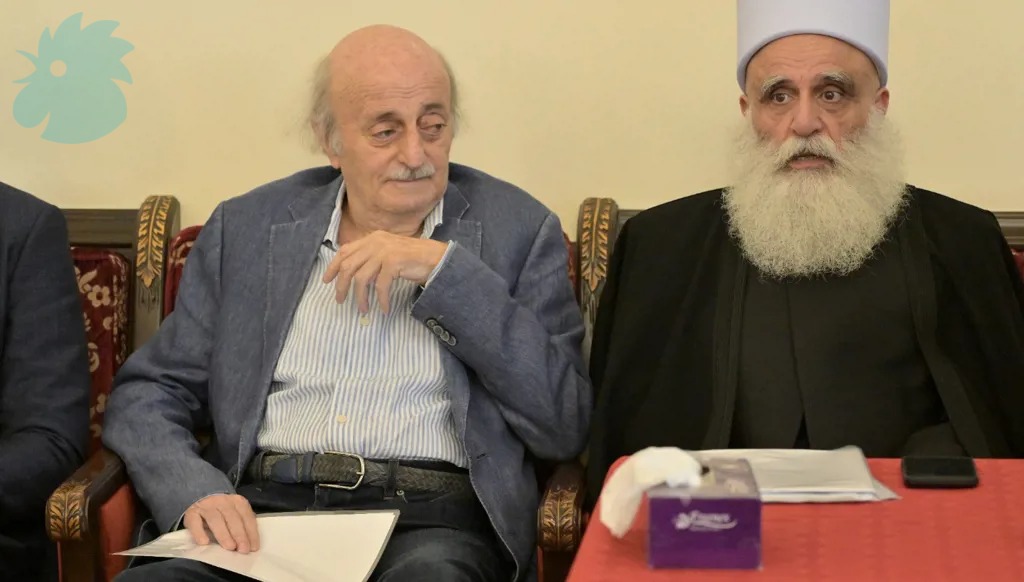


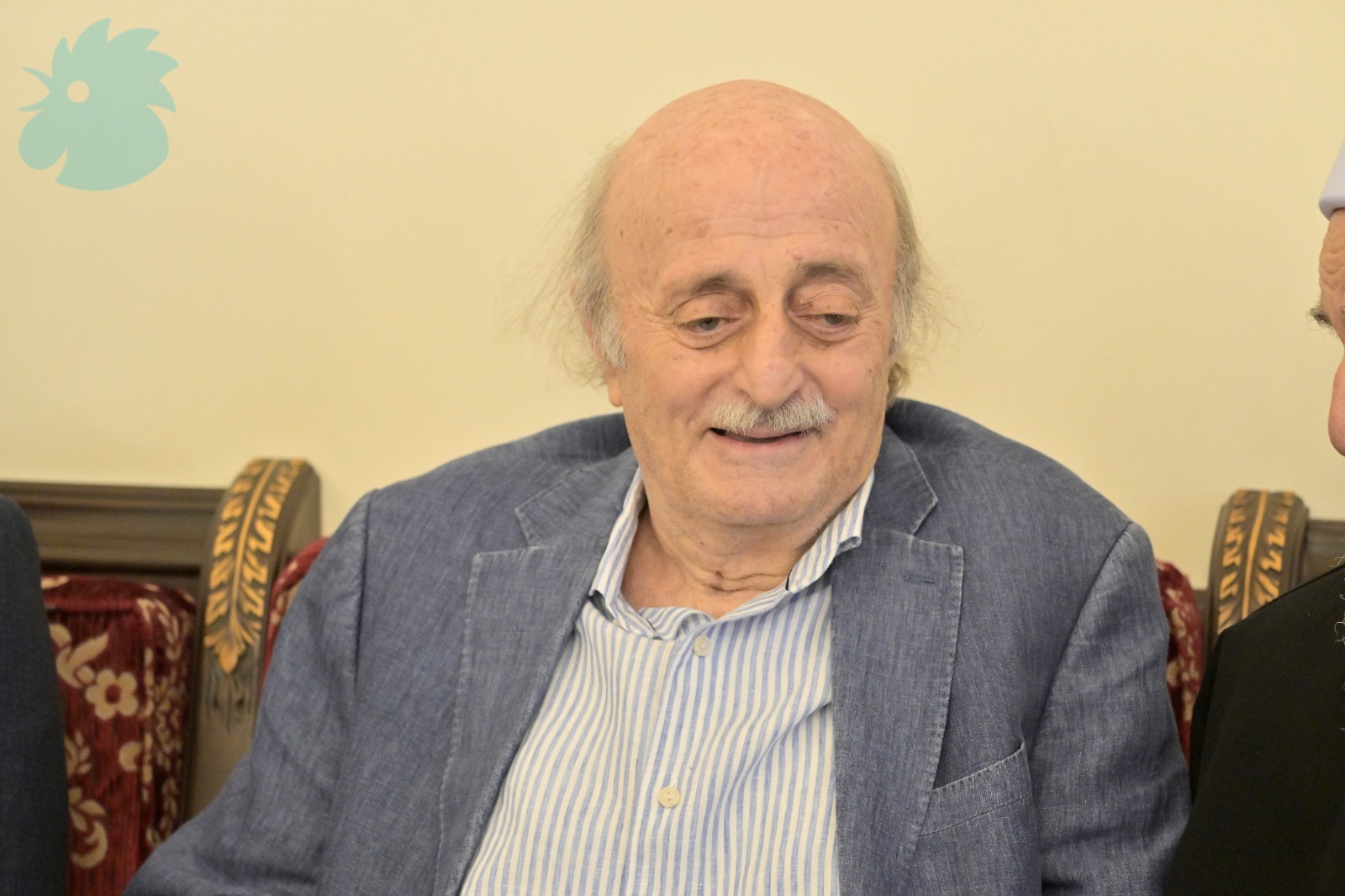
Two days ago, the leader of Mukhtara, Walid Jumblatt chose a spiritual-political platform of particular significance in the Lebanese landscape to raise his voice against the tripartite framework agreement and warn of the consequences of moving forward with the formula under which it was born.
It is not the first time Jumblatt has voiced his opposition to the agreement's contents, having repeatedly criticized it since its announcement. This time, however, he sought to establish clear principles to support his objections, most notably:
- His rejection of the notion that the agreement is tripartite, as presented by its defenders, insisting that "it is unilateral."
- His belief that, based on the formula through which it was reached, "it will not result in a ceasefire."
- His criticism that the Lebanese delegation involved in drafting it "has limited experience in law and diplomacy."
Notably, Jumblatt chose to deliver these remarks during a session of the Druze Religious Council, a venue some interpret as an effort to give his objections broader weight and emphasize that they represent the concerns of a fundamental Lebanese component, rather than merely the position of a prominent political leader. This impression was reinforced by the Druze Sheikh Akl, Sami Abil Mona, who echoed and appeared to fully embrace the same position.
The timing of Jumblatt's objection raises questions
Jumblatt's decision to escalate his objections more than ten days after the agreement was announced raises questions about the motives behind his sharper rhetoric, particularly his assertion that the agreement offers Lebanon no meaningful gains despite its objective of securing a lasting ceasefire and helping the country emerge from its crisis.
Bilal Abdullah, a member of the Democratic Gathering bloc, rejects suggestions that Jumblatt hardened his stance because of tensions with key figures in the government or to appease his ally, Parliament Speaker Nabih Berri, who opposed the agreement from the outset and declared his readiness to confront it, as he did with the May 17 Agreement.
Agreement does not provide 'any guarantee' for Lebanon
Abdullah told Annahar: "To put matters in their proper context, Jumblatt's negative stance toward the agreement is not new. Shortly after it was announced, he quickly objected to it and pointed out many of its flaws, particularly that it offers Lebanon no meaningful gains that would help it emerge from the crisis or guarantee the restoration of its territory and sovereignty."
He added: "Jumblatt has since reiterated this position in several statements, making clear that he remains convinced of his assessment and sees no reason to reconsider it, especially since Israel has taken no steps to demonstrate its commitment to the agreement's provisions, foremost among them the ceasefire.
While Jumblatt has been direct in criticizing the agreement and arguing that it tilts in Israel's favor, we should not overlook the fact that he initially expressed principled support for negotiating with Israel, provided Lebanon adheres to its fundamental constants, foremost among them the 1949 armistice agreement, which protects Lebanon from Israeli and American pressure to move toward a peace treaty with Israel—a step that carries significant risks for the country."
Asked why Jumblatt chose this particular moment to intensify his criticism, Abdullah replied: "It is important to note that Jumblatt does not fundamentally reject the agreement as a whole. Rather, he believes the Lebanese side must insist on amending several disputed provisions. I believe he raised his voice at this stage for two reasons.
"First, he is convinced that the Lebanese delegation that conducted the negotiations lacked the necessary legal and diplomatic expertise, a point he emphasized in his recent remarks.
"Second, he wants to alert the authorities to the need to treat the objections seriously, rather than merely responding to them, and to begin genuinely exploring ways to amend the agreement."
Can Jumblatt's escalating objections be seen as the beginning of an opposition front against the agreement? Abdullah answered: "We are convinced that the time is not yet ripe for the formation of opposition fronts."