

Ankara summit puts NATO's unity to the test
As leaders gather in the Turkish capital, the real battle lies beyond the official agenda, with debates that may shape the Alliance's strategic direction for years to come.



 Messenger
 Whatsapp
 Threads
 Email
Email
 Print
Print
 X
X
 Facebook
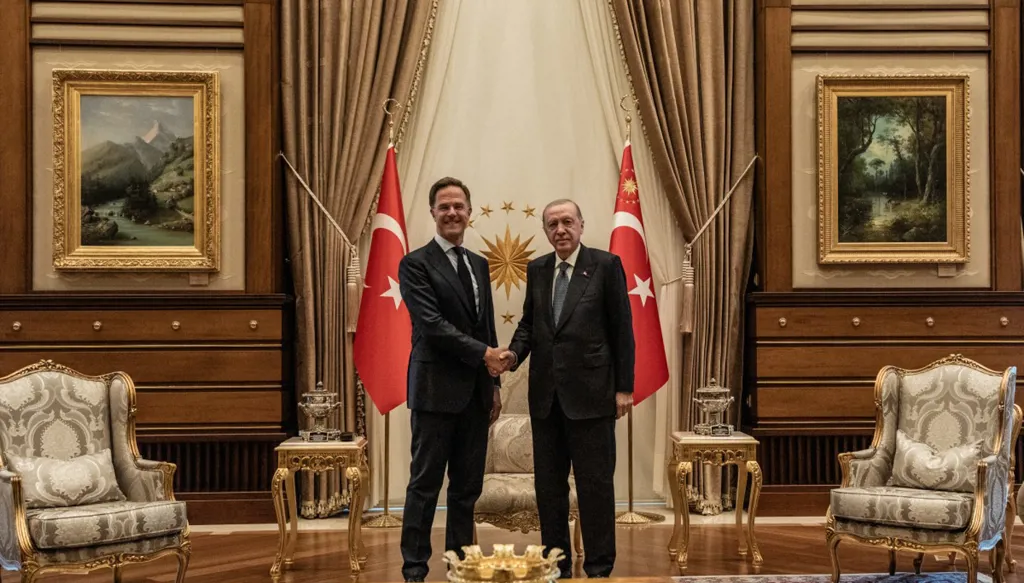


In the heart of Anatolia, Ankara is hosting a NATO summit these days. It is not a routine meeting, but rather an oil painting reflecting the struggle between the legacy of the past and the necessities of the future.
The alliance no longer appears as a rigid bloc inheriting Cold War objectives, but rather as an entity searching for its identity in a world where the balance of power is shifting. It is a "confrontation with itself" as NATO redefines its defensive lines and reassesses the value of its existence.
These transformations are testing Washington’s commitment, Europe’s resilience, and their ability to restore "geopolitical certainty" in an era of unprecedented fluidity.
Increase in defense spending
The primary driver of the summit is the increase in "defense spending," specifically the commitment made at the "Hague Summit" to raise spending to 5% of GDP by 2035.
Turning this commitment from ink on paper into actionable plans represents the greatest challenge, followed by addressing the deep divisions left by the wars in Ukraine and the Middle East within the alliance.
The Ukrainian file remains the most dangerous and difficult. Ukrainian President Volodymyr Zelensky is seeking continued support amid clear Western divisions and growing fatigue. The alliance has pledged to provide €70 billion to Kyiv this year, but the question remains: Are these funds enough to alter the balance of the war, or are they merely temporary measures prolonging the conflict without a resolution?
The other equally pressing issue is the US-Israeli strikes on Iran, which were carried out without consultation with European allies. Most European countries rejected military participation, a position considered a serious shortcoming by US President Donald Trump.
The United States views the confrontation with Iran as part of its broader strategic struggle with China and Russia, seeking to consolidate its influence in the region. Europe, meanwhile, approaches the issue through the lens of "immediate security" and the risks of regional collapse in its southern neighborhood. This makes it less inclined toward escalation, revealing that Washington and its European allies no longer automatically share identical strategic priorities.
Trump seeks to reshape the social contract with allies through deals rather than traditional commitments. He is placing NATO at a crossroads: either remaining an ideological alliance or transforming into a more pragmatic entity, even at the risk of marginalizing its role in major issues such as the war in Ukraine and the confrontation with Iran.
This raises a fundamental question among Europeans: Is Article 5 of the NATO Treaty still valid?
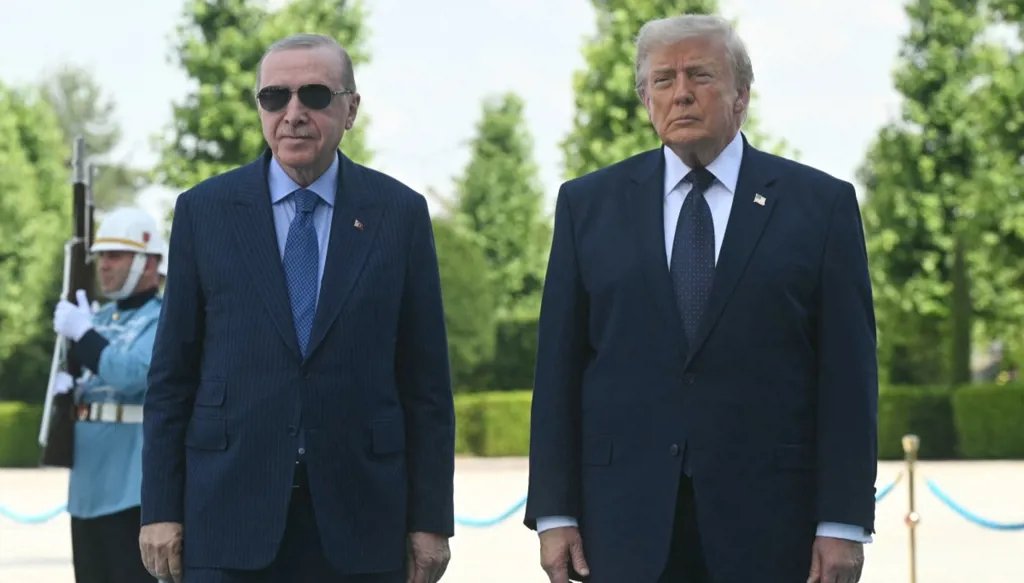
"Selfish strategic sovereignty"
Amid an America signaling a possible retreat while demanding that allies pursue "selfish strategic sovereignty," and a Europe anxious about losing the "American umbrella," the Ankara summit can be considered a "success" if NATO leaders manage to engineer a historic settlement that guarantees the alliance’s survival and its ability to protect members’ interests, rather than turning it into a "commercial security company" stripped of its deterrent credibility against Moscow and Beijing.
The Ankara summit therefore represents a testing ground for a rare political experiment. The results reflected in its final statement may not be decisive, but the discussions taking place behind closed doors will shape the contours of the 21st century.
The degree of success will differ for each participant in the Ankara NATO summit, but the biggest winner is Turkey.
President Recep Tayyip Erdoğan has leveraged his personal relationship with the American president to give Ankara an influential role in conveying messages between Washington and European capitals. The irony is that Ankara, once considered close to leaving NATO, has now become the host of one of the alliance’s most complex and significant summits.
Turkey is using this momentum to strengthen its status as a "strategic partner" by paving the way for major defense contracts, seeking a return to the F-35 program and other opportunities, and presenting itself as a strategic mediator with balanced relations with Moscow and Kyiv, as well as Washington and Tehran. This has turned it into a "geopolitical lynchpin" in European security calculations.
Turkey's central strategic role
Historically, Turkey has been viewed as the "guardian of NATO’s southeastern gate." It represents a geographic buffer with a massive army, positioned on the front lines between the Middle East and the former Soviet sphere.
However, hosting the latest summit in Ankara carries profound significance for the Turkish state: it represents recognition by NATO’s 32 members of Turkey’s central role as a "strategic center of gravity" and a "pivotal state" — a regional power capable of balancing threats in both the Black Sea and the Middle East simultaneously, rather than merely acting as a follower of the United States or Europe.
Ankara’s main gains include recognition of the capabilities of its defense industry, particularly in drones and various missile systems, marking its transition from an arms importer to a partner within Atlantic supply chains.
Hosting the alliance summit places Turkey at the forefront of global political and security stability, strengthening confidence in its economy and its position as a logistical hub. It also brings Middle Eastern issues into focus, particularly the deterrence equation with Iran and the security of waterways and maritime routes such as the Red Sea and the Strait of Hormuz.
This could encourage new partnerships or deepen existing ones between Turkey and Gulf states and the Arab world, aimed at limiting the growing influence of competing international powers, such as China and Russia, in this vital region.
Ankara is no longer the rebellious member of NATO, but rather a "fundamental pillar" of the alliance, supported by its army, which ranks second in NATO.
It has become the stage upon which the drama of international politics unfolds, where the final chapters of one era are being written and the doors to another are opening — all depending on what emerges from the dialogues behind closed doors, in the corridors of the presidential complex in Ankara’s Beştepe district.
Disclaimer: The opinions expressed by the writers are their own and do not necessarily represent the views of Annahar.