

Morocco's football success and national development model
As Morocco marks Throne Day, the country's recognition of sovereignty over the Sahara and its growing influence in Europe and Africa take center stage.



 Messenger
 Whatsapp
 Threads
 Email
Email
 Print
Print
 X
X
 Facebook
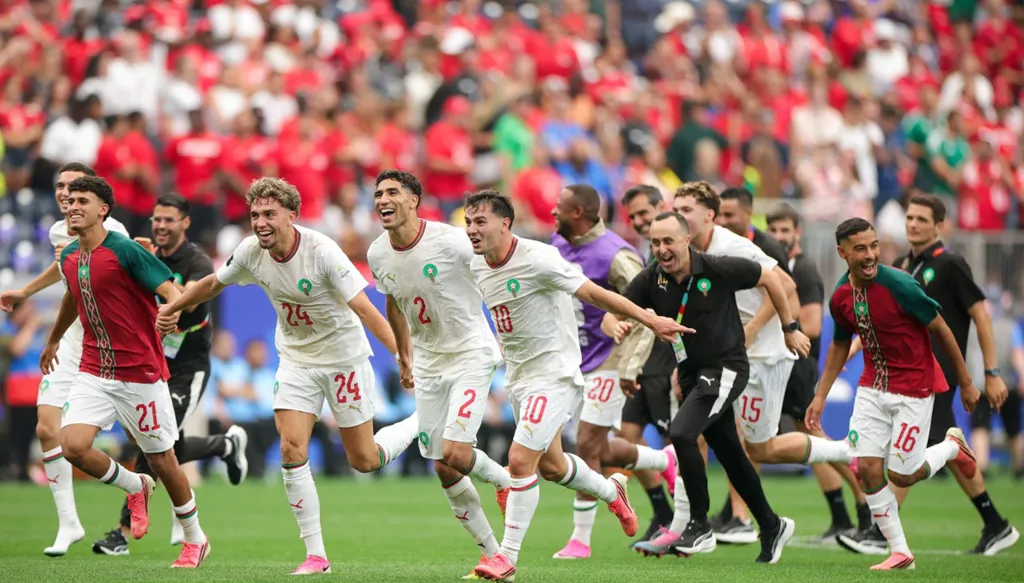


The Moroccan national football team's impressive performances at the World Cup co-hosted by the United States, Canada, and Mexico are no accident.
Those achievements are inseparable from a broader national model built on political stability, economic development, and reforms across multiple sectors. At the heart of that model, is King Mohammed VI's long-standing commitment to combating poverty, an effort portrayed not only as a social priority but also as a means of countering religious extremism and terrorism.
The success of Morocco's football team is described as another expression of the country's strong sense of national unity, linking citizens with one another and with the monarchy. This vision is repeatedly articulated by King Mohammed VI since ascending the throne in 1999, recalling his statement that while his late father had secured Morocco's place on the international map, his own ambition was to secure Morocco's place in the heart of every Moroccan citizen.
Morocco's sporting achievements reflect a much broader national story. Beyond football, it presents Morocco as a country that has invested in its people as its greatest resource through a comprehensive development strategy. From this perspective, the performances of the national team cannot be separated from the country's wider economic and social progress.
Those wishing to understand this connection need only visit Rabat or in fact any Moroccan city to witness what is described as an exceptional nation. A country with deep historical roots, Morocco is also noted as being the first nation to recognize the independence of the United States roughly 250 years ago.
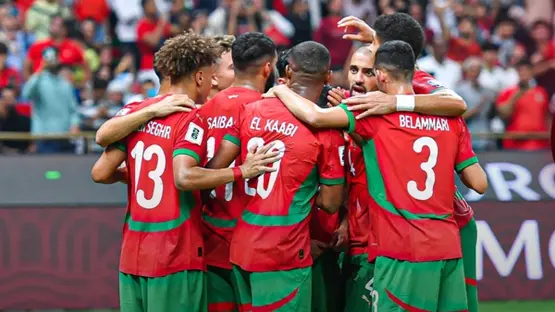
Throne Day
With Throne Day approaching on July 30, it is worth reflecting on Morocco’s achievements over recent months, particularly in consolidating its sovereignty over its southern provinces. United Nations Security Council Resolution 2797, adopted on October 31, 2025, marked a turning point. That day became a national holiday, symbolizing the culmination of a 50-year struggle to reclaim Morocco’s desert territories.
Twenty-seven years after King Mohammed VI ascended the throne, succeeding his father, who launched the Green March in November 1975, several milestones stand out in the long journey that ultimately culminated in Resolution 2797. It all began with Morocco’s resilience in a war of attrition waged against it by the Algerian regime through the Polisario Front.
Morocco not only withstood these attacks but consistently defended what it considers its legitimate rights. At the same time, its willingness to seek a settlement with neighboring Algeria—which has kept the border between the two countries closed since 1994—never diminished. Does the Algerian regime fear its citizens visiting Morocco and comparing conditions in the two countries? Does it worry they might see Morocco’s infrastructure, its modern road network, and the high-speed rail line linking Casablanca and Tangier?
What matters is that the Moroccan caravan continues moving forward. Progress extends beyond the Sahara issue, particularly after the United States recognized Moroccan sovereignty over the territory at the end of President Donald Trump’s first term. It is also reflected in Morocco’s ability to strengthen its ties simultaneously with both Europe and Africa.
Diplomatic victories
Notably, the Democratic administration of President Joe Biden, which succeeded Trump’s first term, maintained U.S. recognition of Morocco’s sovereignty over the Sahara. Europe followed a similar course, with French President Emmanuel Macron playing a key role in encouraging the continent to align with Washington’s position. This stance was also consistent with that of the Gulf states, which have long supported Morocco on the Sahara issue.
Once again, nothing happened by coincidence. Football is not separate from a broader national strategy in a country that knows where it is heading across multiple sectors—from the political reforms enshrined in the 2011 Constitution and the advancement of women’s rights under King Mohammed VI, to investments in clean energy and Morocco’s expanding presence in Africa. That outreach has been reinforced by Dakhla’s emergence as Africa’s gateway to the Atlantic Ocean.
Perhaps most importantly, Morocco has not hesitated to acknowledge shortcomings in areas such as healthcare and education. When public protests emerged in both sectors, the authorities moved to address the concerns rather than ignore them.
Ultimately, Morocco appears determined to fulfill the aspirations of its citizens to live in peace and security while preparing to co-host the 2030 FIFA World Cup alongside Spain and Portugal.
Disclaimer: The opinions expressed by the writers are their own and do not necessarily represent the views of Annahar.