Lebanon Seeks Progress on Israel Agreement with Rome & Washington

Lebanon 08-07-2026 | 08:21

Lebanon Seeks Progress on Israel Agreement with Rome & Washington

As Lebanon counts down to a new round of indirect talks with Israel and a high-stakes visit to Washington, concerns over the agreement's future and regional stability continue to mount


Lebanon Seeks Progress on Israel Agreement with Rome & Washington
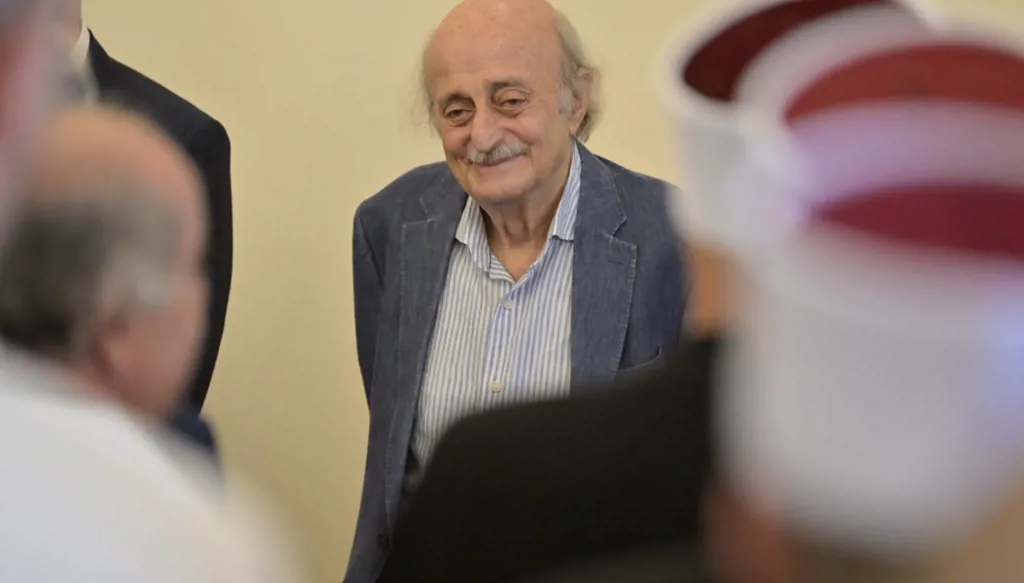
Former Progressive Socialist Party leader Walid Jumblatt at the Druze Community House during the opening of the Druze Religious Council meeting. (Nabil Ismail)
Smaller Bigger

Meanwhile, practical progress inside Lebanon remains at a standstill despite a steady stream of statements and political positions that have done little to influence the regional developments leading to new realities. This month, the Lebanese are awaiting two key events.


The first will take place in the Italian capital, Rome, which is tentatively scheduled to host a new round of Lebanese-Israeli talks on the 14th and 15th of this month. The purpose is to assess the extent of Israel’s cooperation in advancing the framework agreement, amid widespread skepticism and growing concerns about the difficulty of implementing it.


The second event will take place in Washington, where President Joseph Aoun is expected to visit and meet U.S. President Donald Trump at the White House. In an interview with Annahar yesterday, President Aoun outlined the objectives and limits of the visit, reaffirming his refusal to meet Israeli Prime Minister Benjamin Netanyahu. The Lebanese government is counting on the visit to confirm that the United States remains committed to the agreement signed under its sponsorship and is willing to advance it by pressuring Israel to implement its provisions, rather than allowing it to collapse on its own.


Accordingly, the period between now and those two events is expected to keep all outstanding issues on hold, leaving them subject to recurring political disputes that flare up and then subside, while Israel continues its escalation, although not at a level likely to trigger a renewed full-scale war at this stage.
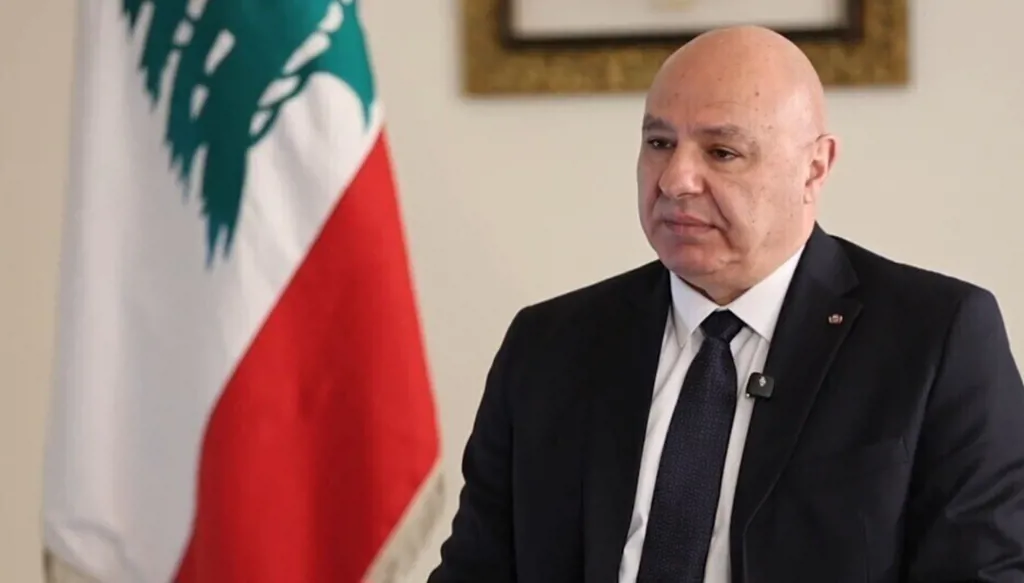
 

President Joseph Aoun. (X)

In this context, a diplomatic source told Annahar that there are concerns the current period may be nothing more than a lull before the return of a devastating war. The source said that if Benjamin Netanyahu wins the next elections, he is likely to press ahead with what he sees as a plan to eliminate Hezbollah. As a result, the source believes the resumption of war would become more likely.


Positions


Regarding the continuation of the negotiations, Italian Foreign Minister Antonio Tajani welcomed the announcement that the next round of Lebanese-Israeli talks, mediated by the United States, will be held in the Italian capital, Rome.


He said, "Rome is a meeting place for peace and dialogue. Last April, we informed the Lebanese and Israeli governments of Italy's readiness to support the path of dialogue for peace and to host the negotiations." He added, "The choice of Rome reflects the diplomatic efforts made by our government, its trusted and active role on the international stage, and its ongoing commitment to supporting stability and dialogue between the parties."


Israeli Foreign Minister Gideon Sa'ar also announced that the next round of talks with Lebanon will take place in Rome next week. During a joint press conference in Jerusalem with his German counterpart, Johann Wadephul, Sa'ar said, "Less than two weeks ago, Israel, Lebanon, and the United States reached a historic framework agreement. These talks are scheduled to continue next week in Rome, Italy." Wadephul, for his part, said that Hezbollah is the cause of all Lebanon's problems.


Arnaud in Israel


Against this backdrop, the Acting United Nations Special Coordinator for Lebanon, Jean Arnaud, began an official visit to Israel yesterday. He is scheduled to meet senior Israeli officials for discussions on the importance of consolidating the cessation of hostilities and implementing United Nations Security Council Resolution 1701.


Aoun and Jumblatt


Domestically, while President Joseph Aoun stressed that he would never accept anyone negotiating on Lebanon's behalf under any circumstances, arguing that Lebanon's sovereignty requires the political leadership to make its decisions independently, he said, "Unfortunately, there is currently a faction in Lebanon whose choices differ from those of the majority of the Lebanese people. It is subject to Iranian influence, seeks to replace the state, and negotiates in its name."


At the same time, former leader of the Progressive Socialist Party, Walid Jumblatt, launched a strong criticism of the agreement. He explained that although he had always supported the principle of negotiations, he believes the current version of the agreement does not lead to a ceasefire and therefore fails to achieve its intended objective.


Jumblatt also criticized the content of the agreement, noting that all international treaties include a clear provision on the principle of withdrawal, whereas, in his view, the framework agreement contains no such provision. He argued that this reflects the fact that the file has been handled by individuals who lack the necessary legal expertise.


Jumblatt said, "The framework agreement is a one-sided arrangement imposed by Israel on a Lebanese team, both inside and outside the country, with limited experience in law and diplomacy."