

Why Lebanon’s talks with Israel must remain a national, non-sectarian matter
As border villages reject claims of seeking Israeli protection, the debate over negotiations highlights a broader national question: security, sovereignty, and peace cannot be built along sectarian lines.



 Messenger
 Whatsapp
 Threads
 Email
Email
 Print
Print
 X
X
 Facebook
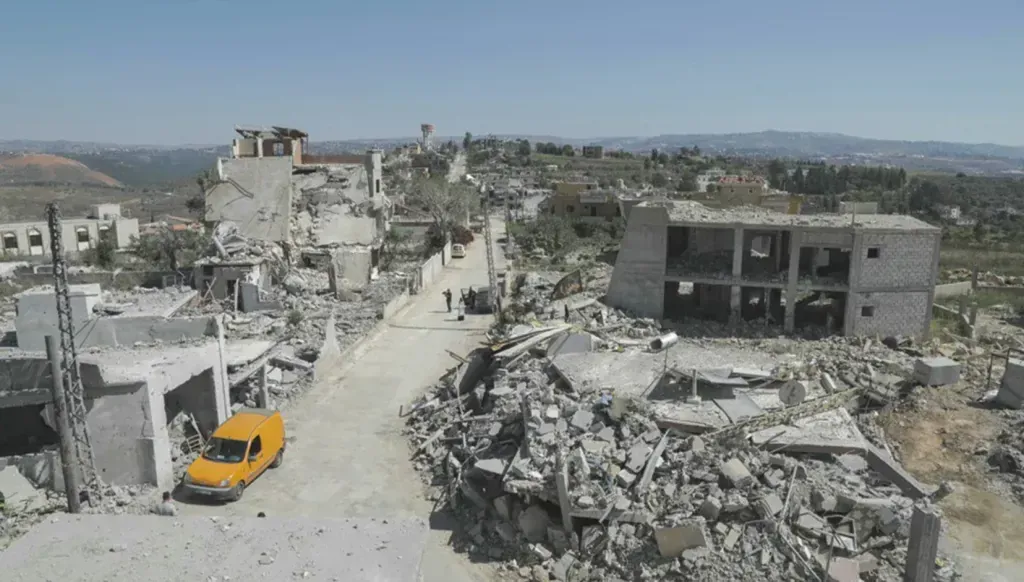


The mayors of the southern Christian border villages were right to directly refute Israeli Prime Minister Benjamin Netanyahu’s claims that they seek to join Israel for protection against Hezbollah.
Their swift counter-statements and reaffirmation of their allegiance to the state and its legitimate forces are essential—not out of fear of provoking the Shiite community or seeking favor with any political or security party, but to emphasize that the pursuit of peace, safe living, and a stable security relationship does not mean moving closer to Israel. Rather, it aims to end a prolonged state of war that has claimed lives, destroyed property, and erased the future.
The issue of negotiating with Israel should not remain a taboo. Negotiations take place with enemies and adversaries, not only with friends and allies. Lebanon’s agreement should be defended from the perspective of advancing negotiations toward peace, without giving up the right to criticize its terms and provisions, with the aim of improving them at any later stage and ensuring their proper implementation for the benefit of all Lebanese, regardless of sect or background.
The defense of negotiations should not become exclusively a Christian matter, even if the Christian president is leading it, because this is a national issue, not a Christian one. Its benefits must be clear to all. Israel, which is waging war against Hezbollah, a major Shiite component viewed by Shiites as an existential conflict, had previously created a crisis for Christians by forcibly displacing them from the Shouf, Aley, and East Sidon, triggering tensions with fellow citizens and resulting in killings and displacement. Such “favor” should not be forgotten by any sensible Christian.
Moreover, Israelis have historically maintained a deeper hostility toward Christians, ranging from religious doctrines to political positions. Recently, I read a report in The Washington Post discussing the rise in attacks against Christians in Jerusalem and the West Bank, amid growing perceptions that the current Israeli government—the most right-wing in Israel’s history—has shown insufficient interest in protecting them. This has contributed to a new atmosphere of tolerance toward religious hostility, particularly among young people and hardline religious groups.
Father Nicodemus Chanabel, head of the Dormition Abbey on Mount Zion in Jerusalem, said: “Today, Christians are beaten, spat upon, and assaulted. These attacks have become part of Christians’ daily life in Jerusalem, and what is captured on cameras represents only a small fraction of reality.”
Under these circumstances of persecution faced by Christians in the Holy Land, Israel should not be viewed—and should not present itself—as a savior or a source of protection. Religion must be excluded from state-led negotiations, which are conducted between states. Everyone retains the right to reject or support the steps taken or those to come, as all matters remain subject to discussion, review, and scrutiny—especially when agreement texts are ambiguous, incomplete, and backed by sponsors whom we may or may not trust. This is irrelevant, however, because they are not a matter of choice but an imposed reality.
Peace, a truce, a security agreement, or any other arrangement with Israel may become an irreversible option despite all intimidation. But in any case, Christians should not be the spearhead of this pursuit, because without the Shiite component, it cannot be achieved, as demonstrated by the maritime demarcation issue.
Those who hold armed power and financial influence have a significant (at least influential and certainly pressing) role, and their position can be decisively obstructive, especially since the decisions being made concern them primarily.
Disclaimer: The opinions expressed by the writers are their own and do not necessarily represent the views of Annahar.