

Algeria’s parliamentary elections reveal deepening political disillusionment
Low voter turnout, candidate exclusions, and limited parliamentary powers highlight persistent doubts over political representation and decision making in Algeria.



 Messenger
 Whatsapp
 Threads
 Email
Email
 Print
Print
 X
X
 Facebook
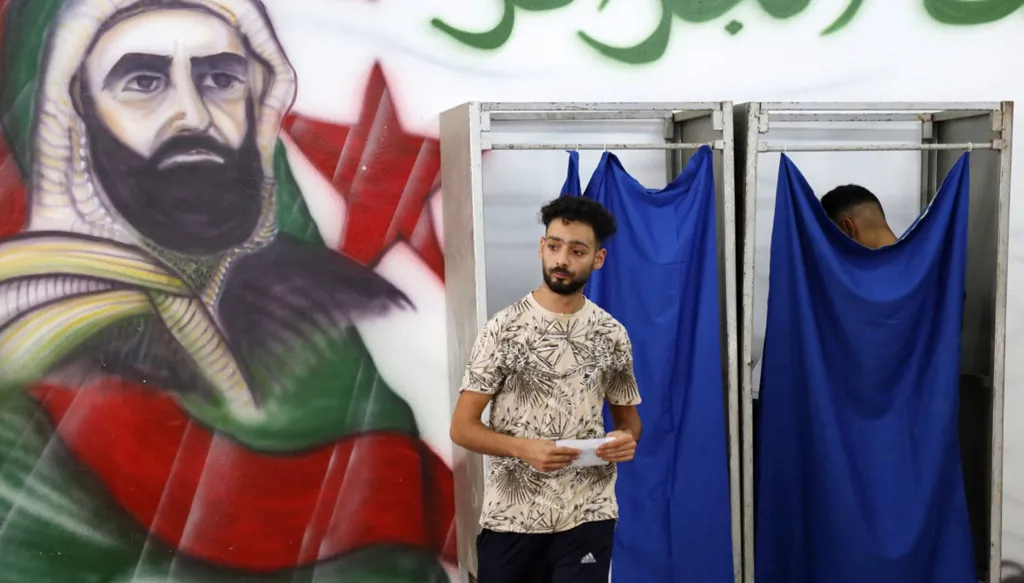


Algeria's parliamentary elections were finally held as scheduled onThursday of this month. So far, the official results have not been announced by the Electoral Authority, which must allow candidates who believe they have been wronged to submit appeals before the Constitutional Court. It should be noted that this election cycle witnessed a dramatic decline in voter turnout, with participation falling below 21 percent.
It is important to note that voter decline has become both a regional and an international phenomenon. In Algeria, however, this is widely understood as a reflection of citizens' disappointment with politics and politicians on a local and national level.
In this context, it should be recalled that the Algerian authorities are the ones who set the “criteria” according to which candidates are either accepted or rejected. During this electoral cycle, Algerian figures holding dual nationality were excluded from running in the parliamentary elections, whether they were living abroad or residing in Algeria.
As a result, and for other reasons as well, the authorities’ “sieve” managed to eliminate hundreds of candidates belonging to ruling parties, opposition parties, or nonpartisan civil society elites. It is noteworthy that this process took place without any serious discussion of the cases of those rejected, whether in the media, civil society organizations, or official bodies such as higher councils.
Experts specializing in Algerian legislative affairs believe that past experiences have repeatedly shown that elected representatives who managed to obtain seats in Parliament, whether through elections or through appointment by the President of the Republic under the presidential third mechanism, which grants him the authority to appoint one third of Parliament’s members, do not possess genuine powers that would practically enable them to implement laws on the ground, immediately intervene to resolve the fundamental problems affecting citizens, whether at the level of electoral districts in deep Algeria or in overseeing the activities of the executive government.
In reality, real power lies primarily in the hands of the head of state and the presidential institutions under his authority. Secondly, it is held by ministers and powerful government administrations within the hierarchy of governance. Thirdly, it is held by governors and district chiefs, who are appointed by the head of state.
In fact, the presidential system adopted by Algeria does not grant Parliament, in either of its two chambers, the authority to appoint the government or ambassadors, or even the heads of higher councils, which are legally considered institutions exclusively affiliated with the Presidency of the Republic. Consequently, members of both parliamentary chambers do not have the real authority to, for example, withdraw confidence from a minister or a governor and dismiss them if they fail to implement the programs that Parliament members themselves approved during regular or emergency sessions.