

State, stability, sovereignty: Conditions for the return of the UAE’s confidence in Lebanon
The UAE's decision to allow citizens to travel to Lebanon reflects more than a security assessment. It signals renewed confidence in a state capable of restoring sovereignty, strengthening institutions, and creating conditions for stability and investment.



 Messenger
 Whatsapp
 Threads
 Email
Email
 Print
Print
 X
X
 Facebook
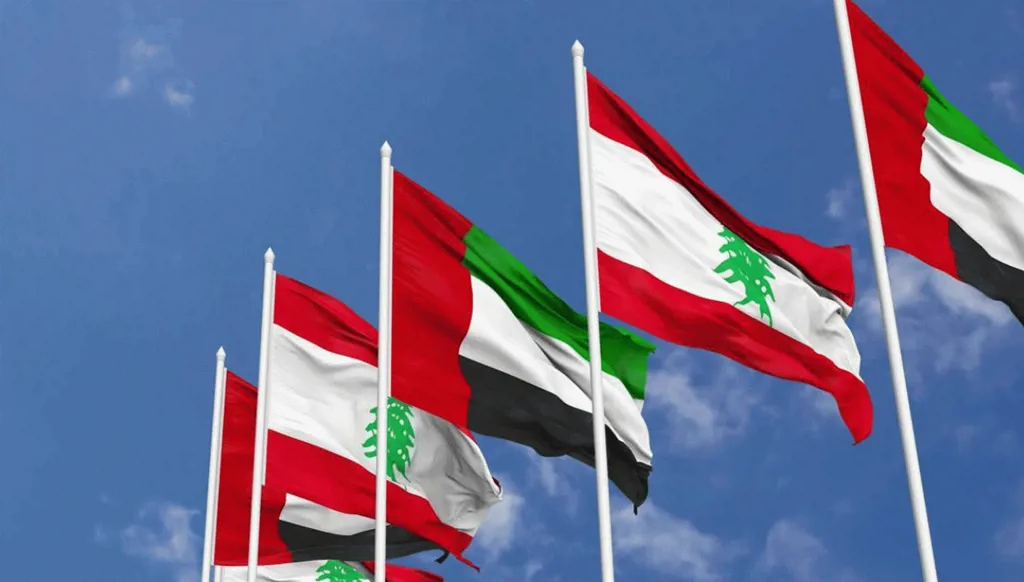


The decision by the UAE Ministry of Foreign Affairs to allow Emirati citizens to travel to Lebanon is a positive development in relations between the two countries. However, its significance extends beyond the travel decision itself. It reflects a carefully considered security and political assessment, opens a window of confidence at a sensitive time, and aligns with the UAE's approach that stability begins with the state and its ability to regain decision making authority and protect its institutions.
Abu Dhabi views Lebanon through the lens of the state and considers its crisis to be a direct consequence of the absence of sovereign decision making. It distinguishes between the Lebanese people, who deserve support, state institutions that require assistance, and the forces that have paralyzed the country by tying its decisions to external agendas. In one of its dimensions, the decision encourages a Lebanese path that restores the role of the national state and expands Gulf confidence as the state gains ground over the logic of weapons and regional alignments.
The UAE's approach toward Lebanon is rooted in a long historical record. Its policy is based on supporting the Lebanese people, standing by state institutions, and preserving Lebanon's unity and sovereignty. From the era of the late His Highness Sheikh Zayed bin Sultan Al Nahyan, the Founder of the United Arab Emirates, to the leadership of His Highness Sheikh Mohamed bin Zayed Al Nahyan, this commitment has remained evident through reconstruction efforts, humanitarian and medical assistance, and political and diplomatic support during difficult times.
The return of Emirati visitors carries both symbolic and economic significance. Gulf visitors have long been an important part of Lebanon's tourism sector because of their spending, longer stays, and ability to stimulate the hospitality industry, service sector, and commercial markets. However, attracting tourists is easier than attracting investors. Investment requires a trustworthy judiciary, banks that safeguard rights, a stable security environment, and a state that controls its own decisions and honors its commitments.
The framework agreement between Lebanon and Israel, brokered by the United States, shifted the discussion from negotiating borders to the Lebanese state's ability to implement its commitments. The UAE welcomed the agreement from the perspective of supporting stability and reaffirmed its support for Lebanon's unity, sovereignty, territorial integrity, and the principle that arms should remain exclusively in the hands of the state.
The international community views the agreement through Lebanon's ability to exercise sovereign decision making through its institutions and to empower the military establishment to extend state authority over armed groups operating outside the national decision-making framework.
The challenge now lies in Lebanon's ability to turn the agreement into a domestic process backed by broad national support. For years, the country has been trapped in a recurring cycle of crises that reappear in different forms. While the state negotiates and seeks international support, decisions on war and peace remain in the hands of forces operating outside its authority.
Meanwhile, Lebanese citizens continue to bear the cost through their security, economy, and future, caught between external pressures and internal dysfunction. Any agreement or period of calm will remain fragile as long as Lebanon continues to serve as an arena for regional power struggles.
Hezbollah remains a major obstacle to this transition. The group views any process that restores the authority of the state as a threat to its own role. As a result, it obstructs agreements that could pave the way for stability and opportunities to move Lebanon from a crisis driven economy toward a path of development and prosperity. Its weapons have weakened Lebanon's foreign relations, tied the country to Iran's strategic calculations, and left the state burdened with mounting political and economic costs. The outcome has been a weaker state, a more fragile economy, and increasingly cautious Gulf and Arab confidence.
The government of Nawaf Salam is approaching the issue of weapons with great caution. It recognizes the sensitivity of Lebanon's domestic landscape and is seeking to avoid direct confrontation while remaining committed to the principle that arms must be exclusively under state control.
This gradual approach does not represent a postponement of the problem. Rather, it reflects an effort to return the issue to the framework of state institutions and move it away from the logic of imposing outcomes by force. Reform requires a government that exercises full authority over its own decisions, and any hesitation on this issue will leave the state unable to safeguard stability or attract external support.
Ultimately, turning the UAE's renewed engagement into a lasting path forward is Lebanon's responsibility. The country must translate the principles of exclusive state control over weapons, administrative and political reform, and the preservation of stability into tangible actions that strengthen the state's position both domestically and internationally.
The more decision making is anchored in state institutions, the greater Lebanon's chances of emerging from its crisis. The further it departs from that institutional path, the more opportunities it will lose.
Disclaimer: The opinions expressed by the writers are their own and do not necessarily represent the views of Annahar