

Aoun: No Meeting with Netanyahu as White House Visit Nears
In a wide-ranging interview, President Joseph Aoun discusses his upcoming meeting with Donald Trump, the implementation of the framework agreement with Israel, the evolving security arrangements in southern Lebanon, and the country's diplomatic positioning amid regional tensions.



 Messenger
 Whatsapp
 Threads
 Email
Email
 Print
Print
 X
X
 Facebook
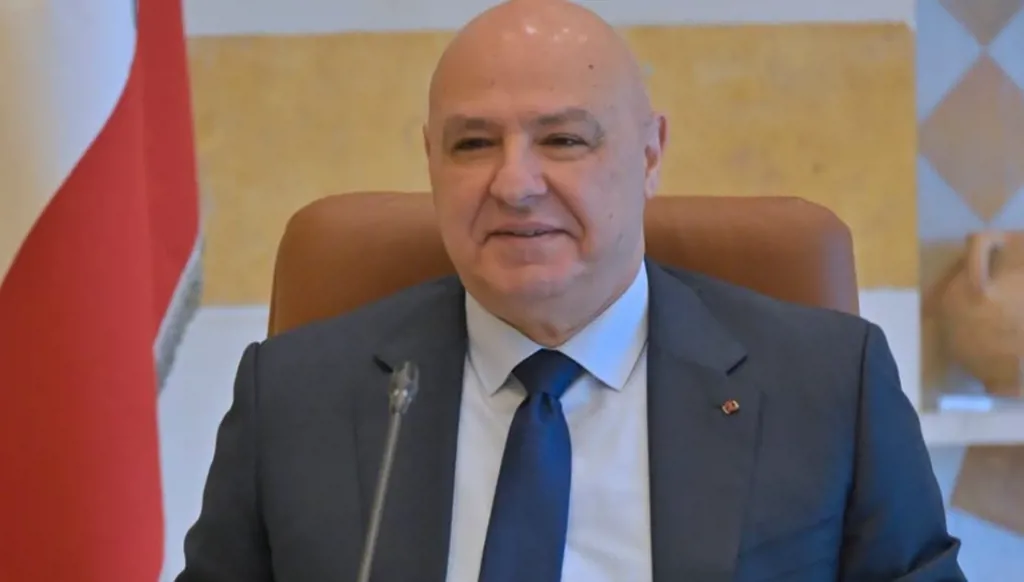
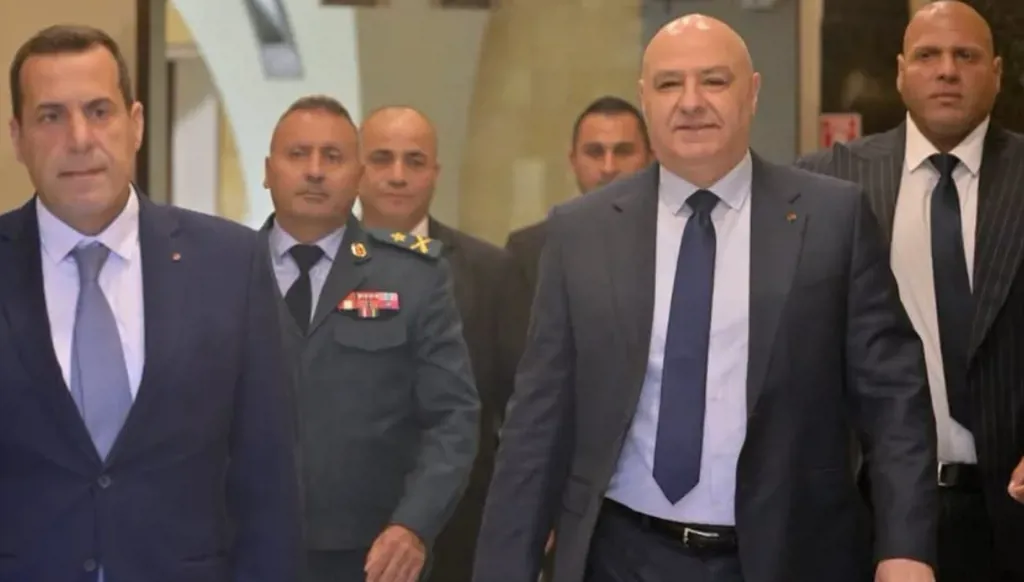
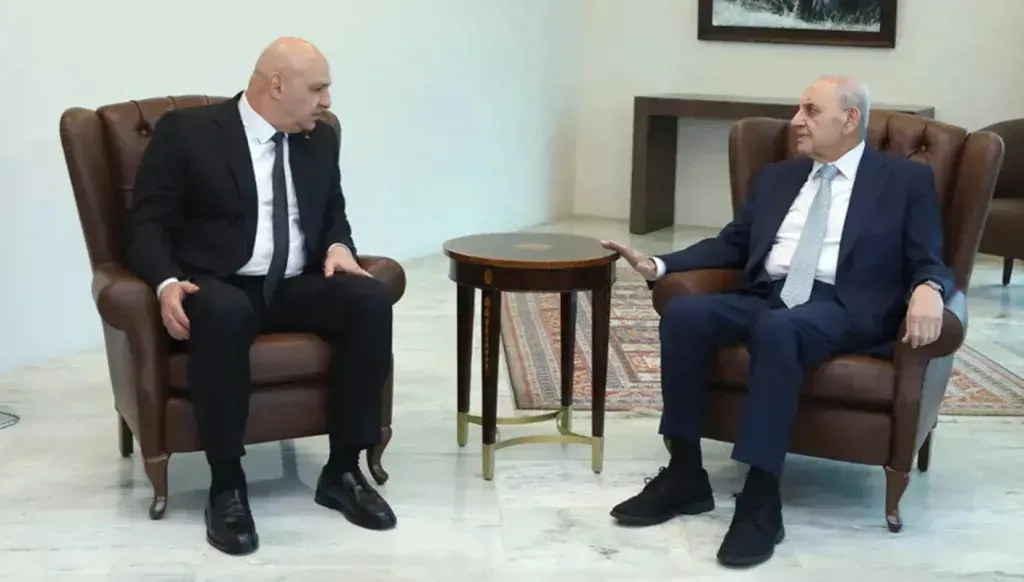


President Joseph Aoun is preparing to visit the White House and meet with U.S. President Donald Trump before the end of this month, as part of efforts to reinforce the framework agreement with Israel, monitor its implementation, and prepare for the launch of a military initiative in southern Lebanon under direct American sponsorship and supervision.
During his meeting with Trump, Aoun will discuss Lebanon’s situation from the signing of the 1949 Armistice Agreement to the present day, focusing on Israel’s treatment of Lebanon throughout those decades and the consequences it has had for the people of southern Lebanon.
The official visit is expected to take place after Benjamin Netanyahu meets with Trump. Although issues of mutual concern between Lebanon and Israel will be discussed with Trump, reports of a meeting between Aoun and Netanyahu are inaccurate. The President is not considering such a meeting and does not accept the idea while Israeli attacks against Lebanese citizens and violations of Lebanese territory continue. If Aoun were to find himself in the same room as Netanyahu, he would leave immediately.
The 17-minute phone call between Trump and Aoun was described as positive. The two leaders agreed on several points and decided to continue their discussions at the White House.
Trump reportedly showed understanding of Aoun’s position, expressed positive intentions, and demonstrated goodwill toward Lebanon. The direct meeting between the two presidents is expected to allow them to address the entire framework agreement in depth and work toward its implementation, while also examining Netanyahu’s influence in the United States and how he may seek to use the issue in Israel’s Knesset elections.
Aoun has repeatedly acknowledged that the agreement is not ideal, but he believes accepting it is justified by the realities on the ground and the balance of power in southern Lebanon, which currently favors Israel. Nevertheless, this will not prevent Lebanon from insisting on its rights and seeking the recovery of its occupied territory.
Aoun also praised the significant role played by the Lebanese negotiating delegation in Washington, including both its diplomatic and military representatives, denying any reports of disagreements between the two sides. It is understood that the security annex was approved by the military officers, and that they themselves requested not to be photographed with the Israeli delegation out of respect for the Lebanese Army martyrs and the civilians of southern Lebanon.
How will the agreement be implemented on the ground?
Aoun revealed to Annahar that military contacts have made significant progress and that implementation will begin on the ground with an initial pilot area in the Zawtar region of Nabatieh. However, there are concerns that Israel may launch an attack on Ali al Taher Hill, which would fundamentally alter the situation.
Members of the Lebanese delegation also communicated with U.S. Secretary of State Marco Rubio regarding the hill, proposing that it be placed under the control of the Lebanese Army. Benjamin Netanyahu reportedly approved the proposal, while Hezbollah rejected it.
It has also become clear that the Mechanism Committee no longer exists in its previous form. It has been replaced by a trilateral framework involving the United States, Lebanon, and Israel, operating under the name MCG4L and headed by General Joseph Clearfield. He will manage the framework from the U.S. Embassy in Awkar, and there will be no direct coordination between Lebanese and Israeli military officers.
Clearfield is said to have a good working relationship with Lebanese Army Commander General Rodolphe Haykal. France will not participate in the new arrangement, although it will continue preparing a conference, in cooperation with Saudi Arabia, to support the Lebanese Army.
Meanwhile, Aoun dismissed reports claiming that a new military force or brigade would be created to carry out the mission or that its officers would be subjected to U.S. screening. He explained that the force would instead be drawn from any brigade operating in southern Lebanon or elsewhere, with no distinction made between officers. He added, "We have full confidence in our officers and soldiers, who serve under the Army's command and leadership and continue to make great sacrifices."
Will Lebanon be represented in the "Geneva Cell"?
According to the details, Aoun received two phone calls on this matter, one from Qatari Prime Minister and Foreign Minister Sheikh Mohammed bin Abdulrahman bin Jassim Al Thani and another from Marco Rubio. Both proposed that Lebanon be represented in the group.
Aoun responded that he has no objection to Lebanon participating in the group, which has not yet been formally established and is intended to monitor the ceasefire. The proposed members would include representatives from the United States, Iran, Qatar, and Pakistan. The Lebanese Army would be represented by an officer serving in southern Lebanon, and Aoun does not believe that such participation would conflict with the implementation of the framework agreement.
Hezbollah remains the primary party concerned by the process. Aoun said that all communication between him and Hezbollah has ceased. He stressed that he would not stand by as a spectator in the face of the developments and challenges confronting the country, nor would he abandon southern Lebanon or its territory or disregard the sacrifices made by its people. He asked, "What is the alternative to the agreement?" Aoun also recalled several meetings with MP Mohammad Raad, during which they discussed the need to carefully consider any support operation and the consequences it could have for the country.
Aoun added that he does not need to prove his good relationship with Parliament Speaker Nabih Berri, saying, "There is no rift between us, and neither of us wants one. We are united in strengthening southern Lebanon, rebuilding it, and ensuring the return of its people to their occupied towns. I am a son of this land."
How he would deal with a sectarian and parliamentary bloc that opposes the framework agreement?
Aoun replied that he would make no decision except in accordance with Lebanon's national interest, working to recover all Lebanese territory in the south and ensuring that no distinction is made between one Lebanese citizen and another.
On another matter, Aoun declined to respond to criticism directed at the government over the state's representation by Minister Michel Menassa at the funeral ceremony of Supreme Leader Ali Khamenei in Tehran. He noted that "Our diplomatic relations with Iran remain intact and have not been severed." He then asked, "How is it that Arab countries and others took part in offering condolences? Was Lebanon expected to be officially absent from the funeral?"