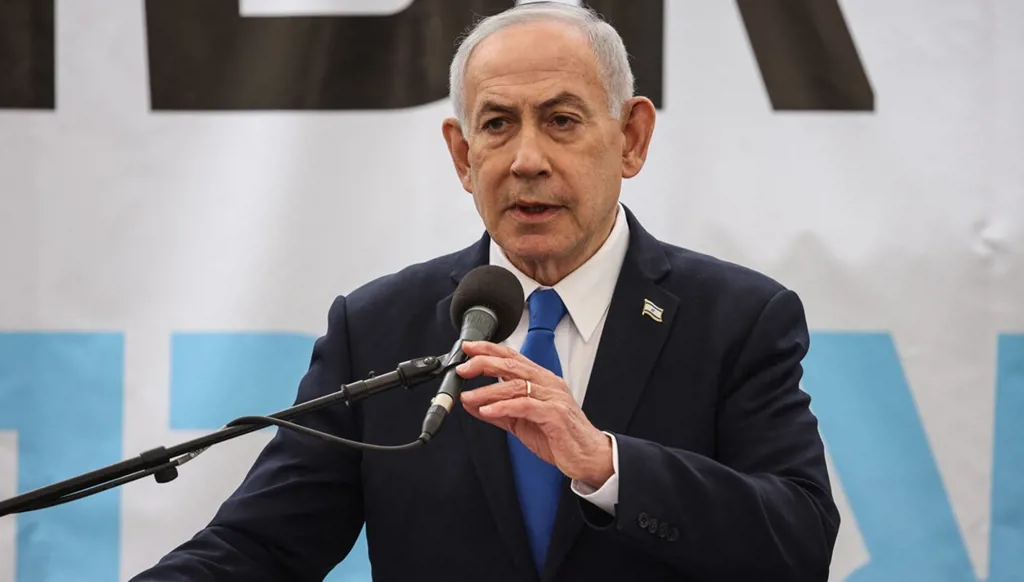
Netanyahu falsely claims Lebanese christian villages want to join Israel
His remarks on Fox News reignited debate over minority protection, psychological warfare, and Israel's strategy in southern Lebanon.

"Some Lebanese Christian villages asked Israel to annex them." This statement by Israeli Prime Minister Benjamin Netanyahu during an interview with Fox News quickly went viral. However, he also said Israel was "protecting Sunnis, Druze, and some Shiites."
He stated: "There are Christian villages in Lebanon, some of which have indeed requested to be annexed to Israel because we protect them from Hezbollah extremists who want to kill them. We do the same with Christians everywhere. It is not only Christians in Lebanon who ask for our protection, but also the Druze and Muslims, Sunni Muslims, and a significant number of Shiite Muslims as well."
Netanyahu's remarks sparked widespread reactions and astonishment, particularly among Lebanese Christians, with many questioning his motives. Examining the proposal suggests it is part of a calculated political and media strategy, especially since actual annexation is legally and internationally impossible.
So why did Netanyahu make this statement? How should its timing and purpose be interpreted?
The Rhetoric and contradictions of "protecting minorities"
Historically, Israel has presented itself as a "protector of minorities," not only in Lebanon but across the region. This strategy is rooted in the idea that Israel, as a Jewish minority in an Arab-Muslim environment, should build alliances with other ethnic and religious minorities to strengthen its security and justify its regional role.
Examples include Israel's ties with the Kurds in Iraq during the 1950s and 1960s, when they opposed the central government in Baghdad, as well as its support for rebel movements in South Sudan before the country's independence in 2011. Lebanon has long been the most prominent arena for this approach, particularly during the Lebanese civil war.
Today, observers believe Netanyahu is attempting to revive this narrative by portraying Israel once again as the "protector of minorities" in the Middle East.
Indirectly, he appears to be invoking the experiences of Saad Haddad and Antoine Lahd within the current political context by suggesting that the Christian community in southern Lebanon views Israel as a protective ally against other groups, particularly Hezbollah.
This narrative raises many questions and considerable distrust because of the legacy of the Haddad and Lahd experiences and the events that culminated in the Mountain War, aside from the broader issues surrounding Israeli protection and Christian secessionist strategies. Christian villages in the south have consistently called for a stronger presence of the Lebanese state and the deployment of the Lebanese army.
At the same time, Netanyahu's reference to Sunnis, Druze, and "a significant number of Shiites" may relate to minority communities in southern Lebanon, but it also strongly reinforces sectarian and political divisions by implying that non-Shiite groups—and even some Shiites—oppose Hezbollah's dominance.
This serves two objectives:
- Highlight Hezbollah as a destabilizing force that threatens other Lebanese communities, while isolating it politically and within its own environment.
- Underscore the weakness of the Lebanese state by suggesting that certain groups seek "protection" or even "cooperation" with Israel.
Bypassing the Framework Agreement?
Netanyahu portrays Israel's military presence as a response to a "popular demand" for minority protection, helping to reduce both international and domestic pressure for an immediate withdrawal by presenting the Israeli army as a force that maintains stability.
His remarks come amid ongoing negotiations over arrangements in southern Lebanon and the implementation of the framework agreement. This timing allows him to introduce more radical ideas, such as "annexation" or "protection," as bargaining tools aimed at securing concessions, including the establishment of a demilitarized security zone or greater operational freedom for the Israeli army in the south.
Addressing the American audience
Observers believe the speech was primarily directed at Western public opinion, particularly conservatives in the United States. Netanyahu's decision to make these remarks on Fox News—a network closely associated with conservative and right-wing audiences—was no coincidence.
He sought to appeal to religious sentiment, particularly among conservative and evangelical Christians in the United States, by portraying Israel as the "sole defender of Christians and minorities in the Middle East" against what he describes as "Islamic extremism" or "religious fascism." This narrative helps sustain diplomatic, military, and political support for Israeli policies.
He also sought to reinforce the concept of "manufactured victimhood." By portraying Christian villages and other minority communities—including Druze, some Shiites, and Sunnis—as vulnerable groups seeking Israeli protection, Netanyahu strengthens the case for continued military and financial assistance from Washington, along with political backing.
In doing so, he reframes the conflict from a political and border dispute into a moral and religious rescue mission, granting ethical and humanitarian legitimacy to the Israeli army's continued presence in the security zone it controls in southern Lebanon and justifying a delayed withdrawal.
Questioning the legitimacy of the Lebanese State
Netanyahu's remarks reinforce the Israeli narrative that Lebanon is a failed state incapable of protecting its citizens and effectively controlled by Hezbollah. Israel has long questioned both the Lebanese army's ability and willingness to act against Hezbollah. Recent remarks by Israeli Defense Minister Yisrael Katz reflect this view. He said, "The Lebanese army will not become lions attacking Hezbollah overnight." The statement accurately reflects the outlook of Israel's military and political establishment.
From Israel's perspective, the absence of a central government in Beirut capable of representing and protecting all Lebanese citizens creates space for Israel to pursue "direct negotiations" with sectarian or local groups to secure its borders—an approach that inevitably undermines Lebanese sovereignty.
There is little doubt that Netanyahu's remarks constitute political propaganda and psychological warfare. They were met with immediate and categorical denials from municipal and religious authorities in the Christian villages of southern Lebanon, who, as noted, remain committed to Lebanon's identity, sovereignty, and state institutions.