

Gulf–Iran relations: The fragile diplomatic path to restoring trust
From Manama to Doha and Tehran, shifting Gulf moves signal cautious steps toward rebuilding trust amid deep security tensions.



 Messenger
 Whatsapp
 Threads
 Email
Email
 Print
Print
 X
X
 Facebook


Normal relations and cooperation between Iran and the Gulf Cooperation Council (GCC) countries fundamentally rely on “trust,” which remains the cornerstone of any stable relationship. This trust, however, was undermined by Iranian forces targeting Arab Gulf states with missiles and drones during the recent war.
Saudi Foreign Minister Prince Faisal bin Farhan, during his participation as a keynote guest in a dialogue session at the “European Council on Foreign Relations” in Vienna last June, spoke openly about the “decline in trust” with Iran. He stressed that “we must engage in dialogue on how to rebuild that trust and reestablish the relationship before discussing any economic cooperation or mutual investment."
This frank approach aims to build relations on solid, lasting foundations rather than formalities or temporary fixes to contentious issues, as Riyadh seeks to strengthen regional security and stability, enabling a greater focus on development and economic projects.
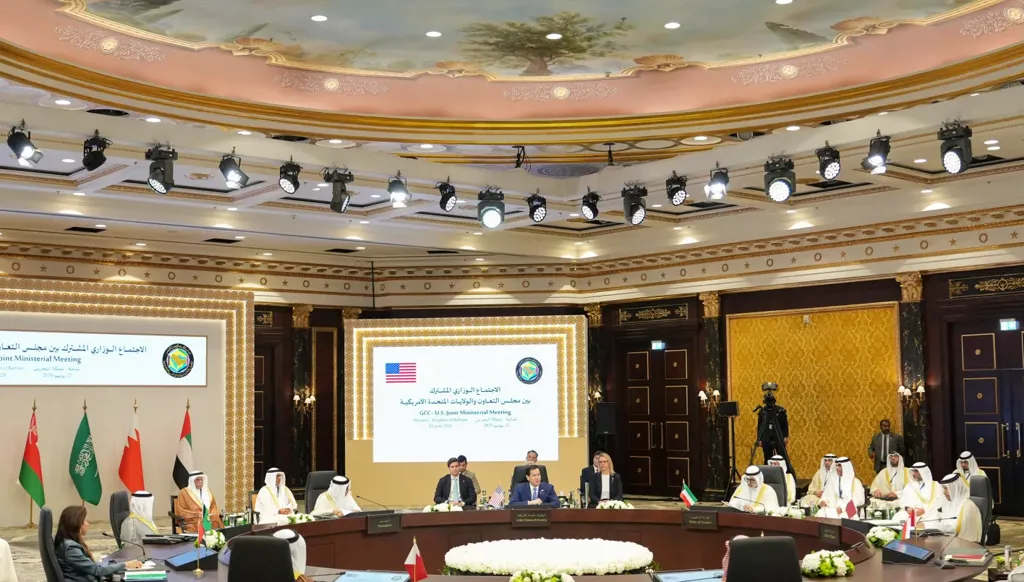
The Manama Meeting Statement
In the same context, an observer of Gulf-Iran relations would note that between June 25 and July 4 this year, three significant signals emerged: the ministerial statement from the Manama meeting, the technical negotiation channel in Doha, and the calculated diplomatic presence in Tehran during the funeral ceremonies of the late leader of the revolution Ali Khamenei.
Taken together, these signals indicate a shift in Gulf positions from managing military and security escalations in the region toward seeking practical settlement solutions built on solid foundations that serve common interests for all parties, without allowing Iran to exercise negative external influence.
This also suggests that Arab Gulf states have not closed communication channels with Iran after the recent war and its attacks on Kuwait and Bahrain, while simultaneously not allowing Washington–Tehran negotiations to proceed independently on issues directly affecting Gulf security.
The joint Gulf-American “Manama Statement” emphasized the necessity of preventing Iran from developing or acquiring nuclear weapons, and included ballistic missiles, drones, and support for proxies among the threats that must be contained. It also stressed the importance of ensuring free and safe navigation in the Strait of Hormuz and rejecting any fees or attempts to control the strait, which Iran seeks to impose.
These points made the statement clear in its interconnected treatment of Iran’s nuclear and regional behavior, underscoring the need to address both tracks without neglecting either. Following the Manama meeting, on June 30, an indirect Iranian-American round of talks took place in Doha. This Qatari role does not function outside the broader Gulf framework, but rather keeps communication with Tehran and Washington open, remaining within the Gulf parameters outlined in the Manama Statement.
What reinforces this alignment with the Manama Statement is that the “technical talks” focused on navigation in the Strait of Hormuz and Iran’s frozen funds, rather than the structure of a final nuclear agreement. This is particularly important as Iran seeks to establish a reality that grants it a recognized role in regulating maritime passage and potentially collecting financial fees in the future.
Participation in Khamenei's Funeral
The Gulf movement continued through participation in the funeral ceremonies of the late Supreme Leader Ali Khamenei in Tehran, adding another signal with Saudi, Qatari, and Omani representation at politically and diplomatically calibrated levels.
Within this complex scene, three key indicators remain to be monitored: unhindered navigation through the Strait of Hormuz without Iranian restrictions, an end to military attacks on Kuwait and Bahrain, and control over armed militias in Iraq.
If progress is made on these fronts, it could mark the beginning of building trust and sound Gulf-Iran relations based on good neighborliness, non-aggression, and non-interference in internal affairs, potentially opening the door to broader bilateral cooperation across various fields.
Disclaimer: The opinions expressed by the writers are their own and do not necessarily represent the views of Annahar.