

Israeli media on Khamenei's Funeral: Power and politics
Rather than viewing the funeral as a farewell, Israeli outlets saw it as Tehran's first attempt to prove regime stability, project strength, and shape the post-Khamenei era.



 Messenger
 Whatsapp
 Threads
 Email
Email
 Print
Print
 X
X
 Facebook


As Iran presented the funeral of Supreme Leader Ali Khamenei as a unifying national moment, Israeli media interpreted it very differently, viewing it as the regime's first political test following the assassination of the man who had ruled the Islamic Republic since 1989.
Rather than focusing on the solemnity of the funeral, Israeli newspapers and television channels concentrated on what they described as Tehran's attempt to demonstrate institutional cohesion, restore the regime's legitimacy, and send both domestic and international messages that Iran remains capable of projecting strength despite the blows it sustained during the war with the United States and Israel.
More of a Power Display than a Funeral
Most Israeli media outlets agreed that the Iranian regime sought to politicize the funeral ceremonies rather than treat them solely as an occasion to bid farewell to the late leader.
Maariv reported that Iranian authorities were attempting to turn the event into a "show of strength at a sensitive time for the Islamic Republic," citing Parliament Speaker Mohammad Bagher Ghalibaf's call for massive public participation in the funeral as a "response to Khamenei's assassination."
The newspaper also highlighted the extensive security and organizational measures surrounding the ceremonies—including declaring public holidays in Tehran, Qom, and Mashhad, shutting down public and private institutions, imposing widespread traffic restrictions, and closing the capital's airspace—arguing that these measures "reflect the significance of the event for the regime."
Similarly, Haaretz political analyst Zvi Barel wrote that the funeral was not merely about mourning the late leader but was also "an attempt to rebuild the regime's legitimacy and demonstrate its cohesion after months of war and losses." He argued that "the Iranian leadership seeks to convey that Khamenei's death has not altered the regime's structure or its ability to continue."
Israeli media also quoted excerpts from Iranian writer Ali Reza, published on the regime-affiliated Roydad 24 website, arguing that death in politics does not mark an end but rather the beginning of a new phase and a struggle over memory and legitimacy—an interpretation consistent with Tehran's efforts to reshape the regime's image following Khamenei's assassination.
Where was Mojtaba Khamenei?
One of the issues that drew particular attention in Israeli media was the absence of the new Supreme Leader, Mojtaba Khamenei, from the funeral ceremonies.
Israel Hayom reported that while hundreds of thousands of Iranians filled the streets of Tehran and Khamenei's sons Mostafa, Meysam, and Masoud took part in the ceremonies, Mojtaba was notably absent.
The newspaper claimed that Mojtaba Khamenei, who was reportedly injured in the strike that killed his father, "remains in hiding for fear of another American or Israeli attack."
Israeli media also argued that his absence fueled speculation about the nature of the transitional period within the regime and how authority is being managed following Khamenei's assassination.
Messages to Washington and Tel Aviv
Israeli analyses also focused on the political messages conveyed during the ceremonies, particularly the slogans directed at the United States and Israel.
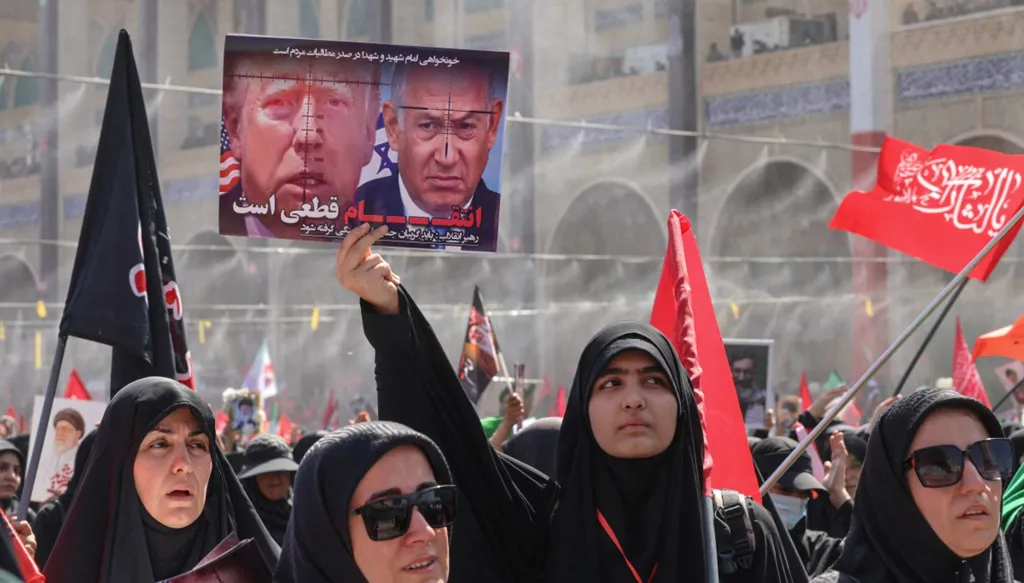
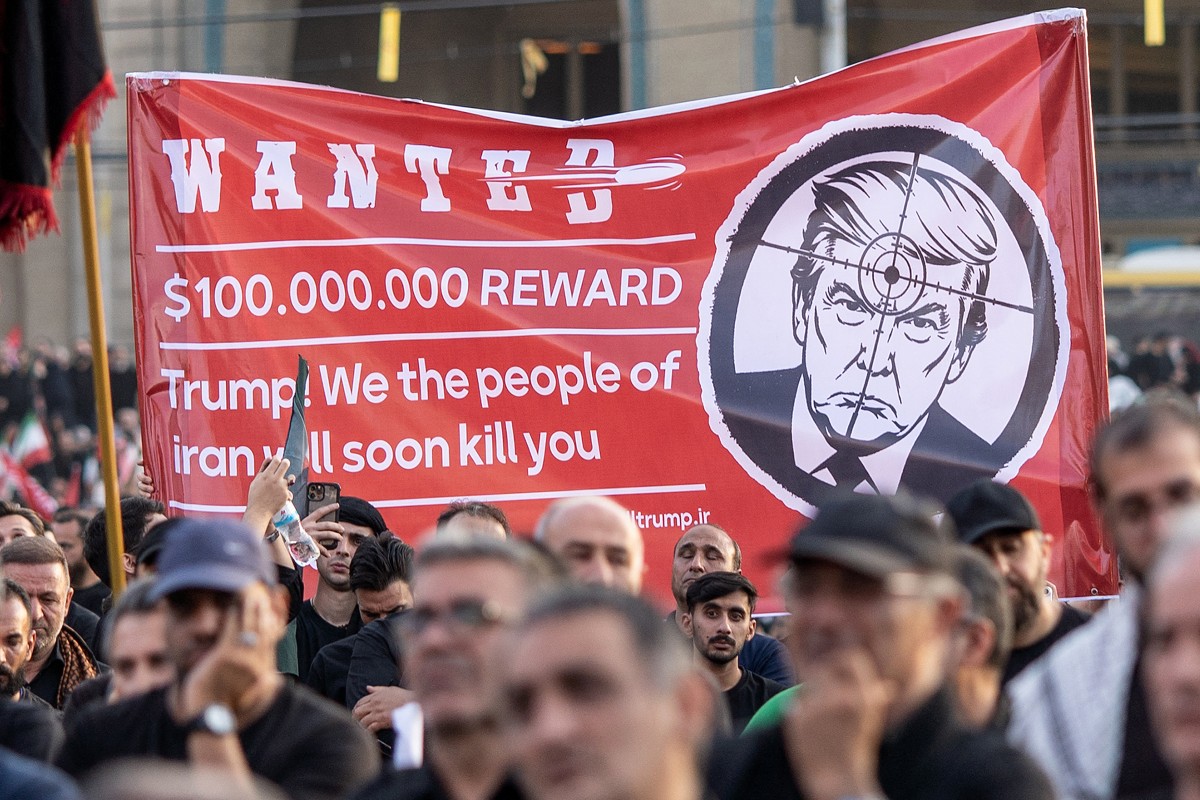
Yedioth Ahronoth wrote that the funeral quickly became a "platform to renew anti-Washington and Tel Aviv rhetoric," as participants chanted slogans such as "Death to America" and "Death to Israel" while carrying banners calling for the assassination of U.S. President Donald Trump and Israeli Prime Minister Benjamin Netanyahu.
The newspaper added that some banners questioned why Trump was still alive, describing the slogans as "reflecting the escalating rhetoric of incitement within Iran following Khamenei's assassination."
Yedioth Ahronoth also reported on an American effort to limit official foreign participation in the funeral, claiming that U.S. Secretary of State Marco Rubio "issued a secret circular to American embassies advising them to inform governments that participating in the funeral could negatively affect their future relations with Washington."
Allies at the Forefront
In its coverage, Israel's Channel 13 focused on the foreign delegations attending the funeral, arguing that their presence reflected Tehran's determination to demonstrate the cohesion of its regional network of allies despite the strikes against the so-called "Resistance Axis."
The channel highlighted the participation of delegations from Hamas and the Houthis in Yemen, noting that Iranian Foreign Minister Abbas Araghchi met with the Hamas delegation and reaffirmed Tehran's continued support for the Palestinian cause.
It also reported on Araghchi's meeting with a Hezbollah delegation, during which he stated that "Hezbollah's brave resistance is a source of pride for Lebanon and the Islamic world," adding that Iran "continues to work for ending the war in Lebanon and occupation."
The channel further reported that many attendees told Iranian media their participation was "an expression of loyalty to Khamenei and adherence to the principles of the Islamic Revolution," with some saying they had traveled hundreds of kilometers to attend the ceremonies.
How Does Israel View the Day After Khamenei?
Haaretz political analyst Zvi Barel argued that the real challenge lies not in organizing the funeral but in managing the post-Khamenei era, given that the institutions of the Islamic Republic had been closely tied to his leadership and balancing role for more than three decades.
He maintained that Khamenei's success in consolidating the doctrine of the "Guardianship of the Islamic Jurist," managing competition among rival power centers, and preserving a delicate balance between political, military, and religious institutions makes his absence "an unprecedented test for the new leadership."
Barel added that the project Khamenei pursued, transforming Iran into a regional power with broad influence, is likely to remain central to the policies of the new leadership. However, he argued that preserving this legacy "will depend on their ability to contain internal challenges and manage foreign relations."
He also suggested that Tehran would likely continue negotiating with the United States when necessary, but from a position seeking recognition of Iran's regional status, viewing this as a continuation of the strategic approach Khamenei established throughout his rule.