

Lebanon-Israel ceasefire moves forward as Iran and U.S. back rival visions for the south
As Washington advances a new security mechanism and Israeli withdrawal plans, Tehran intensifies pressure, exposing competing agendas over Lebanon's future.



 Messenger
 Whatsapp
 Threads
 Email
Email
 Print
Print
 X
X
 Facebook
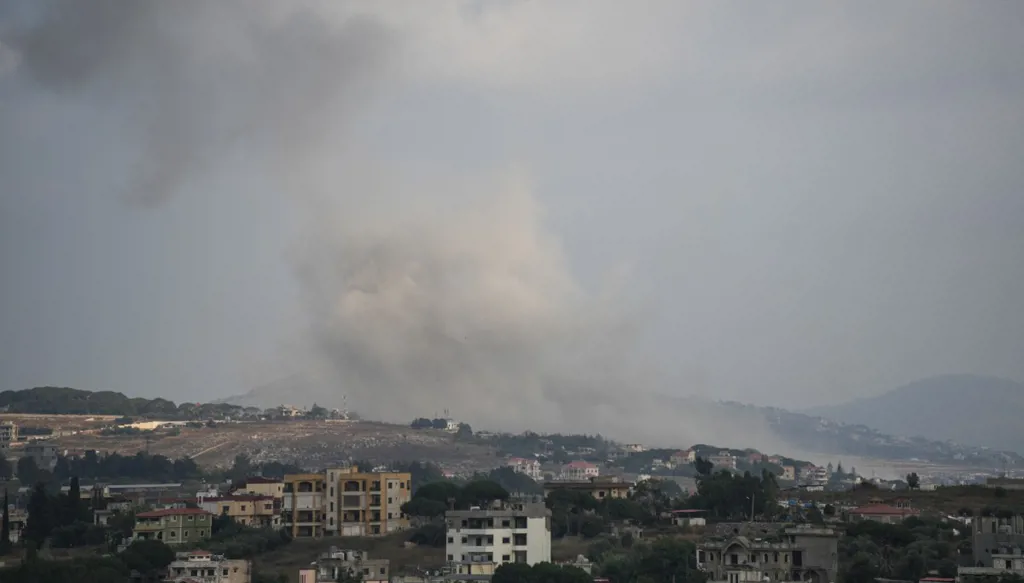


The political confrontation is heading toward further escalation amid increasing Iranian rhetoric. This was reflected yesterday when Iranian officials told Lebanese delegations attending the funeral of the late Imam Ali Khamenei that "the Lebanese authority is one of the obstacles to achieving a ceasefire in Lebanon," adding that "the authority's refusal to appoint a Lebanese representative to the joint U.S.-Iranian-Lebanese committee monitoring the ceasefire is delaying the start of the committee's work."
Officially, Iranian Parliament Speaker Mohammad Bagher Ghalibaf stressed that "the clauses specific to Lebanon were included in the memorandum at Iran's insistence," urging Lebanese factions to implement them in order to prevent strife.
Meanwhile, the Iranian Foreign Ministry said Foreign Minister Abbas Araghchi told a Hezbollah delegation that "Tehran is seriously following efforts aimed at ending the war and occupation in Lebanon." It also noted Araghchi's commitment to "continued support for the resistance approach," while praising "Hezbollah's resistance against the Zionist entity."
In contrast, Lebanon's executive authority, represented by President Joseph Aoun and Prime Minister Nawaf Salam, continues to advance the implementation of the "framework agreement" (or simply the "framework," as President Aoun described it) signed between Lebanon and Israel under American auspices. The process is expected to gain significant momentum during Aoun's upcoming visit to Washington, where he is scheduled to meet U.S. President Donald Trump.
President Aoun reaffirms his commitment to the agreement
President Aoun reaffirmed his position on the agreement, saying: "Some blame me for this 'framework,' and I tell them: I can remain in Baabda Palace without caring about any agreement, but should I leave my people to die? Should I watch these wars, the ruins, and all this destruction? Yesterday, while I was visiting Our Lady of Harissa with my wife, a woman stopped me in Nabatiyeh. She cried bitterly and told me her home had been leveled to the ground. She said, 'Your Excellency, we do not want war; we want peace.' I tell you, I am not infatuated with Israel, but give me another solution to follow, whatever it may be. To those who oppose this 'framework,' I am waiting for any solution or agreement that can get us out of these wars."
Meanwhile, Washington has signaled the beginning of a gradual activation of the framework agreement by appointing the former head of the "Mechanism" committee, General Joseph Clearfield, to lead the new security and military committee overseeing the direct implementation of the Lebanese-Israeli framework agreement. Clearfield is reportedly holding discreet contacts and meetings between Beirut, Tel Aviv, and Washington in preparation for forming the tripartite Lebanese-American-Israeli team, while also accelerating the implementation of the framework through pilot areas in southern Lebanon.
Israeli Reports on Withdrawal
At the same time, the Israel Broadcasting Authority (Kan) reported progress in preparations for the next phase of the Israeli army's withdrawal from southern Lebanon. According to the report, the Zawtar areas in Nabatiyeh will serve as the first pilot point, with direct U.S. involvement in coordinating the withdrawal, establishing a joint mechanism to supervise the ceasefire, and transferring responsibility to the Lebanese Army.
Israeli assessments indicate that another phase of redeployment is approaching following last week's visit to Israel by General Joseph Clearfield, commander of U.S. Marine Corps Forces Central Command and the official overseeing the Israeli withdrawal project in Lebanon. During the visit, he reportedly discussed the next stages of the withdrawal with Israeli officials. The report added that Clearfield's team is expected to arrive this week to prepare plans for two additional areas slated for evacuation by the Israeli army.
According to the report, transferring control of these areas to the Lebanese Army is expected to take between one and three weeks.
The report also stated that the Israeli army has prepared proposals regarding the next withdrawal areas and submitted them to Israeli Chief of Staff Eyal Zamir, who is expected to present them to the Israeli Security and Political Cabinet for approval.
According to informed sources, the new mechanism is intended to enhance coordination between Israel and Lebanon by enabling both sides to operate through a shared virtual operations room.
The report added that while the United States will continue to play a central role in establishing the coordination cell, its mandate will extend beyond monitoring ceasefire violations to coordinating steps related to the dismantling of Hezbollah.
Sources further stated that Washington will oversee the approval of individuals participating in the mechanism to ensure that no sensitive information reaches Hezbollah. According to the Israeli assessment, this concern was one of the factors behind the failure of the previous mechanism established in 2024. The statement also includes an implicit accusation that Lebanese Army officers maintained continuous contact with Hezbollah officials before and after the mechanism committee's regular meetings.
According to the Israeli report, these developments indicate that the southern Lebanese file has entered a new phase of military and political consultations, pending decisions on the next stages of withdrawal and the mechanisms for implementing the security understandings.
Israeli Chief of Staff in Shqif
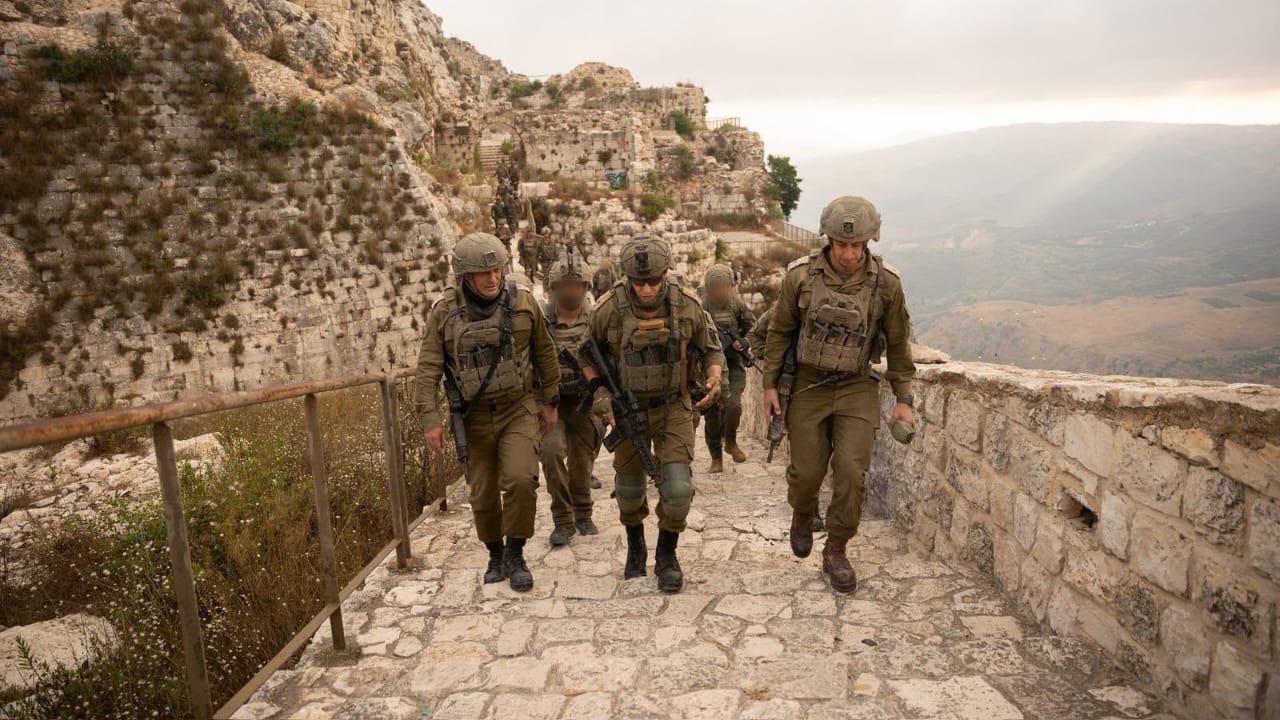
Operationally, Israeli Chief of Staff General Eyal Zamir visited the Shqif Castle site yesterday, accompanied by several officers.
According to the Israeli army spokesperson, Zamir conducted a field tour and assessed the operational situation in the mountain range. He also inspected the underground route discovered there and said following the visit that the Lebanese Army must fulfill its commitments under the historic agreement and work to clear the area of Hezbollah militants.
Operationally, the Israeli army also continued its attacks on towns and villages in southern Lebanon. Israeli warplanes struck the Harik district between Kfartibnit and Nabatiyeh al- Fawqa.
A hostile drone dropped a sound bomb on the town of Mansouri in the Tyre district. The Israeli army carried out extensive explosions in the towns of Beit Yahoun and Kounine in the Bint Jbeil district, while an Israeli helicopter conducted a sweeping operation over Majdal Zoun in the Tyre district.
In addition, an Israeli aircraft dropped two sound bombs over the town of Hadatha in the Bint Jbeil district. Israeli Channel 12 also reported that the army launched an attack in the Ali Taher Heights area before later striking Nabatiyeh al-Fawqa.