

EU walks a tightrope on Lebanon–Israel framework deal: Support with clear conditions
Brussels backs de-escalation but ties success to Israeli withdrawal, Lebanese state monopoly on arms, and stronger army support amid concerns over implementation gaps and regional risks.



 Messenger
 Whatsapp
 Threads
 Email
Email
 Print
Print
 X
X
 Facebook
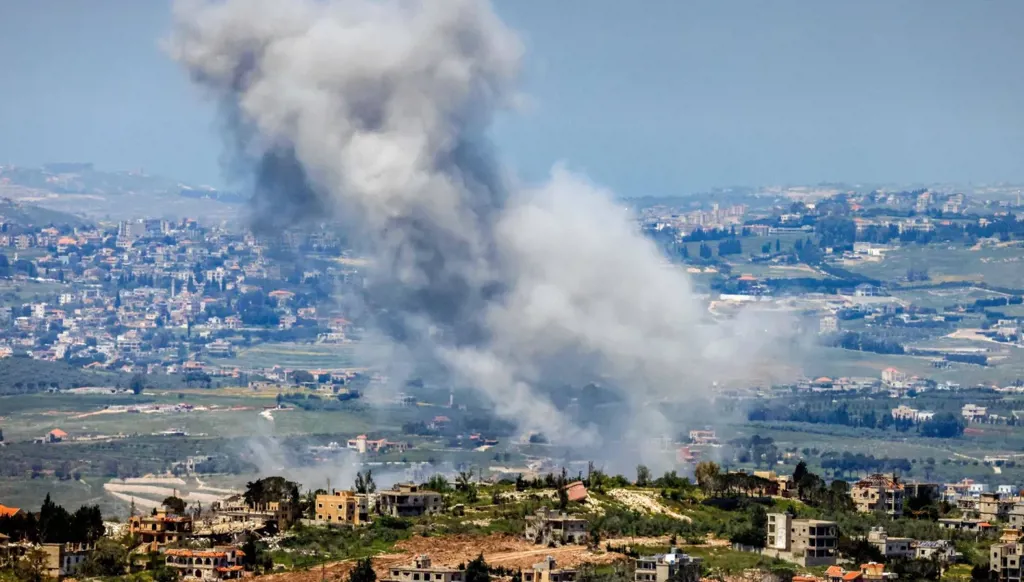


The European position on the framework agreement between Lebanon and Israel is based on conditional political approval rather than full and uncritical endorsement. The European Union views it as an opportunity to prevent escalation into a wider war, but considers its success dependent on three main conditions: the withdrawal of Israel from Lebanese territories, the exclusive possession of weapons by the Lebanese state, and effective international support for the Lebanese army to enable it to carry out its duties.
The official position of the European Union is clear. Brussels has welcomed the agreement as a step that could enable the disarmament of “Hezbollah,” paving the way for a gradual withdrawal of Israeli forces. It sees it as an opportunity to de-escalate and restore Lebanon’s sovereignty and territorial integrity. The EU has emphasized that the priority is to prevent a renewed war, given the severe humanitarian and economic burdens Lebanon is already bearing.
France has adopted a similar position, though expressed in terms more closely tied to the Lebanese reality, viewing the agreement as a pathway toward the full restoration of Lebanon’s sovereignty, a state monopoly on arms, the withdrawal of the Israeli army, and the delivery of humanitarian aid along with the return of displaced persons. From this perspective, Paris sees the agreement not merely as a security arrangement but as an entry point for rebuilding the authority of the Lebanese state, particularly in the south.
European Commission President Ursula von der Leyen has described the agreement as a “crucial step away from escalation,” while expressing appreciation for the U.S. mediation role. This reflects a European view that the agreement marks the beginning of a political process aimed at reducing the risk of escalation, rather than a final peace settlement.
Despite this supportive stance, there is European concern over the EU’s absence from shaping the guarantee and implementation mechanisms. The agreement was reached under U.S. sponsorship, while the European role—particularly that of France—remained limited in the implementation framework, which some observers interpret as a sign of declining European influence in one of the issues most historically linked to France.
In an attempt to regain an executive role, France and Italy have proposed the idea of creating a multinational force or coalition to support Lebanon after the end of the UNIFIL mandate, with the aim of strengthening state sovereignty and supporting the Lebanese army. However, this proposal faces Israeli reservations about any extensive French role or a formula resembling UNIFIL, as well as U.S. support for the Israeli position. Its success also depends on Lebanese internal consensus and a clear definition of mandates and rules of engagement.
In the European press, the approach appears more cautious. Le Monde described the agreement as a historical but fragile framework, noting that it excludes “Hezbollah” from signing while effectively requiring the Lebanese army to implement disarmament in specific southern areas. It considered that the agreement could reduce tensions in the short term, but does not guarantee a sustainable settlement amid Hezbollah’s rejection and Israel’s linkage of full withdrawal to the removal of its perceived military threat.
Meanwhile, The Guardian focused on a clause calling on the parties to refrain from “hostile or negative actions” in international legal and political forums. This clause has raised concerns among European human rights activists that it could restrict the prosecution of war crimes or weaken victims’ access to international justice mechanisms, including the International Criminal Court, raising questions about achieving calm at the expense of legal accountability.
In conclusion, Europe supports the agreement in principle but does not consider it fully secured. It aligns with its traditional priorities of stopping the war, supporting the Lebanese army, restoring state sovereignty, preventing Lebanon’s collapse, and maintaining stability in the Eastern Mediterranean. At the same time, Europe continues to express four main concerns: the possibility of the agreement becoming a cover for a prolonged Israeli presence, the difficulty of the Lebanese army carrying out its duties without sufficient political and financial support, the risk of an internal crisis due to Hezbollah’s refusal, and Europe’s continued marginalization in the guarantee and implementation arrangements.
In summary, the European position can be encapsulated in the following equation: yes to an agreement that serves as an entry point for the restoration of the Lebanese state and its sovereignty, but no to an agreement that legitimizes prolonged occupation or becomes a recipe for internal Lebanese conflict.
Disclaimer: The opinions expressed by the writers are their own and do not necessarily represent the views of Annahar.