

Europe’s quiet shift in Syria: Inside the growing focus on the coastal region
As EU and German officials meet religious and civic figures in Tartus and Latakia, a cautious new European engagement emerges, listening to local communities without redefining Syria’s political balance.



 Messenger
 Whatsapp
 Threads
 Email
Email
 Print
Print
 X
X
 Facebook
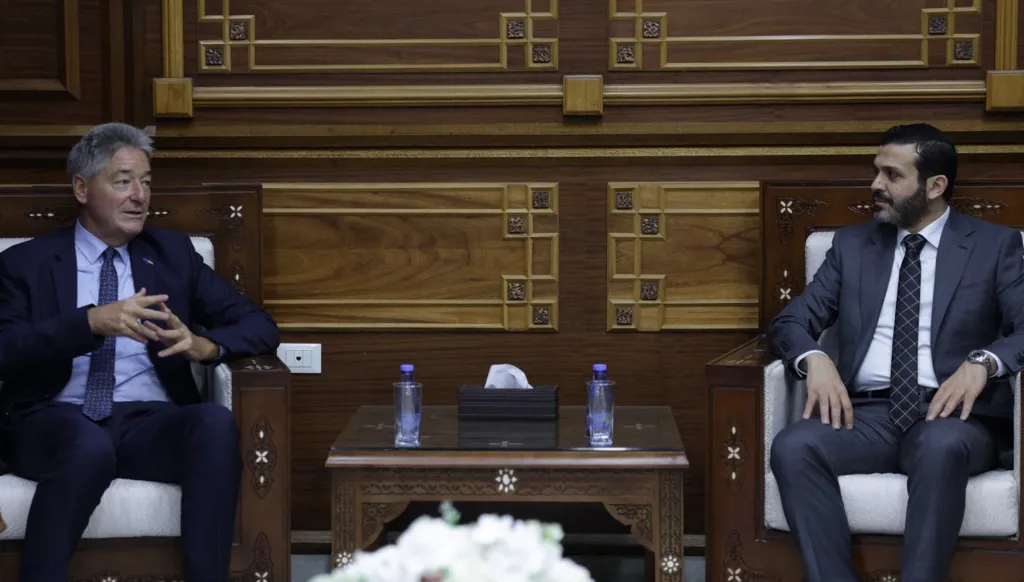


From the visit of German State Minister Serap Güler to Tartus and Latakia, to the meeting of the head of the EU Delegation in Syria, Michael Ohnmacht, with Alawite religious and civic figures in Tartus, the Syrian coast appears to be entering, albeit cautiously, the sphere of direct European interest. This does not mean that Brussels or European capitals have adopted a dedicated policy toward the coast or the Alawite component, but rather reflects a growing attention to an environment undergoing a sensitive transitional phase and facing accumulated security, social, and political concerns.
This development raises questions about the extent of European engagement on the coast, and whether it remains within routine diplomatic activity or signals a more open approach toward local components inside Syria.
From Statements to Meetings
The European position on Syria, in its general framework, is based on supporting stability and recovery, encouraging a more inclusive political process, with emphasis on protecting minorities and ensuring the participation of different components. However, the shift from official statements to direct meetings on the coast adds a further dimension, especially as the region carries accumulated security and social challenges, and as various local actors seek communication channels that are not exclusively mediated through Damascus.
This approach aligns with Ohnmacht’s discourse on transforming EU–Syria relations from rupture toward a new form of partnership, including economic recovery and reconstruction, based on the idea that Syria’s stability represents a direct European interest.
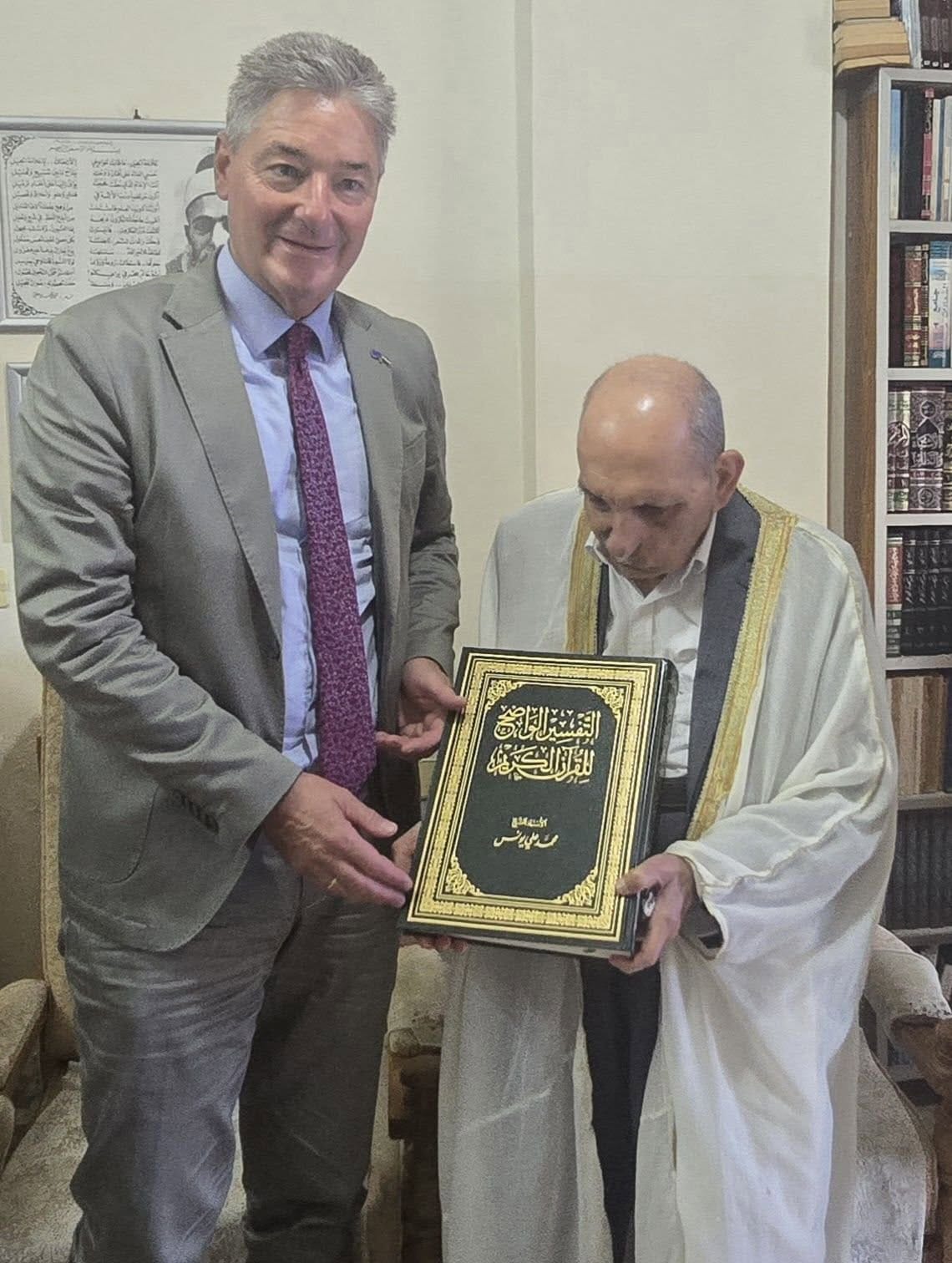
In this context, his meeting in Tartus drew attention not only for its timing but also for its setting, as it took place at the house of Sheikh Mohammed Ali Younes, which carries religious and social symbolism within the Alawite environment, rather than in an official or political venue. The only publicly available details came from Sheikh Mohammed Abdullah Mayhoub, a religious figure in the Alawite community, who described the gathering as bringing together a segment of the Alawite community “from various religious and civil directions.”
Mayhoub wrote that Ohnmacht chose Sheikh Younes’s house “to be a space for meeting and dialogue,” noting that the Alawite community was present there “in its civil and religious forms,” reflecting its internal diversity. He added that the concerns of the coast were discussed, alongside hopes for a European role in supporting stability, preserving dignity, diversity, and cultural specificity.
On Ohnmacht’s and the EU Delegation’s official account, the Tartus visit appeared within a broader program that included a visit to the “Zain Pharma” pharmaceutical company and a tour of the old city, focusing on economic recovery, cultural heritage preservation, and community dialogue, while the meeting at Sheikh Younes’s house was not highlighted in the official narrative.
Without Political Dimensions?
A source who attended the meeting told Annahar that the gathering, at Sheikh Younes’s initiative, included representatives from most segments of Alawite society, including religious, civil, and women’s groups. According to the source, the meeting was not political in nature and should not be given interpretations beyond its scope.
The same source added that Ohnmacht’s general approach focused on stability and listening to Alawite concerns on the coast, without aiming to establish a separate political channel or create new representation for the Alawite component. He also denied any connection between Ohnmacht’s visit to Tartus and Serap Güler’s visit to Syria.
For his part, Dr. Mohammed Habash described the meeting between Ohnmacht and Sheikh Younes as largely “honorary,” given the EU representative’s position in Syria. In remarks to Annahar, he said such meetings “do not take place without the knowledge of the Syrian authorities” and operate within the framework of both Syrian and broader interests, viewing these visits as complementary to state efforts rather than contradictory to them.
Habash added that under the previous regime, any communication with international actors was often framed as “aggression” or “treason,” and could lead to security repercussions. He said that “today there is different thinking within the state,” where such views are considered outdated, as the world has become more interconnected. He emphasized that these communications take place legally and with authorization, and should be seen as supportive of state plans.
A Cautious European Approach
Ohnmacht’s activity was not limited to Tartus. His visit also included Latakia, where he met Governor Ahmed Mustafa and visited the Latakia Hospital for Cardiology and Surgery. According to Annahar sources, the visit also included meetings with religious and civic figures in the province, though these did not receive the same public coverage as in Tartus, reflecting the sensitivity surrounding European engagement with local communities wary of political interpretations of external meetings.
His visit came shortly after a tour by German State Minister Serap Güler, two weeks earlier. The German official statement presented her visit as a political and economic mission covering government institutions, the business sector, civil society, and various minority groups, including stops outside Damascus in Tartus, Latakia, and Aleppo.
In this sense, Güler’s visit appeared more like an exploration of economic and political engagement opportunities in a “new Syria,” rather than a focused outreach to the coast, although the inclusion of Tartus and Latakia added symbolic significance.
Between Güler’s visit and Ohnmacht’s meetings, a cautious European approach becomes visible—one that supports engagement with the central authority in Damascus while gradually expanding channels of communication with local communities. This does not yet amount to a specific European policy toward the coast, but reflects a growing understanding that Syria’s stability is not determined solely by relations with the government, but also by listening to the concerns of local components, particularly the Alawite community, during the transitional phase.
In conclusion, the Tartus meeting may not carry the full political weight some might attribute to it, but it goes beyond a simple social visit. Its importance lies in its timing, location, the nature of participation that remained largely discreet, and the implicit message it conveys: Europe seeks to directly listen to concerns from the coast, while local actors aim to express their perspectives without necessarily turning this engagement into a new political alignment.