

Lebanon public opinion increasingly divided over framework agreement, security situation
Heightened political and security tensions continue in Lebanon amid disputes over the Lebanese Israeli framework agreement, ongoing Israeli ceasefire violations in the south, and escalating domestic rhetoric between state officials and opposition voices warning of national repercussions.



 Messenger
 Whatsapp
 Threads
 Email
Email
 Print
Print
 X
X
 Facebook
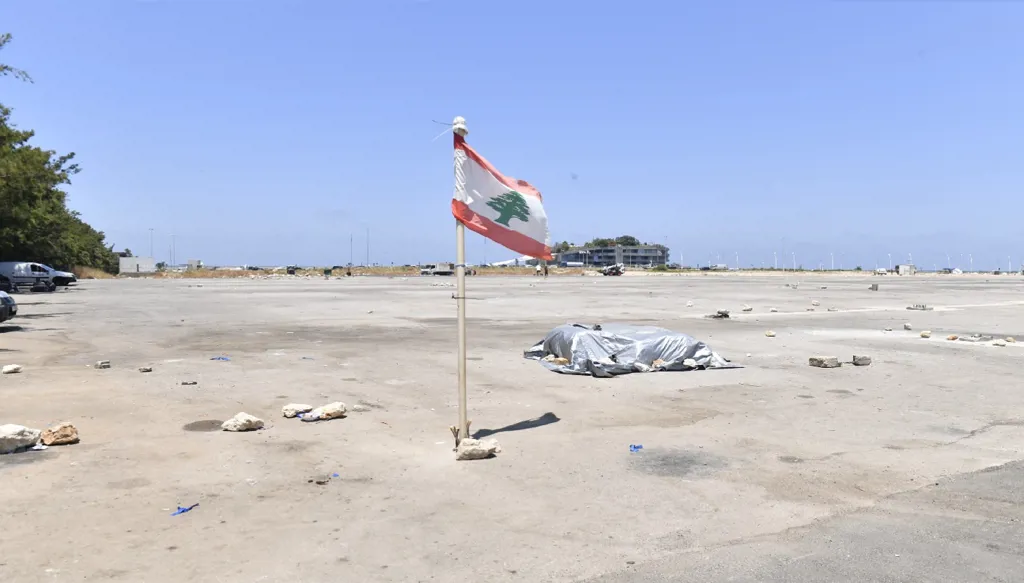


During the waiting period for the start of implementing the framework agreement between Lebanon and Israel, during which the United States military side is carrying out the necessary preparations to ensure the success of the two implementation zones experiment for deploying the Lebanese Army in those areas after the disarmament of armed groups and the withdrawal of Israeli forces, official Lebanon is awaiting the beginning of the Israeli withdrawal following the return of the commander of the United States Marine Corps in the Central region, Major General Joseph Clairfield, who is currently in Israel, to Lebanon to discuss post-handover procedures for the experimental areas and the timetable for withdrawal, in preparation for transferring them to the Lebanese Army.
At the same time, notable consequences are being recorded from the relative decline in combat and military operations in the south, as reports indicate the return of more than 640,000 displaced people out of more than one million counted by Lebanese authorities to their homes, according to figures published by the International Organization for Migration, amid a decrease in the intensity of confrontations between Hezbollah and Israel. The International Organization for Migration stated in a report published on Thursday that 646,107 returning displaced persons were reported, while around 500,000 people remain displaced, based on data collected in coordination with local authorities since 22 June.
However, the relative de-escalation in the field situation in the south has not overshadowed ongoing attempts by Hezbollah to keep political instability dominant inside the country through increasing media and political escalation. These attempts witnessed yesterday a highly negative breach of red lines by involving the senior Jaafari Mufti Sheikh Ahmad Kabalan in a verbal campaign against the President of the Republic, carrying all the signs of rhetorical decline and an attack on the highest constitutional, moral, and official authority in the country.
Meanwhile, Parliament Speaker Nabih Berri met with the Commander of the Lebanese Army, General Rodolphe Haykal, to discuss recent developments, particularly the security situation, in light of Israel’s continued attacks and violations of the ceasefire, in addition to the conditions of the military institution.
At the same time, the campaign of the so called axis of resistance appeared yesterday to have taken cover behind a sermon delivered by the senior Jaafari Mufti Sheikh Ahmad Kabalan, who stated that the current reality of the country is drowning in a renewed project to “Judaize Lebanon,” claiming that this form of “Judaization” is a thousand times more dangerous than the May 17 Agreement. He called on President Joseph Aoun to withdraw what he described as this national mistake into which the country has been dragged, arguing that Lebanon cannot withstand experimental or suicidal ventures.
He added that if the President takes pride in the words and principles of Imam Musa al Sadr, then he is the one who said that Israel is an absolute evil and a historical enemy based on aggression, occupation, betrayal, and terrorism. He further described the framework agreement as a historic national collapse that will not pass regardless of the cost.
He also said that nothing is more unusual than what he called this “submissive authority,” insisting it is an authority of surrender regardless of how labels are changed, describing it as incapable, paralyzed, and nonetheless insisting on acting as an agent at the expense of national interests. He concluded that instead of addressing Lebanon’s sovereign, financial, economic, health, and social needs, the authorities have become a national burden and a historic disaster.